

The Department of Chemical Engineering offers graduate programs leading to the master of chemical engineering (M.Ch.E.) degree and the doctor of philosophy (Ph.D.) in chemical engineering. The purpose of the department's graduate programs is to provide the guidance and opportunity for students to develop the quantitative skills of engineering and science and the acumen to apply these skills for the welfare of modern society. Students in the program naturally have a broad range of interests and career objectives, and it is the philosophy of the department to expose them to a variety of fundamental and applied research problems that will hone those engineering skills necessary in any career, whether in industry, academia or government.
This involves a combination of graduate core courses in chemical engineering and applied mathematics, advanced science and engineering electives and independent (thesis) research conducted with the guidance and mentorship of a chemical engineering faculty member. (A nonthesis option is also available for the M.Ch.E. degree).
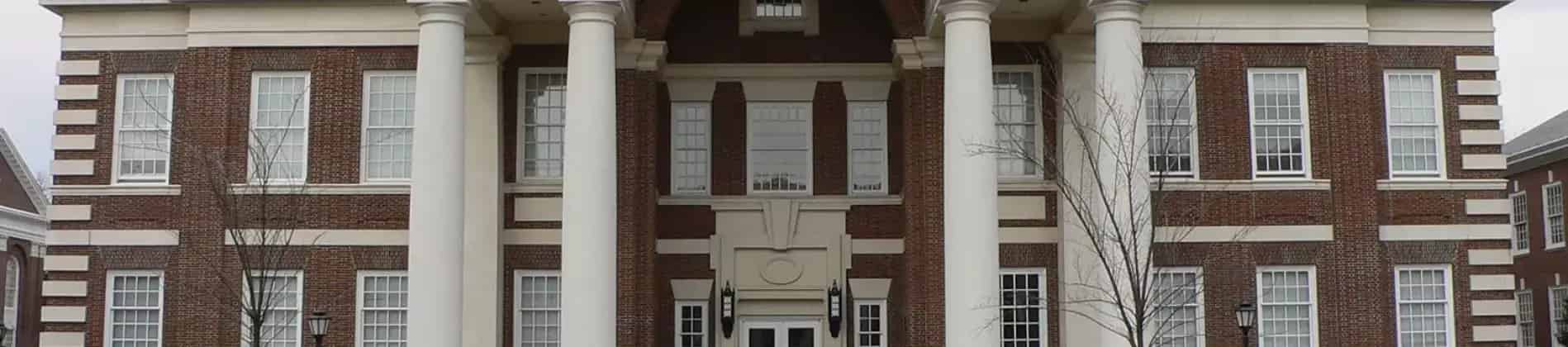
The Chemical Engineering Department is housed in Allan P. Colburn Laboratory, a memorial to one of the pioneers in chemical engineering who established the department. The laboratory houses the Center for Catalytic Science and Technology, which is equipped with the modern tools of catalysis and surface science, and the Center for Molecular and Engineering Thermodynamics, whose personnel study a range of thermodynamic problems. Other laboratory facilities are for research in alternative energy, polymer engineering, rheology, process control, fluid mechanics, biochemical and biomedical engineering, materials science, photovoltaic systems, mass transfer and separation processes. The department's growing emphasis on bioengineering is enhanced by the participation of a number of faculty and students in the Delaware Biotechnology Institute. The department also benefits from close contacts with industrial colleagues in the Delaware Valley and New Jersey heartland of the chemical process industries. An extensive program of visiting scholars brings distinguished engineering scientists from around the world to the campus for periods ranging from a few days to a year.
Close contact, formal as well as informal, with colleagues in a wide range of industries is one of the distinguishing characteristics of the department. Such contact, with corporate leaders as well as practicing engineers and scientists, helps to provide students with an understanding of the milieu in which the engineer works. Lectures given by these visitors describe the unique opportunities that engineers have to contribute to the quality of life and also the restrictions that society, acting through industry and government, places on technology.
Extensive facilities for research and graduate study are available within the department. Laboratories specifically devoted to catalysis, electrocatalysis and reaction engineering house gas chromatographs interfaced with a computer-controlled mass spectrometer, infrared spectrophotometers for surface studies of working catalysts, electron spectrometers for analysis of catalyst surfaces, x-ray diffractometers, transmission and scanning electron microscopes, a laser-Raman spectrometer, an x-ray spectrometer, gas chemisorption equipment, many catalytic flow microreactors and hardware/software for computational studies. Many of these studies are carried out in the University's pioneering Center for Catalytic Science and Technology, supported by governmental funds and grants from a group of industrial sponsors.
Laboratories specifically devoted to polymer engineering are equipped with multiple rheogoniometers and mechanical spectrometers, Instron test equipment, x-ray diffractometers and equipment for spinning and extruding polymers. The polymer engineering group is involved in the research of Delaware's Center for Composite Materials and in interdisciplinary activity supported by several industrial organizations of the U.S., France, Germany, Italy, Japan and the United Kingdom.
Biochemical and biomedical engineering laboratories contain a range of equipment for cell culture and fermentation, and for protein purification, analysis and characterization. The latter includes 2-D gel electrophoresis, high performance liquid chromatography, membrane ultrafiltration, atomic force microscopy and capillary electrophoresis. Research in the biological area is also conducted in collaboration with colleagues in the life sciences, the Department of Chemistry and Biochemistry, the College of Agriculture and Natural Resources, the Delaware Biotechnology Institute and laboratories in the pharmaceutical and biotechnology industries.
The process control and monitoring laboratories contain a number of real-time instrumented experiments for online model-based control and fault diagnosis. The specific experiments include emulsion polymerization, complex quadruple-tank level control and other systems. All of these units are equipped with state-of-the-art control hardware and software systems.
The J.A. Gerster Memorial Thermodynamics Laboratories contain equipment for high-pressure and low-pressure vapor-liquid equilibrium, for high-temperature and multiphase equilibrium and other physical property measurements and for separations processes. Molecular dynamics and quantum mechanical calculations and modeling of simple and complex fluids are performed on the Facility for Computational Chemistry's parallel computer and at other computational resources at the University as well as at national centers. These and other facilities are part of the Center for Molecular and Engineering Thermodynamics.
Laboratories focused on the study of colloids and interfaces contain a variety of spectrometers for quasi-elastic light scattering, fluorescence measurements and small-angle x-ray scattering. State-of-the-art instruments are available for the measurement of electrophoretic mobilities of colloids, surface tensions, ion activities and conductivities, as well as for the determination of liquid phase compositions. Small angle neutron-scattering investigations are also performed at national facilities.
Several faculty and students are involved in chemical engineering research in photovoltaics in which information needed for the design of large-scale processing units is obtained from laboratory-scale experimentation in collaboration with the Institute for Energy Conversion. Experimental and theoretical studies in photovoltaic unit operations are conducted in a cooperative activity between the department and the Institute of Energy Conversion.
One of the most rapidly growing aspects of research within the department is process modeling. Research efforts include computer control and modeling of biochemical reactors, development and modeling of novel separations processes, modeling of transport in living systems, modeling and simulation of polymer processes and elucidation and modeling of reaction pathways. To support the research in chemical engineering analysis, the department maintains its own computer laboratory. Numerous microcomputers are in use in our research laboratories both for data acquisition and modeling; most recently several BEOWULF clusters of high performance PC computers have been built; the department also makes extensive use of the University and national computing facilities.
A dual degree in the MBA and M.Ch.E. programs is available to graduate students.