
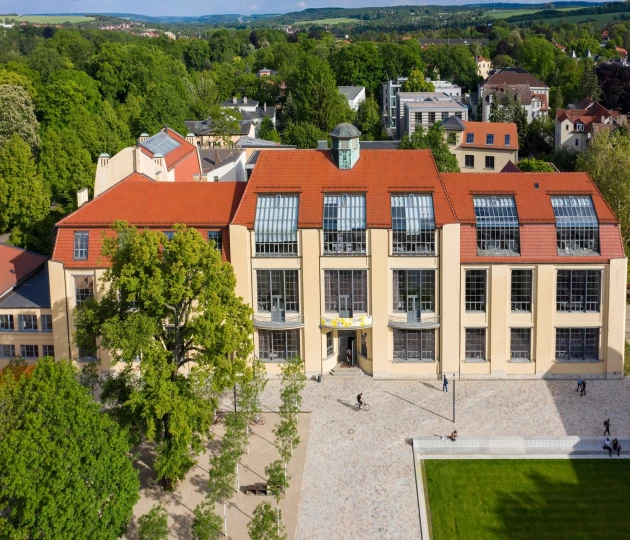
Cultural Landscapes & Urban Resilience
    Tuition Fee
    EUR 500
    Next IntakeAugust 8, 2021

    Cultural Landscapes & Urban Resilience

    About

    Learn about the influence of human-made and natural factors on the built environment and develop responsive planning schemes for more resilient cities! In this two-week intensive course, you will gain a deep insight into the influence of human-made and natural factors on the built environment and develop responsive planning schemes for more resilient cities. You will learn about various aspects of urban resilience from environmental and cultural perspectives, using different tools, scientific methods, and analysis, including GIS techniques. Resilience in the face of natural risks Based on the robustness and readiness of our built environment and the vulnerabilities these variables may encounter, urban resilience is often difficult to assess when it comes to its integration and implementation in everyday reality. In order to take unexpected occurrences of natural hazards – such as earthquakes, floods, or droughts – into account and to become reactive in the built space, disciplines related to spatial development are increasingly important. An interdisciplinary, transcultural, and integrated urban design approach In this course, the overarching topic of urban resilience is studied from a transcultural perspective. Furthermore, the process of change that forms the cultural landscapes for urban resilience requires an interdisciplinary approach that takes diverse aspects for building schemes and planning processes into account. In these two weeks, you will learn how to develop such an integrated urban design approach. Among other topics, the course will include: Setting parameters for urban resilience Complexity of integrated urban development concepts and realities Analytical approaches to urban heat islands (at the neighbourhood level and beyond) Societal ideals and the impact of urban green on the urban environment Drawing out a comparative study between informal and formal settlements Learn how affected areas can be connected to user-oriented systems Consequences from the case studies for integrative planning schemes From a general overview to a specific case study — from theory to practice The course includes lectures on more general approaches to integrated urban development and urban sustainability but also takes a closer look at urban resilience in the context of climate-sensitive planning by analysing urban heat islands and different building typologies and urban patterns. Part of the programme is GIS training and application in order to map such heat islands of informal and formal housing areas using a practical, illustrative case study. Based on these findings, you will get the chance to create practical design solutions that respond to urban heat in physical, cultural, and social contexts. Accompanying programme You will also have the opportunity to take part in the vast and varied social programme that the Bauhaus Summer School has prepared. Meet participants from all over the world at the game night, international food evening, free visit to the cinema, or when diving into the exciting cultural options that Weimar has to offer! We look forward to welcoming you in the summer!

    Fee Information

    How to Apply

    https://www.uni-weimar.de/summerschool/en/home/

    Cultural Landscapes & Urban Resilience

    Bauhaus University Weimar

    Bauhaus University Weimar

    Germany

    Germany, Weimar