
Environmental Chemistry
    Duration4 year(s)
    Tuition Fee
    USD 16,206 / Semester
    Next IntakeAugust 28, 2023
    Environmental Chemistry

    About

    Ph.D. Degree

    Environmental chemistry focuses on the chemical processes influencing the composition and chemical speciation of natural systems (air, water and soils), the chemical fate and mobility of contaminants in the environment, chemical processes that affect the toxicity and bioavailability of contaminants, and chemical aspects of contaminant remediation and pollution prevention. The common link is a focus on the underlying chemical structure, reactivity and mechanisms that dictate the extent and rates of environmentally important chemical reactions. Environmental chemistry is a challenging field, requiring core training in physical, analytical, organic and inorganic chemistry, and an understanding of how these disciplines can be applied to complex environmental systems. It also provides a quantitative and fundamental approach to understanding the processes that influence the quality of the environment.

    The Department of Chemistry and Biochemistry offers B.S. and M.S. via concentrations under the chemistry degree. The program provides education and research opportunities focused on the molecular scale aspects of environmental science. The program defines three tracks to meet a wide range of student interest:

    1. atmospheric chemistry,
    2. aqueous/environmental geochemistry, and
    3. environmental toxicology and contaminant fate.

    Students may also design a custom focus area, subject to approval by their advisory committee.

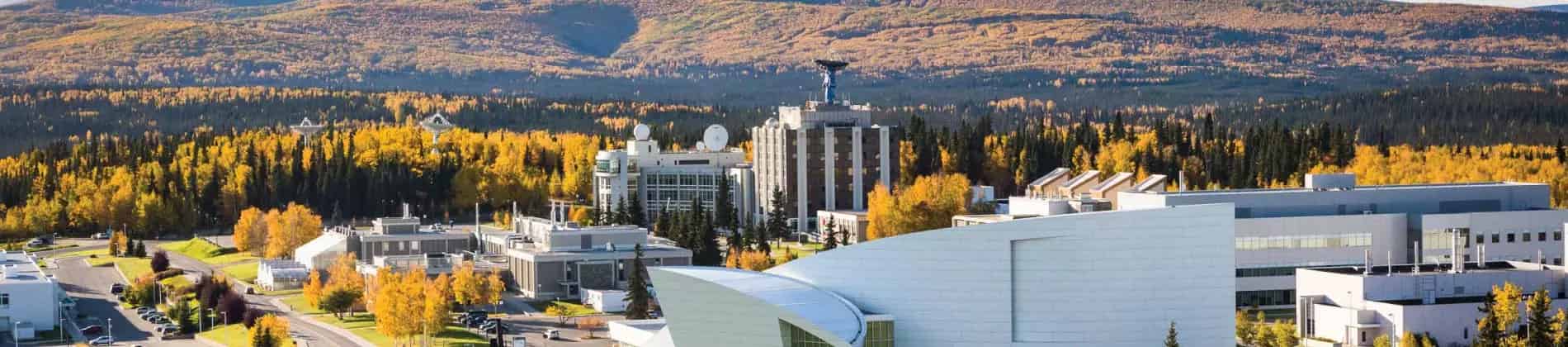
    Our faculty are involved in a wide range of projects from field studies of chemical transformation and transport, to laboratory and modeling studies of the basic mechanisms of environmental reactions, to the development of novel chemistry useful in contaminant remediation. The program is centered in the Reichardt Building on the Fairbanks campus which houses state-of-the-art classrooms, laboratories and computer facilities to support education and research activities. Located in Interior Alaska, UAF is home to numerous research institutes and centers that focus on Arctic science and engineering and provide great opportunities for collaboration and cross-disciplinary studies focused on the chemistry of polar and sub-Arctic systems.

    The Ph.D. program in environmental chemistry provides advanced training in the concepts and methods of molecular environmental sciences with the expectation that Ph.D. recipients will be acknowledged as experts in their particular topic of study. This is accomplished primarily through the Ph.D. dissertation, which is a body of independent research that presents new findings on forefront topics related to molecular processes in the environment. The Ph.D. in environmental chemistry prepares students for careers in academia or the public and private research sectors. Graduate students in the environmental chemistry program are typically supported through teaching and research assistantships or fellowships. Students interested in a M.S. degree focusing on environmental chemical problems should see the M.S. chemistry with concentration in environmental chemistry program.

    Minimum Requirements for Environmental Chemistry Doctoral Degree: 32 credits

    College of Natural Science and Mathematics
    Department of Chemistry and Biochemistry
    907-474-5510
     

    Requirements

    Entry Requirements

    Certificate/Associate Degree Programs

    • at least 18 years old, or
    • have a high school diploma, or
    • have a General Educational Development (GED) diploma.

    Bachelor Degree Programs

    • Have a high school diploma, and
    • Pass the 16-credit high school core curriculum with at least a 2.5, and
    • Have a cumulative GPA of 2.5, and
    • Submit ACT or SAT test scores
      • If you are applying to UAF for the academic years 2021-22, 2022-23, 2023-24, 2024-25 or summer 2025, your ACT and SAT scores will be waived.

    If you don't meet these requirements, contact an admissions counselor. You may have options to begin a degree or certificate program, such as starting as a pre-undeclared student or as a non-degree student.

    The admission qualifications for international applicants are the same as domestic applicants with the addition of:

    • Proof of English Proficiency
    • Official diploma for institutions who do not list a degree and graduation date on the transcript

    Please refer to the other student types (Freshmen, Transfer or Graduate) for program qualifications.

    Minimum required English proficiency:

    • A minimum TOEFL score of 79.
    • A minimum IELTS score of 6.5.
    • Completion of secondary education in Great Britain, New Zealand, Australia or Canada (excluding Quebec).

    Requests for exception to this policy may be submitted via email to the Office of Admissions. Acceptable grounds for waiving this requirement may include:

    • Successful completion (C or higher) of a college-level, non-ESL English composition course.
    • A comparable score on another approved exam such as the ACT, SAT or EdReady exam.

    International Transcripts: Send official secondary school and/or university transcripts to World Education Services (WES) and request a comprehensive course-by-course credential report. Transcripts from Canadian institutions (excluding Quebec) are exempt from this requirement; they may be sent directly from the issuing institution.

    English Requirements

    • IELTSMin 6.5
    • TOEFLMin 79

    Fee Information

    Application Fee 75

    How to Apply

    To start your adventure at UAF, your first step will be to apply for admission. We offer a fast and convenient online application. 

    Once you are admitted into a degree program at UAF, we’ll start preparing your I-20 — the form needed to apply for the F-1 student visa and to enter the U.S. in student status. This process can take up to 7-10 business days once all documents have been received.

    You'll also send your official secondary school and/or university transcripts to a NACES-approved evaluation service and request a comprehensive course-by-course credential report. Transcripts from Canadian institutions (excluding Quebec) are exempt from this requirement; they may be sent directly from the issuing institution.
    SpanTran is a NACES-member company that has created a custom application for UAF students. We recommend using the UAF SpanTran Evaluation Request Form to ensure you get the right kind of evaluation at a discounted rate.

    In order to issue your immigration documents, we must receive the UAF Financial Statement for International Students (PDF) and supporting documentation. We’ll also need a copy of your passport identification page.

    Your immigration documents will be mailed to the address you provided, along with your official letter of acceptance and information about applying for your visa and travel to Alaska.

    You must have a student visa to study in the United States. UAF offers documents for two student visa types (F and J) depending on the type of program you attend. As part of the application process, you’ll also need to schedule a visa interview.

    Environmental Chemistry
    University of Alaska Fairbanks
    University of Alaska Fairbanks
    United States of America

    United States of America, Fairbanks