
Human-Computer Interaction (HCI)
    Duration2 year(s)
    Next IntakeJanuary 10, 2021

    Human-Computer Interaction (HCI)

    About

    In the English-language Human-Computer Interaction (HCI) Master of Science programme, students acquire sound knowledge on theoretical and practical state-of-the-art methods and technologies in the fields of interface design, usability and interactive system development with a focus on technical aspects. The research-oriented programme is taught by internationally renowned professors. It also offers students the opportunity to participate in interdisciplinary research and design projects. As part of their electives, students can attend courses from the Computer Science for Digital Media Master's degree programme as well as from all non-Computer Science degree programmes at the university, including Art and Design, Media Studies, Media Management, and other faculties of Bauhaus-Universität Weimar. The international Master's degree programme is accredited by ACQUIN. It has already attracted students from all over the globe. The programme is based on the following pillars: (a) The study of current topics within the field of human-computer interaction and psychology: usability and user study methods; user-centred design and user interface testing; innovative interface technologies in virtual reality, computer vision and image analysis, adaptive systems, mixed reality, ubiquitous computing, and graphic interfaces (b) Acquisition of key skills and competences through a project-based study approach that includes active training of scientific communication, presentation, and written skills in small groups Students work in modern laboratories of the research groups at the Digital Bauhaus Lab and other on-campus buildings, which provide an excellent infrastructure including highly precise eye tracking equipment, 3D printers and other rapid prototyping technologies, unique multi-user stereoscopic projection, latest generation of head-mounted displays, a high resolution tiled display wall with multi-touch, 3D scanners, various unmanned aerial vehicles, and more. They are regularly involved in research and development projects during their studies and in international publication activities. Good students may also find teaching and research assistantships or other jobs at the university and with local companies. Usability is becoming ever more important for computer systems, particularly as ubiquitous computing becomes pervasive. The ability to design complex systems and user interfaces with regard to usability and appropriateness for the usage context increases in importance. Job adverts for software developers often request knowledge of usability and interface design. Our graduates can work both in software development, in particular in conception and development of novel interface technologies, and in the area of usability and user research, which are both growing in demand.

    Requirements

    Entry Requirements

    The prerequisite for admission to the Master's degree programme is a Bachelor of Science degree in computer science, media informatics, media technology, or related fields with a strong component of computer science. English skills at level B2 (CEFR)  FAQ on the application:https://www.uni-weimar.de/de/medien/studium/medieninformatik-computer-science-for-digital-media-hci/faq-application-hci/

    Fee Information

    How to Apply

    Prospective students who have obtained their first university degree outside the European Union (EU) must apply via: www.uni-assist.de. Applicants who graduated within the EU and do not need a visa should apply online at: http://www.uni-weimar.de/online-bewerbung.

    Human-Computer Interaction (HCI)

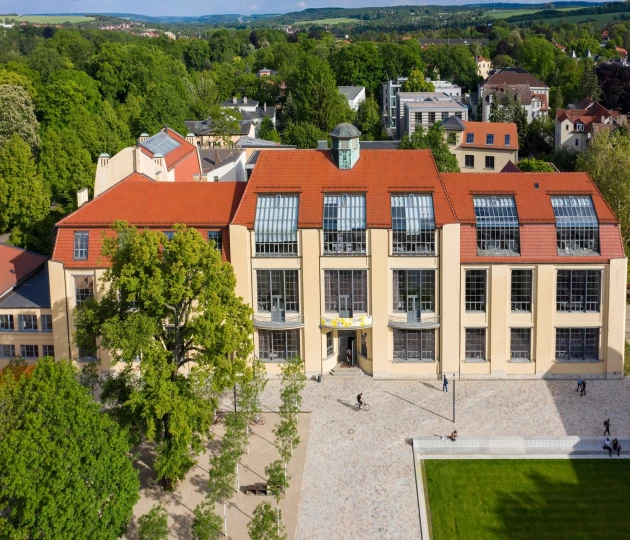
    Bauhaus University Weimar

    Bauhaus University Weimar

    Germany

    Germany, Weimar