
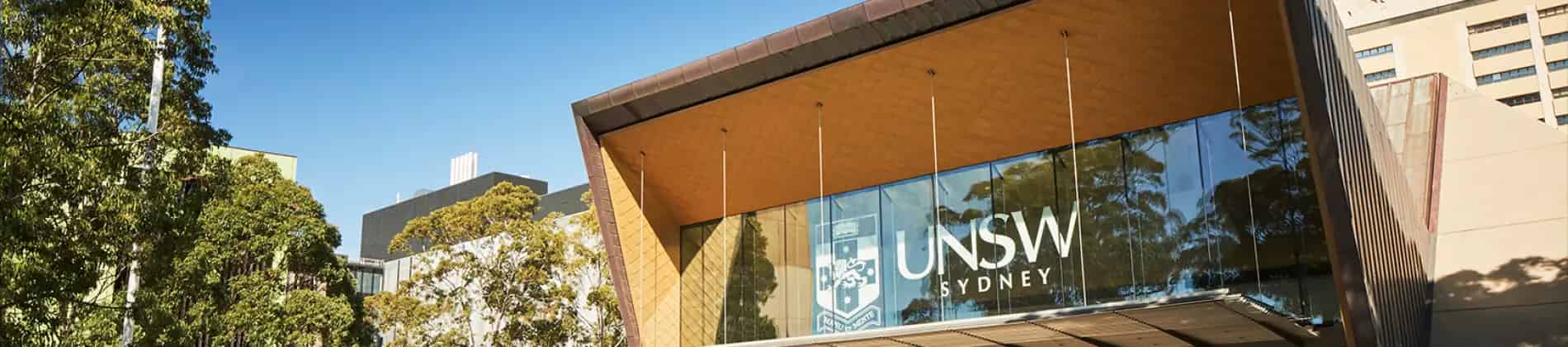
Master of International Relations

    Master of International Relations

    Duration2 year(s)
    Tuition Fee
    AUD 30,612 / Year
    Next IntakeJuly 1, 2026

    Master of International Relations

    About

    The UNSW Master of International Relations recognises the complexity and the globalised nature of today’s world, and is specifically designed to advance your understanding of global politics and foreign policy. Through this degree, you’ll critically examine theories and issues in contemporary world politics. You’ll explore international security, great-power rivalry, regional conflicts, nuclear proliferation, global environmental politics, civil conflict and terrorism, human rights, gender politics, international political economy, development and other pressing international issues.

    Alongside this, you’ll learn to understand how these concepts and theories in international relations shape our view of the world. You’ll graduate with the in depth knowledge and experience to work in a variety of sectors in Australia and internationally, from NGO’s to government organisations and multinational corporations.

    • Be supported by our diverse, open and inclusive Arts, Design & Architecture community.
    • Learn through research-informed teaching
    • Prioritise career success - UNSW won the Australian Financial Review's Most Employable Students Award in 2024.
    • Benefit from strong industry links and partnerships
    • Access world-class alumni connections
    • Join a global top 20 university (QS World University Rankings, 2024)
    • Join a community that’s part of the prestigious Group of Eight (Go8) universities

    Requirements

    Entry Requirements

    There are three different streams of the Master of International Relations. The stream you apply for will depend on the depth of your prior academic and/or professional experience, and how closely it relates to international relations

    If you apply for Stream A or Stream B, you may be eligible to have your study recognised via Recognition of Prior Learning (RPL). If your prior study is recognised, credit points can be counted towards the degree, and you would then be able to complete the coursework undertaking fewer subjects.

    For all three streams, you will need to meet the following admission requirements to be considered for entry into the program:

    For the 1 year stream (A)

    • Honours degree or Graduate Diploma* (or equivalent qualification) in a relevant discipline with a record of academic achievement equivalent to a UNSW credit average of 65%^.
    • Bachelor degree (or equivalent qualification) in a relevant discipline with a record of academic achievement equivalent to a UNSW credit average of 65%^, plus one year relevant professional experience.

    For the 1.7 year stream (B)

    • Bachelor degree (or equivalent qualification) in a relevant discipline with a record of academic achievement equivalent to a UNSW credit average of 65%^.
    • Bachelor degree (or equivalent qualification) in any discipline with a record of academic achievement equivalent to a UNSW credit average of 65%^, plus one year relevant professional experience.
    • Honours degree or Graduate Diploma* (or equivalent qualification) in any discipline with a record of academic achievement equivalent to a UNSW credit average of 65%^.

    For the 2 year stream (C)

    • Bachelor degree (or equivalent qualification) in any discipline with a record of academic achievement equivalent to a UNSW credit average of 65%^.

    *It is expected that a Graduate Diploma will have been completed after an undergraduate degree.

    ^Students from a non-211 university in China are now required to have a record of academic achievement equivalent to a UNSW distinction average (75%).

    Relevant disciplines include: Social Sciences; Humanities; Business; Economics; Law; Public Health; Communications.

    Applicants with a degree in a discipline not listed here but who wish to make a case for its academic relevance to these programs should enquire here: [email protected].

    English Program Requirements

    Faculty Undergraduate Postgraduate coursework Postgraduate research
    Arts, Design & Architecture

    6.5 overall (min. 6.0 in each subtest)


    Exceptions:

    • Bachelor of Education (Secondary): 7 overall (min 6.5 in writing & reading, 7.5 in speaking & listening)
    • Bachelor of Education (Primary) (Honours): 7.0 overall (min 7.0 in each subtest)
    • Bachelor of Social Work (Honours): 7 overall (min 7.0 in listening, reading, writing, and speaking)

    6.5 overall (min 6.0 in each subtest)


    Exceptions:

    • Master of Teaching (Primary & Secondary): 7.5 overall (min 7.0 in writing & reading, 8.0 in speaking & listening)

    7.0 overall (min 6.0 in each subtest)

    Career

    Future careers

    Upon completion of a UNSW Master of International Relations, you’ll be able to analyse world affairs and explore the many issues raised by the rapidly changing nature of world politics. You’ll do this through the advanced skills gained through your degree, enabling you to move into diverse careers that drive solutions to our most pressing global challenges.

    Potential careers

    • Public sector: Department of Foreign Affairs and Trade, Department of Home Affairs, Ministry of External Affairs (Mexico), Ministry of Foreign Affairs (Norway) and the Ministry of Defence (Singapore)
    • Private sector: Media Organisations, Trans- and Multi-national corporations, Industry and Financial Services
    • International Organisations such as the United Nations and the World Bank
    • Non-government Organisations in countries such as Australia, Indonesia, Malaysia, Canada, Thailand and Tonga
    Software Developer

    Fee Information

    Tuition Fee
    30,612 / year
    Application Fee 150

    Master of International Relations

    University of New South Wales

    University of New South Wales

    Australia

    Australia, Sydney