

- Cover the core mathematics required to successfully complete a Mining Engineering degree programme at the University of Exeter.
- Learn in a friendly and structured environment where you will be supported academically and personally as you prepare to study a Mining Engineering undergraduate degree.
- Provided you achieve the specific progression criteria, you will progress into Year 1 of the BEng Mining Engineering programme (Penryn Campus).
- Depending upon the qualifications you’ve gained prior to beginning the Foundation programme it may be possible to transfer to an undergraduate programme in Engineering, Mathematics, Natural Sciences or Physics which has a foundation year, provided you meet the entry requirements for that programme. Please note: year 1 of this course is taught at Streatham Campus in Exeter (Devon). For years 2-4 you will then move to the Penryn Campus (Cornwall). Who this course is for We believe that fair access to higher education is a fundamental enabler for social mobility and are committed to delivering this through our education. We aim to widen participation and raise attainment - bridging gaps in retention, progression and success - to ensure our students enjoy the best possible outcome. In support of the University’s Access and Participation Plan this course is only open to UK domiciled students who meet our contextual offer eligibility criteria, or are classed as Mature Students, and who may not have met the entry requirements for first year entry or have not been able to take A-level Mathematics alongside a BTEC L3 Extended Diploma. Check if you are eligible to join this programme on our contextual offer webpages. If you are an international student looking for a foundation course, please visit our INTO page.
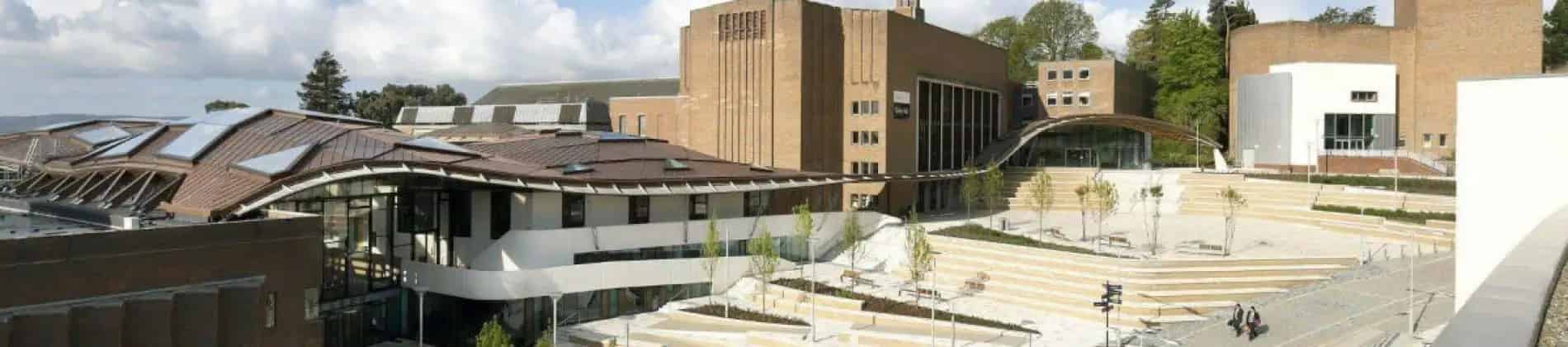
Mining Engineering with Foundation Year

University Rank:#170
Compare
Wishlist
Duration4 year(s)
Next IntakeSeptember 1, 2026
Mining Engineering with Foundation Year
About
Requirements
Entry Requirements
Eligibility criteria
| Qualification | Typical offer | Required subjects |
|---|---|---|
| A-Level | BCC | C in Maths and B in a Science* subject. (See below under 'read more') We will also accept AS Maths at A or Core Maths at A in lieu of A-Level Maths. |
| IB | 26/544 | Maths HL 4 or SL 6, and HL 5 in a Science subject. |
| BTEC | DMM | Applicants studying one of the following BTEC Extended Diplomas will be considered without GCE A-Level Maths and Science subjects: Construction and the Built Environment, Building Services Engineering, Civil Engineering, Engineering, Aeronautical Engineering, Electrical and Electronic Engineering, Manufacturing Engineering, Mechanical Engineering |
| GCSE | 4/C | Grade C or 4 in GCSE English language |
| Access to HE | 19 L3 credits at Distinction grade and 26 L3 credits at Merit Grade | 12 L3 credits in Maths at Pass Grade and 12 L3 credits at Merit Grade or above in another Science subject |
| T-Levels | T-Levels not accepted | N/A |
NB General Studies is not included in any offer.
In support of the University’s Access and Participation Plan this course is only open to UK domiciled students who meet our contextual offer eligibility criteria and who may not have met the entry requirements for first year entry or have not been able to take A-level Mathematics alongside a BTEC L3 Extended Diploma. Check if you are eligible to join this programme on our contextual offer webpages.
*Accepted GCE A-Level/AS science subjects include: Biology/Human Biology; Chemistry; Computing; Design and Technology; Electronics; Environmental Science; Environmental Studies; Geography; Geology; Life and Health Sciences; Physical Education; Physics; Psychology; Science (applied); Statistics.
English Program Requirements
Test Name: IELTS Academic, IELTS Online, IELTS One Skill Retake and IELTS Indicator (IELTS – Academic version)
Required Score: 6.0 overall and no less than 6.0 in any section
Test Name: TOEFL iBT, TOEFL iBT Home Edition, TOEFL iBT Paper Edition and TOEFL MyBest scores
Required Score: Overall score 87 with minimum scores of 21 for writing, listening, reading and speaking.
Test Name: Pearson Test of English (Academic) PTE
Required Score: 64 overall with no less than 64 in all communicative skills
Test Name: LanguageCert International ESOL SELT
Required Score: B2 Communicator with minimum 33 in writing, speaking, listening & reading
Test Name: LanguageCert Academic
Required Score: 65 overall and no less than 65 in any skills score
Test Name: INTO Pre-sessional English
Required Score: 60 and no less than 60 in any sub-section
Test Name: Study Group Academic English
Required Score: Minimum of 60% overall, no less than 60% in any section
Test Name: Skills for English: SELT
Required Score: B2 Pass
Test Name: Duolingo English Test - test taken up to 30th June 2024
Required Score: 110 overall and no less than 110 in Literacy, 95 in Conversation, 110 in Comprehension and 90 in Production
Test Name: Duolingo English Test - test taken from 1st July 2024
Required Score: 110 overall and no less than 110 in any Integrated Subscore
Career
Careers
This programme will prepare you for graduate-level employment by developing a number of the skills and attributes that are valued by employers. These include the ability to:
- engage imaginatively in the process of understanding and analysing contemporary international arts, and acquire the analytical tools necessary for an understanding of them.
- promote a sense of the complex social, cultural, and institutional interactions between the production and reception of contemporary art and acquire the critical tools necessary to reflect upon these interactions.
- engage critically with theoretical perspectives, major debates, and intellectual paradigms in the fields of art history, visual culture and arts criticism, and to encourage comparative reflection on the shared and contested knowledge produced therein.
- understand the historical evolution of key concepts and procedures, in arts practice, art criticism and curatorship, and to consider the distinct and shared ways in which these concepts and procedures have developed within and beyond particular national traditions as well as different institutional contexts.
- to develop a comparative understanding of the ways in which aesthetic judgements are constructed and aesthetic processes are experienced with regards to contemporary art.
- acquire a sense of the distinctive social and cultural importance of the contemporary arts through an intellectually stimulating and satisfying experience of learning and studying.
- develop the basis for further study in art history, gallery studies, or related disciplines.
- develop a range of subject-specific, academic and transferable skills, including high-order conceptual and visual literacy and communication skills of value in graduate employment.
Opportunities
The MA will provide you with the opportunity to undertake a placement or research project with an organisation from the sector, enabling students to apply their knowledge in a business setting. A number of the University’s graduate attributes will be developed through study of the programme, including engaging as an active and committed global citizen.
Skills
The programme is international in its focus and encourages you to understand the social, cultural and economic issues that surround the contemporary art world. The skills you develop are therefore transferable into a broad range of employment contexts, both related to the arts sector and beyond. For example, the Art Writing module will equip you to: produce texts suitable for a variety of different platforms: including briefing documents, arts criticism, catalogue writing, exhibition texts, interpretation materials, podcasts and online content.
Potential career paths
- Public galleries / museums
- Curation
- Commercial galleries and dealerships
- Arts Investment and Wealth Management
- Arts and Culture Policy
- Heritage Management
- Academia
- Culture Management: Government Departments / Advisory Boards
- Marketing, PR and Communications
Fee Information
Mining Engineering with Foundation Year
The University of Exeter

United Kingdom, Exeter