
Natural Hazards and Risks in Structural Engineering (NHRE)

    Natural Hazards and Risks in Structural Engineering (NHRE)

    Duration2 year(s)
    Next IntakeOctober 1, 2021

    Natural Hazards and Risks in Structural Engineering (NHRE)

    About

    (1) The Master's degree programme "Natural Hazards and Risks in Structural Engineering" is an intensive and application-based, advanced course of study. The programme is intensively supervised and research-oriented. It provides students with a solid technical basis in the key areas of structural engineering through a coherent and coordinated programme, integrating research and practical applications. (2) The degree programme enables students to acquire excellence in oral and written skills. By providing students with advanced scientific and interdisciplinary knowledge, they are able to take on demanding engineering tasks in the areas of planning, construction and realisation of structures under specific conditions. They are also able to carry out site- or structure-specific risk analysis using modern tools to estimate the threat of natural hazards. In addition to strengthening their theoretical and scientific competence, students develop skills in modelling, simulation and application of performance-based design, fieldwork and laboratory investigations. In order to structure and reflect the complexity of the chain reactions inherent to natural hazards, this programme explores in detail various engineering disciplines and engineering-related areas of the natural sciences, social sciences and economics. It examines the central role that structural engineering plays in reducing the impact of natural disasters. Furthermore, it focuses on the engineering methods that are used to assess and reduce the vulnerability of structures. The programme highlights the demands on engineering technology at both regional and global level by using international projects as models. The elective compulsory modules expand on specific lines of development; they equip and prepare students systematically for future professional careers or further research positions.

    Requirements

    Entry Requirements

    The minimum qualification of admission to this programme is normally a Bachelor of Science degree in civil engineering or an equivalent university degree, a degree from a college of public administration, or a degree from a government or accredited professional school. The examination committee must ensure that the candidate's prior degree is equivalent to that of the Bachelor's programme in civil engineering. If not, the examination committee may attach additional conditions for admission, which the candidate must meet. The final grade for the first professionally qualifying Bachelor of Science degree should generally be 2.5 or better.

    Fee Information

    How to Apply

    Bauhaus-Universität Weimar c/o uni-assist e.V. 11507 Berlin Germany

    Natural Hazards and Risks in Structural Engineering (NHRE)

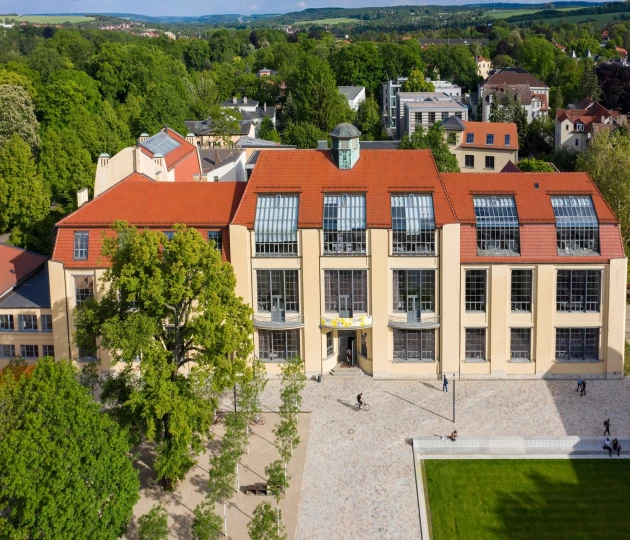
    Bauhaus University Weimar

    Bauhaus University Weimar

    Germany

    Germany, Weimar