
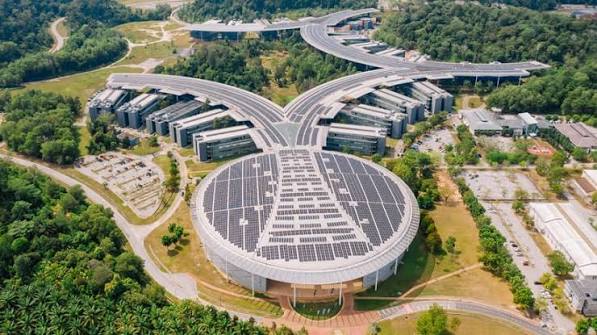
Bachelor of Electrical and Electronic Engineering at University Teknologi PETRONAS

    Bachelor of Electrical and Electronic Engineering at University Teknologi PETRONAS

    0
    Bachelor of Electrical and Electronic Engineering at University Teknologi PETRONAS

    University Teknologi PETRONAS offers the Bachelor of Electrical and Electronic Engineering as a full-time degree delivered on campus at its main campus in Batu Gajah, Malaysia. Taught in English and completed over 5 years, the program equips students with the theoretical knowledge and practical skills required for electrical and electronic engineering and related professional fields. The next available intake begins on September 6, 2027.

    About Bachelor of Electrical and Electronic Engineering

    Overview IntroductionElectrical & Electronics Engineering (EE) have always been one of the important engineering disciplines within the engineering society. EE contributions are not limited to areas with applications such as telecommunications, computer systems, and power engineering but also extended into areas of applications such as in manufacturing, information technology and many more. Unlike other engineering disciplines, EE is very dynamics and sensitive to technological advancement in the world. In fact, most technological revolution starts from Electrical and Electronics.Electrical & Electronics engineers are involved in the design and development of modern high technology applications, such as, automation for electromechanical systems, computer systems, embedded systems, or electronic control systems applied in process plants, renewable energy, automotive industry, aerospace, and even maintenance. In other words, Electrical & Electronics engineers are in high demand in various fields. Graduates in this EE are highly sought after by potential employers.At higher levels, students of the Electrical and Electronics Engineering programme at Universiti Teknologi PETRONAS are exposed to data and computer networking, digital signal processing, electrical machines, power systems, control systems, communication systems, instrumentation and power electronics. In the final year, students have the opportunity to major in one of these selected areas of their interest:Computer and CommunicationInstrumentation and ControlPower Systems EngineeringElectronics & DevicesProgramme OutcomesApply knowledge of mathematics, natural science, engineering fundamentals and engineering specialisation to the solution of complex engineering problems.Identify, formulate, conduct research literature and analyse complex engineering problems reaching substantiated conclusions using first principles of mathematics, natural sciences and engineering sciences.Design solutions for complex engineering problems and design systems, components or processes that meet specified needs with appropriate consideration for public health and safety, cultural, societal, and environmental considerations.Conduct investigation of complex engineering problems using research-based knowledge and research methods including design of experiments, analysis and interpretation of data, and synthesis of information to provide valid conclusions.Select and apply appropriate techniques, resources, and modern engineering and IT tools, including prediction and modelling, to evaluate complex engineering problems, with an understanding of the limitations.Apply reasoning informed by contextual knowledge to assess societal, health, safety, legal and cultural issues and the consequent responsibilities relevant to professional engineering practice and solutions to complex engineering problems.Evaluate sustainability and impact of professional engineering work in the solutions of complex engineering problems in societal and environmental contexts.Apply ethical principles and commit to professional ethics and responsibilities and norms of engineering practice.Function effectively as an individual, and as a member or leader in diverse teams and in multi-disciplinary settings.Communicate effectively on complex engineering activities with the engineering community and society.Apply knowledge of engineering management principles and economic decision making in one's own work, as a member and leader in a team, to manage projects in multidisciplinary environments.Recognise the need for, and have the preparation and ability to engage in independent and life-long learning in the broadest context of technological change. I want to find another Bachelor Course
    The Electrical and Electronics Engineering programme at Universiti Teknologi PETRONAS emphasises on a strong foundation in physics, mathematics, and chemistry, followed by a thorough coverage of basic electrical and electronics engineering courses such as circuit theory, analogue electronics, digital electronics, microprocessor, and signal & systems. 

    Disciplines

    Electrical EngineeringElectronics & Embedded Technology

    Requirements and Admission Criteria for Bachelor of Electrical and Electronic Engineering at University Teknologi PETRONAS

    English Requirements

    • IELTSMin 5
    • TOEFLMin 59

    Other Requirements

    1Minimum Grade: Pass with at least Principal C (or 2.00) in Mathematics, Physics and ChemistryMinimum Grade: Pass with at least Grade C in Mathematics, Physics and ChemistryMinimum Grade: Pass with minimum 24 Points including at least Point 4 in Mathematics, Physics and ChemistryMinimum Grade: Pass Matriculation Program in relevant field from an Institution which is recognised by the Malaysian Government with at least a final CGPA of 3.00/4.00

    Tuition and Fee Information for Bachelor of Electrical and Electronic Engineering at University Teknologi PETRONAS

    Bachelor of Electrical and Electronic Engineering at University Teknologi PETRONAS
    University Teknologi PETRONAS
    University Teknologi PETRONAS
    Malaysia

    Malaysia, Batu Gajah

    WhatsApp student consultation with YouApply