
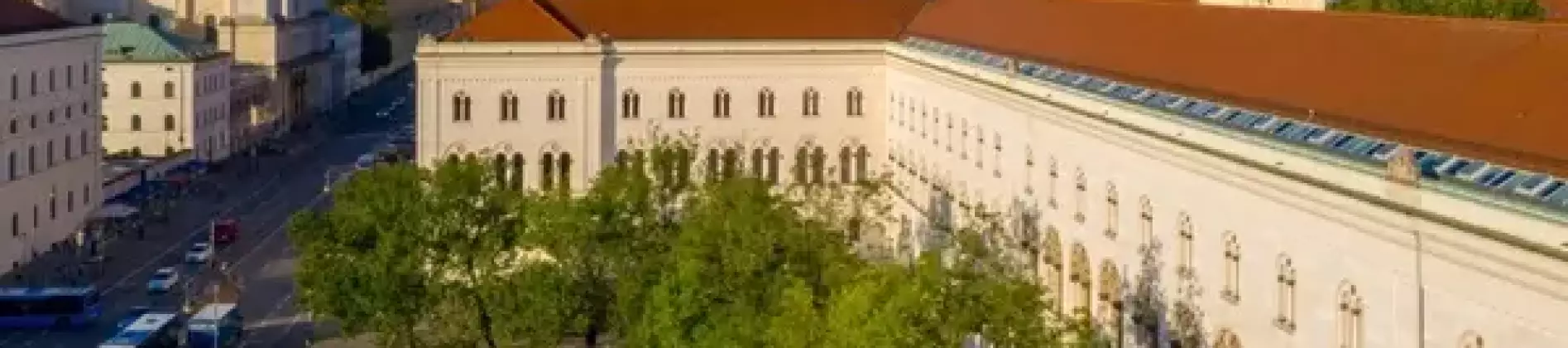
Bachelor of Nanoagents for Spatiotemporal Control of Molecular and Cellular Reactions (DFG-SFB 1032 Integriertes GRK) at Ludwig Maximilians University Munich

    Bachelor of Nanoagents for Spatiotemporal Control of Molecular and Cellular Reactions (DFG-SFB 1032 Integriertes GRK) at Ludwig Maximilians University Munich

    0
    Bachelor of Nanoagents for Spatiotemporal Control of Molecular and Cellular Reactions (DFG-SFB 1032 Integriertes GRK) at Ludwig Maximilians University Munich

    Ludwig Maximilians University Munich offers the Bachelor of Nanoagents for Spatiotemporal Control of Molecular and Cellular Reactions (DFG-SFB 1032 Integriertes GRK) as a full-time degree delivered on campus at its München campus in München, Germany. Taught in English and completed over 3 years, the program equips students with the theoretical knowledge and practical skills required for nanoagents for spatiotemporal control of molecular and cellular reactions (dfg-sfb 1032 integriertes grk) and related professional fields.

    About Bachelor of Nanoagents for Spatiotemporal Control of Molecular and Cellular Reactions (DFG-SFB 1032 Integriertes GRK)

    An ambitious goal in nanoscience is the vision of artificial assemblies with nanoscale architecture which operate at the molecular level and perform specific functions at a cellular level or within a cellular system, in short: nanoagents. The leading idea of the Collaborative Research Centre (Sonderforschungsbereich, SFB) 1032 is to design synthetic biomolecular constructs, nanoagents, which fulfil biomimetic or entirely novel functions. As highly motivated and well-trained junior scientists are a crucial cornerstone for the success of the SFB1032, the doctoral students profit from a well-reasoned training and supervision concept in an excellent scientific environment within the SFB's Integrated Research Training Group. The IRTG's purpose is to promote early research independence and continuing qualification of the doctoral researchers by ensuring excellent working conditions, by fostering the active involvement of the students, e.g., in research projects, conferences, and international exchange, and by offering a wide range of transferable skills seminars. A special emphasis is placed on establishing a scientifically stimulating and open atmosphere that will foster interaction between students from different disciplines. Additional support is offered by the GraduateCenter.

    Requirements and Admission Criteria for Bachelor of Nanoagents for Spatiotemporal Control of Molecular and Cellular Reactions (DFG-SFB 1032 Integriertes GRK) at Ludwig Maximilians University Munich

    Entry Requirements

    A Bachelor's degree (or equivalent, e.g., "Vordiplom") in physics, chemistry, or life sciences, plus a Master's degree (or equivalent, e.g., "Diplom")

    Tuition and Fee Information for Bachelor of Nanoagents for Spatiotemporal Control of Molecular and Cellular Reactions (DFG-SFB 1032 Integriertes GRK) at Ludwig Maximilians University Munich

    How to Apply for Bachelor of Nanoagents for Spatiotemporal Control of Molecular and Cellular Reactions (DFG-SFB 1032 Integriertes GRK) at Ludwig Maximilians University Munich

    https://www.portal.graduatecenter.uni-muenchen.de/ocgc/cens
    Bachelor of Nanoagents for Spatiotemporal Control of Molecular and Cellular Reactions (DFG-SFB 1032 Integriertes GRK) at Ludwig Maximilians University Munich
    Ludwig Maximilians University Munich
    Ludwig Maximilians University Munich
    Germany

    Germany, München

    WhatsApp student consultation with YouApply