
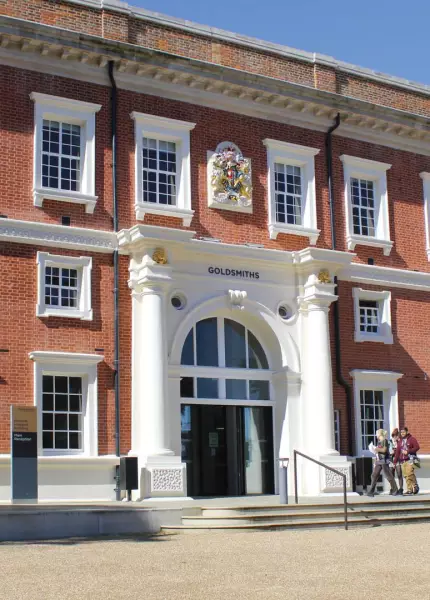

BSc (Hons) Creative Computing

    BSc (Hons) Creative Computing

    Duration3 year(s)
    Tuition Fee
    GBP 29,451 / Year
    Next IntakeSeptember 22, 2026
    BSc (Hons) Creative Computing

    About

    Whether you’re interested in creative coding, digital art, electronic music, or app and games development, this degree will prepare you for a technology-focused career in the creative industries.

    • BSc Creative Computing helps you develop the creative, technical and critical thinking skills essential for a career in creative technology and related areas – whether you're interested in app and games development, audio-visual effects, social media, digital art or digital advertising.
    • You’ll learn creative technology skills from the ground up. You don't need to know how to code before you join the course: we begin with the basics and build you up to a professional industry standard.
    • We’ll teach you multiple coding languages, covering areas such as graphics and sound, physical computing, creative AI and full-stack web development.
    • The degree will nurture your development not just as a technical expert, but also as a creative thinker, allowing you to learn and explore through a combination of technology and imagination.
    • This degree is hands-on and practical from the start. You’ll create your own games, apps, digital artwork and interactive music systems. By working on practical projects throughout your degree you’ll build a relevant skillset for your future career.
    • In your third year, you'll have the opportunity to undertake a year-long industry placement (making this programme four years full-time, or six years part-time). This gives you valuable experience to build confidence and contacts, further develop your skills and industry insight, and enhance your career prospects.

    Contact the department

    If you have specific questions about the degree, contact Dr Jamie Forth.

    Requirements

    Entry Requirements

    We accept the following qualifications:

    A-level: BBB
    BTEC: DDM
    International Baccalaureate: 33 points overall with Three HL subjects at 655
    UAL Extended Diploma: Merit overall
    Access: Pass with 45 Level 3 credits including 30 Distinctions and a number of merits/passes in subject-specific modules
    Scottish qualifications: BBBBC (Higher) or BBC (Advanced Higher)
    European Baccalaureate: 75%
    Irish Leaving Certificate: H2 H2 H2 H2

    Additional requirements

    If you do not have a Science or Mathematics-based A-level, you should normally have at least Grade B/Grade 6 at GCSE Mathematics.

    Alternative qualifications and experience

    See our full list of undergraduate entry qualifications.

    We welcome students with a range of educational experiences. If you believe you may not meet the standard qualification requirements we would still encourage you to apply because we consider all aspects of your application when making a decision.

    We’ll pay particularly careful attention to your personal statement, which is your opportunity to demonstrate your interest in the subject you’ve applied for. Your referees are also welcome to include any relevant contextual comments around your academic achievements. We’ll look at all these things when making a decision on your application, as well as your qualifications and grades, and may still be able to offer you a place.

    International qualifications

    We also accept a wide range of international qualifications. Find out more about the qualifications we accept from around the world.

    If English isn’t your first language, you will need an IELTS score (or equivalent English language qualification) of 6.0 with no element lower than 5.5 to study this programme. If you need assistance with your English language, we offer a range of courses that can help prepare you for degree-level study.

    Career

    This highly versatile degree is designed to prepare you for a range of careers in the creative technology sector. Graduates will be both technical experts and creative thinkers and makers.

    Where do Goldsmiths computing graduates work?

    Our graduates have gone on to work in areas such as:

    • Machine learning
    • Digital public art
    • Digital advertising
    • User interface and experience design
    • Music technology
    • Film/TV special effects and post-production
    • Software engineering

    Some of the recent graduate-level careers for computing alumni have included:

    • Machine learning developer
    • Mobile developer
    • Video game developer
    • Computer music/sound engineer
    • Full-stack web developer
    • Data analyst
    • E-learning programmer
    • Application programmer
    • App developer
    • Database manager

    Employers include:

    The pace of change in the computing sector is rapid, and you may be pursuing careers and using digital methods we cannot yet imagine. You can read more about possible career options after you graduate on our computing careers page.

    This programme is also a pathway into Masters-level study in a variety of computing disciplines.

    Skills

    Throughout the degree you will learn skills including:

    • Creative skills such as ideas generation and imagination, and using computation for creative expression
    • Technical skills including professional-level programming skills, front-end web development, and learning multiple coding languages (covering areas such as graphics and sound, physical computing, creative AL and full-stack web development)
    • Software analysis, design and implementation skills
    • An understanding of contemporary computing practice
    • Critical, analytical, creative, reflective and interpersonal skills that will prepare you for a career in industry or research, including the ability to work independently and in groups
    • Project management

    You'll be supported throughout the programme to understand the different potential career journeys you can follow, and to build a portfolio of work to demonstrate your capability to gain employment or freelance work in that area.

    Regular guest lectures from industry professionals will support your development of sector knowledge and awareness of different career paths.

    Industrial placement year

    If you decide to take the industrial placement year, you will develop the practical skills and real-world experience that is sought after by employers.

    Some of the companies BSc Creative Computing students have worked at during their work placement year recently include:

    Find out about the Goldsmiths Careers Service

    Fee Information

    Tuition Fee
    29,451 / year
    BSc (Hons) Creative Computing
    Goldsmiths, University of London
    Goldsmiths, University of London
    United Kingdom

    United Kingdom, London

    Go to Official Website
    WhatsApp student consultation with YouApply