
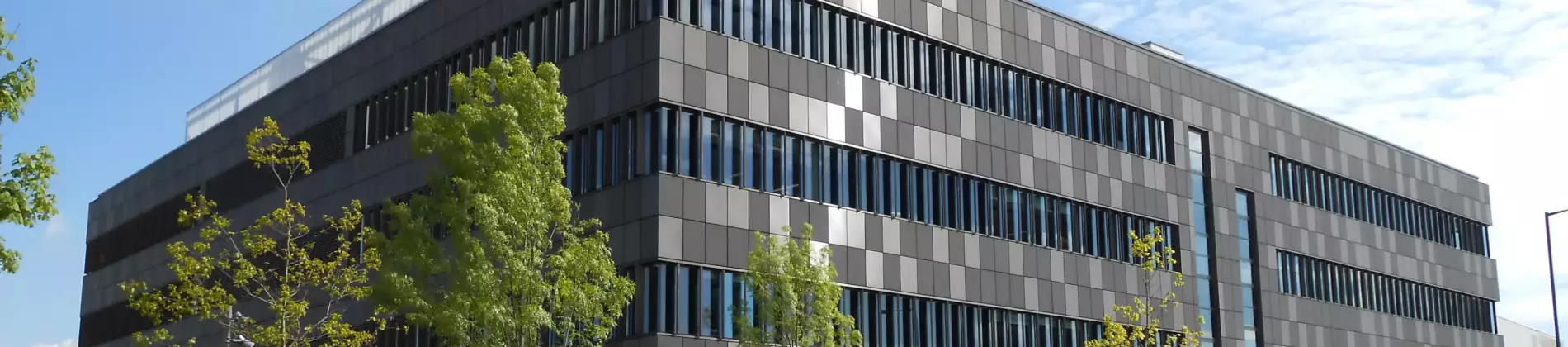
Sports Coaching BA (Hons) at Staffordshire University

    Sports Coaching BA (Hons) at Staffordshire University

    Sports Coaching BA (Hons) at Staffordshire University

    The Sports Coaching BA (Hons) at Staffordshire University is a Bachelor program designed for students who want to build the knowledge and skills required for careers in this field. Delivered on campus at the university's main campus in Stoke-on-Trent , United Kingdom, the program is taught in English and takes 4 years to complete. Students study in a Full Time environment while preparing for future professional opportunities. The next intake starts on September 25, 2026.

    About Sports Coaching BA (Hons)

    If you want to pursue a career in sports coaching and development, either in the UK or abroad, then our Sports Coaching degree is for you.

    Do you want to help athletes and teams perform to their absolute best? Or maybe you like the idea of helping to shape sports policy? Wherever your sporting ambitions lie, weâll give you the practical skills and knowledge youâll need to build a successful career in the sports industry.

    Supported by our research active educators, youâll take a multidisciplinary approach to sports coaching that encompasses sport pedagogy, psychology, sociology, policy and more.

    Youâll develop your practical coaching skills across a variety of sports and can tailor your learning by choosing a specialised sports coaching focus, or a broader study experience that incorporates greater sports development and sports sociology themes, particularly in the final year of your study.

    Through established partnerships with internationally recognised organisations, including UK Coaching, The FA, the RFU and Nippon Sports University, and regional sporting and educational organisations such as Sport Across Staffordshire and Stoke on Trent, Staffordshire University Academies Trust, Sir Stanley Matthews Sports Centre, Stoke City FC Community Trust and Port Vale FC Community Trust, youâll have the opportunity to assist with research projects, participate in additional coaching workshops and undertake coaching consultancy work to complement your studies.

    Youâll also have the chance to work with local, regional - and in some cases national - stakeholders to assist in delivering innovative and best coaching practices, and co-produce work to promote physical activity to marginalised populations.

    Industry leading technology

    Throughout the course, youâll use industry leading technology to enhance your skills and prepare you for a job in industry:

    • NVivo and SPSS are used in research methods modules and can be employed within your independent research projects.
    • Dartfish (a sports performance analysis software platform) and Global Positioning System Technology (wearable technology) are used to dissect individual and/or team performance and track the movement demands of individual and team sport performance.
    • In the physiology module, youâll work in our dedicated labs using equipment including Cortex Metalyzer (to measure resting metabolic rate), Biodex (for isokinetic testing), BodPod Body Composition System, Bio-Pac ECG (to measures electrical activity of the heart) and Bio-Pac EMG (to evaluate the response of muscle against nerve stimulation).

    Do you want to help athletes and teams perform to their absolute best? Or maybe you like the idea of helping to shape sports policy? Wherever your sporting ambitions lie, weâll give you the practical skills and knowledge youâll need to build a successful career in the sports industry.

    Supported by our research active educators, youâll take a multidisciplinary approach to sports coaching that encompasses sport pedagogy, psychology, sociology, policy and more.

    Youâll develop your practical coaching skills across a variety of sports and can tailor your learning by choosing a specialised sports coaching focus, or a broader study experience that incorporates greater sports development and sports sociology themes, particularly in the final year of your study.

    Through established partnerships with internationally recognised organisations, including UK Coaching, The FA, the RFU and Nippon Sports University, and regional sporting and educational organisations such as Sport Across Staffordshire and Stoke on Trent, Staffordshire University Academies Trust, Sir Stanley Matthews Sports Centre, Stoke City FC Community Trust and Port Vale FC Community Trust, youâll have the opportunity to assist with research projects, participate in additional coaching workshops and undertake coaching consultancy work to complement your studies.

    Youâll also have the chance to work with local, regional - and in some cases national - stakeholders to assist in delivering innovative and best coaching practices, and co-produce work to promote physical activity to marginalised populations.

    Industry leading technology

    Throughout the course, youâll use industry leading technology to enhance your skills and prepare you for a job in industry:

    • NVivo and SPSS are used in research methods modules and can be employed within your independent research projects.
    • Dartfish (a sports performance analysis software platform) and Global Positioning System Technology (wearable technology) are used to dissect individual and/or team performance and track the movement demands of individual and team sport performance.
    • In the physiology module, youâll work in our dedicated labs using equipment including Cortex Metalyzer (to measure resting metabolic rate), Biodex (for isokinetic testing), BodPod Body Composition System, Bio-Pac ECG (to measures electrical activity of the heart) and Bio-Pac EMG (to evaluate the response of muscle against nerve stimulation).

    On successful completion of study, we will issue the following award: BA (Hons) Sports Coaching

    On successful completion of study, we will issue the following award: BA (Hons) Sports Coaching

    Work placements

    The second year of your studies incorporates a Student Placement module where the experience and skills of your preferred career can be refined and supported by experienced practitioners and university staff.

    Placement providers include:

    • Stoke City FC - Youth Academy and Womenâs team, and Community Trust
    • Port Vale FC - Youth Academy and Womenâs team, and Foundation Trust
    • Bee Active
    • Local Schools
    • Staffordshire FA
    • A variety of local sports clubs
    • Lichfield Rugby Union Football Club - Men, women, and junior teams
    • Welsh Rugby Union – Age-grade player pathway programs

    Youâll also have the chance to undertake a ‘Real World Projectâ and present to prospective employers the reflections and findings of your project.

    • Enquire about this course
    • Book an Open Day
    • Apply now

    This course will help you to develop yourself to a high professional standard; youll be ready to work and excel in todays dynamic sports industry. Youll acquire the skills and knowledge to work within the sports development and coaching sector, with modules covering content relating to various aspects of sports coaching, sports development, management, sports sociology and sports policy.

    In your second year, youll typically spend one day each week on a mandatory work placement. Working in a well-supported sports-related professional environment, you will fine-tune your future career path and significantly increase your employability prospects.

    This course will prepare you for employment in a range of roles within the Sport and Physical Activity sector, which contributes approximately £40 billion to the UK economy each year and employs approximately one million people. Staffordshire University is one of only a few Universities working in partnership with the Chartered Institute for the Management of Sport and Physical Activity (CIMSPA), your professional development body.  This demonstrates our commitment to supporting you to reach your career goals, access free ongoing CPD, networking opportunities and access to your chartered professional body.  In your first year, your CIMSPA student membership will be included at no additional cost; for more information on the benefits of student membership please visit CIMSPA.

    On completion of the course you will should have had the opportunity to improve your employability prospects and get your career off to a great start as a sports coach. 

    This course will help you to develop yourself to a high professional standard; youll be ready to work and excel in todays dynamic sports industry. Youll acquire the skills and knowledge to work within the sports development and coaching sector, with modules covering content relating to various aspects of sports coaching, sports development, management, sports sociology and sports policy.

    In your second year, youll typically spend one day each week on a mandatory work placement. Working in a well-supported sports-related professional environment, you will fine-tune your future career path and significantly increase your employability prospects.

    This course will prepare you for employment in a range of roles within the Sport and Physical Activity sector, which contributes approximately £40 billion to the UK economy each year and employs approximately one million people. Staffordshire University is one of only a few Universities working in partnership with the Chartered Institute for the Management of Sport and Physical Activity (CIMSPA), your professional development body.  This demonstrates our commitment to supporting you to reach your career goals, access free ongoing CPD, networking opportunities and access to your chartered professional body.  In your first year, your CIMSPA student membership will be included at no additional cost; for more information on the benefits of student membership please visit CIMSPA.

    On completion of the course you will should have had the opportunity to improve your employability prospects and get your career off to a great start as a sports coach. 

    Academic year

    The course operates on a modular basis that provides flexibility and choice. Typically the majority of modules are 30 academic credits with a smaller number of 15 credit modules. Each credit taken equates to a total study time of around 10 hours. Total study time includes scheduled teaching, independent study and assessment activity. Full-time students take modules worth 60 credits per semester, with part-time students taking proportionately fewer credits per semester. All students take a total of 120 credits per level and 360 credits for the degree as a whole. Your overall grade for the course and your degree classification are based on the marks obtained for modules taken at levels 5 and 6.  The full-time course has one start point in September.

    The course operates on a modular basis that provides flexibility and choice. Typically the majority of modules are 30 academic credits with a smaller number of 15 credit modules. Each credit taken equates to a total study time of around 10 hours. Total study time includes scheduled teaching, independent study and assessment activity. Full-time students take modules worth 60 credits per semester, with part-time students taking proportionately fewer credits per semester. All students take a total of 120 credits per level and 360 credits for the degree as a whole. Your overall grade for the course and your degree classification are based on the marks obtained for modules taken at levels 5 and 6.  The full-time course has one start point in September.

    Teaching

    The course adopts an interdisciplinary approach to the study of sports coaching. Modules that centre on pedagogical aspects of understanding effective and contemporary methods of coaching have lead lectures delivered by university staff, Visiting Teaching Fellows and guest lecturers.

    These are followed by coaching practicals which cover a broad range of sports and inclusive physical activities like multi-skills. There is a mixture of how these practicals are delivered. On occasions staff led these to offer examples of contemporary practices with students having the chance to work with staff to co-deliver these sessions to peers and external groups, such as college students and school pupils. Students are then encouraged to collaborate with peers and independently deliver sessions with support and guidance from staff as they progress through their studies.

    Other modules that focus on the cultural aspects of sport and physical activity, employ a blended learning approach whereby in person lectures and seminars are complemented with independent learning activities or online sessions via Microsoft Teams.

    Seminars enable you to discuss and constructively develop your understanding of topics covered in lectures in smaller groups of around 16-18 students.

    Throughout your studies, staff leading modules are research active, providing contemporary insights into each discipline of sports coaching and producing evidence-based teaching content. There are regular opportunities to voluntarily assist with research projects, additional coaching workshops and coaching consultancy work to complement your studies.

    The course adopts an interdisciplinary approach to the study of sports coaching. Modules that centre on pedagogical aspects of understanding effective and contemporary methods of coaching have lead lectures delivered by university staff, Visiting Teaching Fellows and guest lecturers.

    These are followed by coaching practicals which cover a broad range of sports and inclusive physical activities like multi-skills. There is a mixture of how these practicals are delivered. On occasions staff led these to offer examples of contemporary practices with students having the chance to work with staff to co-deliver these sessions to peers and external groups, such as college students and school pupils. Students are then encouraged to collaborate with peers and independently deliver sessions with support and guidance from staff as they progress through their studies.

    Other modules that focus on the cultural aspects of sport and physical activity, employ a blended learning approach whereby in person lectures and seminars are complemented with independent learning activities or online sessions via Microsoft Teams.

    Seminars enable you to discuss and constructively develop your understanding of topics covered in lectures in smaller groups of around 16-18 students.

    Throughout your studies, staff leading modules are research active, providing contemporary insights into each discipline of sports coaching and producing evidence-based teaching content. There are regular opportunities to voluntarily assist with research projects, additional coaching workshops and coaching consultancy work to complement your studies.

    Assessment

    Your course will provide you with opportunities to test your understanding of your subject informally before you complete the formal assessments that count towards your final mark. Each module normally includes practice orformative assessments, for which you receive feedback from your tutor. Practice assessments are developmental and any grades you receive for them do not count towards your module mark. There is a formal orsummative assessment at the end of each module. This includes a range of coursework assessments, such as essays, reports, portfolios, performance, presentations, final year, independent project and written examinations. The grades from formal assessments count towards your module mark.

    Your course will provide you with opportunities to test your understanding of your subject informally before you complete the formal assessments that count towards your final mark. Each module normally includes practice orformative assessments, for which you receive feedback from your tutor. Practice assessments are developmental and any grades you receive for them do not count towards your module mark. There is a formal orsummative assessment at the end of each module. This includes a range of coursework assessments, such as essays, reports, portfolios, performance, presentations, final year, independent project and written examinations. The grades from formal assessments count towards your module mark.

    Learning support

    In addition to the excellent support you will receive from your course teaching team, our central Academic Skills team provides group and one-to-one help to support your learning in a number of areas. These include study skills (including reading, note-taking and presentation skills); written English (including punctuation and grammatical accuracy); academic writing (including how to reference); research skills; critical thinking and understanding arguments; and revision, assessment and examination skills (including time management).

    Additional support

    Our Student Inclusion Services support students with additional needs such as sensory impairment, or learning difficulties such as dyslexia.

    Feedback

    You will normally receive feedback on coursework assessments within 20 working days following the date of submission. Examination feedback may take a variety of formats. However, as a minimum, generic feedback will be made available to all students who take written examinations.

    You will normally receive feedback on coursework assessments within 20 working days following the date of submission. Examination feedback may take a variety of formats. However, as a minimum, generic feedback will be made available to all students who take written examinations.

    Disciplines

    School of Health Science and Wellbeing

    Requirements and Admission Criteria for Sports Coaching BA (Hons) at Staffordshire University

    Entry Requirements

    Undergraduate

    Undergraduate (bachelors) degrees

    To apply for an undergraduate (bachelors) degree you need one of the following qualifications:

    • Community College Diploma / Associate Degree with a minimum grade GPA of 2.5
    • International Baccalaureate (IB) Diploma with 28 points overall
    • Successful completion of a relevant International Foundation Year from a recognised UK Institution
    • For A-Level requirements, please see the ‘entry requirements’ section on the relevant course page

    Integrated masters and two-year accelerated degrees

    To apply for an integrated masters or two-year accelerated degree you need one of the following qualifications:

    •  Community College Diploma / Associate Degree with a minimum grade of 2.8
    • International Baccalaureate (IB) Diploma with 30 points overall
    • Successful completion of a relevant International Foundation Year from a recognised UK Institution
    • For A-Level requirements, please see the ‘entry requirements’ section on the relevant course page

    English Requirements

    • PTEMin 59
    • IELTSMin 6

    English Program Requirements

    The majority of our undergraduate bachelor degree courses require a minimum overall IELTS score of 6.0, with 5.5 in reading, writing, speaking and listening. However, we also accept a wide range of qualifications from around the world. The following qualifications are acceptable for most of our Bachelor degree courses.

    Career Opportunities after Completing Sports Coaching BA (Hons)

    Careers

    Example careers and earnings include:

    • Sports Performance Analyst (starting @ £18,000 with progression to £36,000)
    • Community Sports Coach (starting @ £16,000 with progression to £21,000)
    • School Teacher (starting at £25,000 with progression to £41,000)
    • College Lecturer (starting at £27,000 with progression to £45,000)
    • Sports Development Officer (starting at £16,000 with progression to £30,000)
    • Sport, Health and Wellbeing Leader (starting at £16,000 with progression to £31, 000)
    • Women’s Sports Participation Officer (starting at £16,000 with progression to £29,000)
    • Inclusion Sports and Physical Activity Officer (starting at £16,000 with progression to £25,000)
    • Sport and Physical Activity Operations Manager (starting at £16,000 with progression to £35,000)

    All students have access to Career Connect, our dedicated careers team.

    CIMSPA

    Tuition and Fee Information for Sports Coaching BA (Hons) at Staffordshire University

    How to Apply for Sports Coaching BA (Hons) at Staffordshire University

    • Contact one of our approved overseas education representatives in your country

    • Use the ‘apply now’ button on the undergraduate course pages to apply through UCAS. (Visit the UCAS website for more information). To do this, you'll need:

      • UCAS course code - you’ll find the four-digit code (e.g. P500) in our prospectus, on the course page or on the UCAS website.

      • An institution code for the university – it's S72 for Staffordshire University.

    Sports Coaching BA (Hons) at Staffordshire University
    Staffordshire University
    Staffordshire University
    United Kingdom

    United Kingdom, Stoke-on-Trent

    WhatsApp student consultation with YouApply