
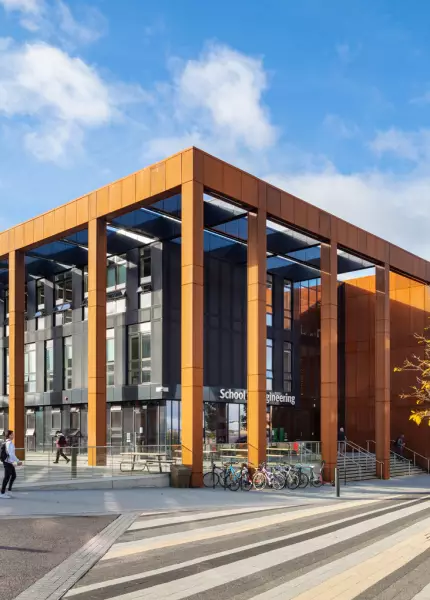
Science Communication,Postgraduate Diploma

    Science Communication,Postgraduate Diploma

    Duration18 month(s)
    Tuition Fee
    GBP 22,525 / Year
    Next IntakeSeptember 1, 2026
    Science Communication,Postgraduate Diploma

    About

    Introduction

    Based in our renowned Science Communication Unit, this flexible Master's is led by expert staff from this ever-evolving field. The course provides students with a contemporary knowledge of science communication practice underpinned by cutting-edge research, combined with extensive industry links.

    The Science Communication Unit (SCU) at UWE Bristol is recognised for internationally leading research, creative approaches to practice and outstanding teaching. Our MSc Science Communication gives you an excellent opportunity to benefit from the Unit's international expertise, resources and contacts. It provides those new to the field with a knowledge of research and practice that's in demand by employers. The course also offers those with some experience an opportunity to develop new innovative approaches to their work.

    Why study MSc Science Communication?

    The Science Communication Unit is well known and widely respected in the industry, as is our Science Communication Master's. The Unit's staff have extensive experience of science communication practice. Our research seeks to bring science and society closer together, as well as being societally relevant. It's developed in conjunction with those who practice science communication, with the aim of advancing the field.

    Bristol is a hub for science communication. It's home to BBC Studios, which produces a range of natural history programmes, including Frozen Planet, and the popular science magazine, BBC Science Focus. Bristol is also home to the award-winning science centre, We The Curious, which the Unit has collaborated with for over 15 years.

    As well as drawing on the academic and practical experience of staff within the Science Communication Unit, our MSc course gives you an opportunity to meet a range of visiting lecturers. Many of these work in the industry and you can benefit from their real-world practical experience. This also provides an excellent networking opportunity for students interested in developing contacts among science communication practitioners.

    The course is structured in a way that enables those working to study with us. It combines a solid theoretical background with practical skill development and has excellent links with the sectors and industries it informs. Visiting specialists also help you understand what they are looking for in future employees.

    Introductory modules provide a broad theoretical foundation in areas such as the rationale for public engagement with science, understanding the audience, the role of the media in society, communication theory and models of informal learning.

    You'll then specialise by choosing from optional modules in science writing, video and audio production for podcasts and vodcasts and face-to-face public engagement. Within these modules, you'll develop skills informed by the latest trends in science communication. You'll be provided with opportunities to hone your practical skills and develop a portfolio of work that showcases your expertise as a science communicator.

    A final project draws together your interests, by allowing you to focus in depth on one area. You may choose to explore an area of research or take a more practical approach, such as evaluating a science communication activity. We offer a number of projects hosted by external organisations, which gives you the opportunity to tackle a real-world problem.

    Inspirational and vocational

    The weaving together of theory and practice ensures our Science Communication Master's is intellectually stimulating while also providing the skills employers seek. Visit the Science Communication Unit Blog to find out more about our ongoing projects, as well as where some of our graduates are now working after the course.

    Please contact the Programme Leader if you would like more information.

    Comments from former students

    "When deciding where to study a master's degree, employability was a huge factor for me. I was keen to study somewhere that would teach me how to get stuck straight into the world of science communication. From day one in the Science Communication Unit, we were treated like professionals and encouraged to present ourselves as so to the rest of the sci-comm community." Siobhan, former MSc Science Communication student

    "My advice: if you're thinking about science communication, give it a go. Attend a taster, attend the Masterclass. It will be rigorous and challenging, but you'll walk away with skills and confidence to go after anything. I know I did. Then join me at NASA." Kassie, former MSc Science Communication student

    Requirements

    Entry Requirements

    We are pleased to confirm that our New students webpages are now available for students starting this course in September 2025. Here you can find links to useful information about registering, course start dates, arriving on campus what to expect before and when you arrive.

    We automatically send a message via your Welcome website plus an email to notify you once your Preparing to Study information is available. It is important that you regularly check your Welcome website for new messages.

    An honours degree (at least 2:2) awarded by a UK institute of higher education, or equivalent.

    As science communication is a field that requires cross disciplinary knowledge, skills, and/ or experience, we accept students with a range of backgrounds across the sciences, arts, humanities, and social sciences. For example, previous students have come from disciplines including natural and applied sciences, psychology, journalism, medicine, media studies, arts, mathematics, education, and engineering. We encourage you to contact the Programme Leader (Dr Amanda Webber) if you would like clarification on whether you meet the entry requirements.

    If you do not meet the above entry requirements but have at least 12 months relevant professional experience and/or equivalent qualifications, we will consider your application on an individual basis.

    UWE Bristol's International College

    International students who do not meet the academic or English language requirements to study this course can qualify by completing preparatory study at our International College.

    English language support

    If you meet the academic requirements but require additional support to take your language skills to the required level, you may be able to attend one of our pre-sessional English courses. Students who successfully complete the pre-sessional course can progress onto their chosen degree course without retaking an IELTS or equivalent.

    Read more about our Pre-Sessional English Programme.

    Career

    Careers

    Careers / Further study

    Science communication skills are in high demand in a wide range of sectors and industries, such as journalism, public relations, science centres and museums, science education, policy, professional consultancy and Research Council/learned institutions.

    Throughout our Science Communication Master's, you'll encourage you to develop the professional skills that'll help you secure employment or research positions. Successful employment for our graduates is essential to this course's success.

    To help you achieve your career goals we offer the following opportunities:

    • Learning Lab placements - Designed in collaboration with our students and host organisations. In recent years, students have been placed with BBC Science Focus Magazine, TV production company Films@59 and Select Science.
    • External Science Communication project - As part of the project module, you can apply for a project working with an external organisation. In the past students have worked with organisations including, the British Science Association, the British Geological Survey and the Green Man Festival.
    • Dedicated careers sessions - From the outset, you have access to sessions that help you build your skills and experience with specific careers in mind. For example, We The Curious provides a session for you to find out about volunteering with them.
    • The Postgraduate Science Communication Student Blackboard - Through this virtual learning environment we inform you about voluntary, placement and paid job opportunities. Employers contact us to advertise job opportunities with our students. After graduation, you can keep in touch with the team and other graduates as well as learning about job opportunities through on our LinkedIn group.

    Comments from local employers

    "We've been partnering with the MSc Science Communication for many years. We love sharing our Natural History Consortium programmes with the students, and each year offer a supervised project with our environment charity. These have ranged from audience development projects to developing content for national stakeholders working with UWE Bristol students always brings new thinking into our organisation so it really is win-win. We like to welcome students to volunteer or connect with our work throughout the year as we know that the opportunities for practical experience are one of the best things about the course. We regularly run into former students right across the industry and sector it's truly impressive to watch where they end up." Savita Willmott, Chief Executive, The Natural History Consortium.

    Fee Information

    Tuition Fee
    22,525 / year
    Science Communication,Postgraduate Diploma
    University of the West of England (UWE Bristol)
    University of the West of England (UWE Bristol)
    United Kingdom

    United Kingdom, Bristol

    Go to Official Website
    WhatsApp student consultation with YouApply