

- Synthesize theoretical and evidence-based knowledge from the sciences, humanities and nursing when planning and/or providing care in collaboration with individuals, families, groups, and communities.
- Apply critical inquiry and clinical reasoning, as a generalist, when planning and/or providing care to diverse individuals, families, groups, and communities across the lifespan, in a variety of community-based and institutional settings
- Synthesize thoughtful, focused reflection and reasoned judgment in the delivery and evaluation of nursing care, to improve nursing outcomes and nursing practice.
- Evaluate and revise effective and respectful communication strategies (written, verbal, electronic, and other appropriate technologies).
- Evaluate the effectiveness of communication skills with clients, groups and organizations, while maintaining appropriate confidentiality of information.
- Use information systems effectively to manage and evaluate care for diverse clients, families and groups and communities.
- Analyze the roles nursing plays in society.
- Participate actively in effective relationships with diverse clients, interprofessional teams, community agencies, and other stakeholders.
- Serve as a health educator for the purpose of developing attitudes, knowledge, skills, and behaviors to promote, protect, and restore health and assist the client in making informed health care choices.
- Institute activities to prepare for licensure and professional nursing practice.
- Analyze the role of nursing in global health, and the effects of global health issues on nursing practice.
- Demonstrate cultural competence when providing care for diverse individuals, families, groups and communities.
- Advocate for social justice, including commitment to the health of vulnerable populations and the elimination of health disparities.
- Manage nursing care in collaboration with clients and an interprofessional team, through coordination, delegation, consultation and referral.
- Model the professional nursing role based on accepted standards of practice, including accountability for one's personal and professional behaviors and development.
- Analyze the financial, legal and ethical implications of professional decisions involving individuals, groups, communities and organizations.
- Express informed positions on professional issues and trends, opportunities for advocacy, and strategies for social and political action for health and well-being.
- Explain the leadership role of nurses in addressing global health issues.
- Participate in practice settings, professional organizations, communities and government to improve nursing practice, nursing education, client care and the health care delivery system.
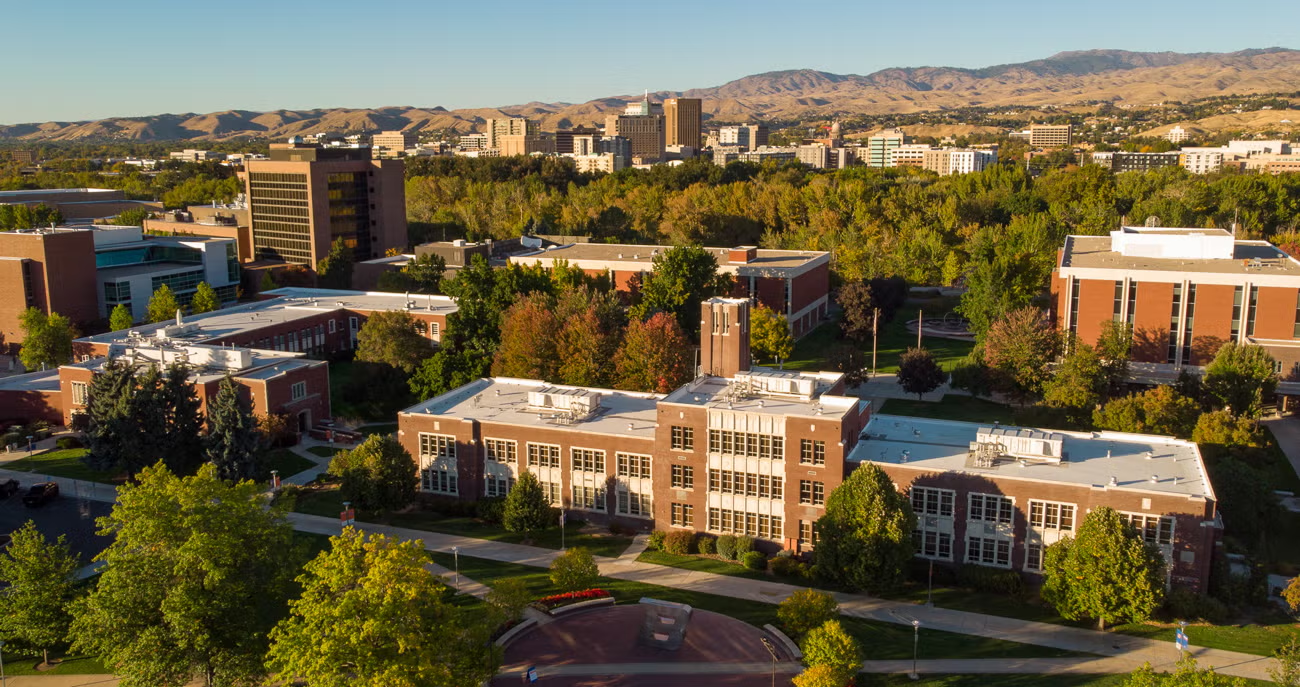
Bachelor of Science in Nursing, RN-BS Completion AA or AS Track at Boise State University
Bachelor of Science in Nursing, RN-BS Completion AA or AS Track at Boise State University
Study Bachelor of Science in Nursing, RN-BS Completion AA or AS Track at Boise State University, a Bachelor degree offered at its main campus in Boise , United States of America. This Full Time program is delivered on campus in English and takes approximately 4 years to complete. Students benefit from a structured learning experience designed to build both theoretical knowledge and practical experience. The next intake is scheduled for August 21, 2027.
About Bachelor of Science in Nursing, RN-BS Completion AA or AS Track
Disciplines
College of Health Sciences
Requirements and Admission Criteria for Bachelor of Science in Nursing, RN-BS Completion AA or AS Track at Boise State University
Entry Requirements
- Online application
- $85 application fee (non-refundable)
- High school transcripts or marksheets
- Proof of English proficiency
- Photocopy of your passport name page
English Requirements
- PTEMin 50
- IELTSMin 6
- TOEFLMin 68
Tuition and Fee Information for Bachelor of Science in Nursing, RN-BS Completion AA or AS Track at Boise State University
Application Fee 85
How to Apply for Bachelor of Science in Nursing, RN-BS Completion AA or AS Track at Boise State University
Once we have received all items, we will review your application and consider you for a place at Boise State. Admissions decisions are typically issued within two weeks of the completion of your application, though this can vary depending on the time of year and volume of applications we are receiving.
If you are accepted to Boise State and plan to study on an F-1 student visa or J-1 student exchange visa, you will need to submit a Financial Documentation Form and proof of sufficient funds in order to begin the process of applying for your student visa. If you are currently studying in the U.S. on an F-1 student visa, you will also submit copies of your current I-20, visa, and I-94 after being admitted to Boise State and will need to reach out to your current institution to request that your SEVIS record be transferred.
Bachelor of Science in Nursing, RN-BS Completion AA or AS Track at Boise State University

Boise State University

United States of America, Boise