

The dynamics within the healthcare industry are creating an information intensive environment that professionals must navigate as they deliver healthcare to patients. Clinical and non-clinical professions in the industry will be required to be knowledgeable and proficient in the development and usage of information technology. The future success or failure of healthcare organizations will be predicated on their abilities to effectively and efficiently manage the valuable asset of information. This curriculum blends the topics of leadership, system theory and management, technology, data management, and regulatory constraints so as to prepare graduates for critical leadership roles in healthcare organizations. As informatics leaders, graduates will assist in developing information systems in healthcare that positively impact patient care at an individual, local and national level.
Prospective students would come from a variety of education backgrounds, including, but not limited to health information management, nursing, radiology, patient financial services, health care government agencies, clinical and administrative decision support, computing services, and pharmacy. Employment opportunities upon completion would include a variety of challenging prospects, including, hospitals, clinics, health information exchanges, elevated decision support, database administrators, clinical documentation specialists, and consultants.
This program is classified as a STEM program.
JOB OPPORTUNITIES
As the health care industry develops, under vastly expanding regulatory mandates, there is a need for information systems that will meet the needs of all stakeholders and, the need to educate health informatics professionals will steadily increase. The American Medical Informatics Association (AMIA) boasts a membership of over 4000 members dedicated to advancing the health care industry through the deployment and diffusion of technology into the health care process. AMIA projects a need for more than 50,000 new health IT workers in the next five to seven years (http://www.amia.org). Additionally, the Bureau of Labor Statistics expects the job outlook for Health Service Managers to increase at a rate of 22% over the next seven years.
PROGRAM MISSION
In harmony with the mission of Loma Linda University and the School of Allied Health Professions, the Department of Health Informatics and Information Management is dedicated to:
Educating competent health informatics professionals.
Promoting the health informatics management profession.
Extending the current knowledge of health informatics professionals at neighboring health care facilities.
Challenging students and department faculty to maintain high standards of ethical and professional behavior.
Encouraging students and faculty to seek a meaningful relationship with God and a balanced Christian lifestyle.
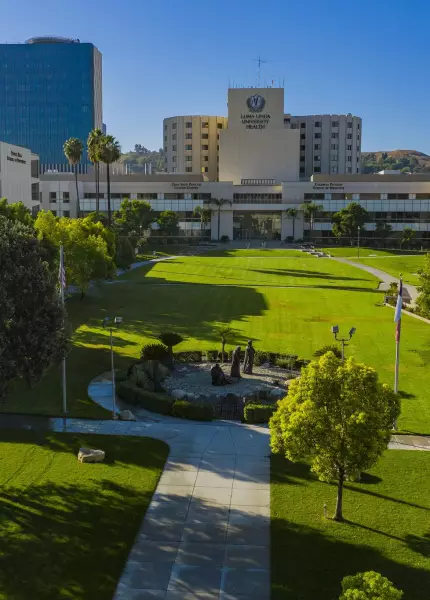
Master of Health Informatics at Loma Linda University
Loma Linda University offers the Master of Health Informatics as a full-time degree delivered on campus at its main campus in Aberdeen, United States of America. Taught in English and completed over 1 year 6 months, the program equips students with the theoretical knowledge and practical skills required for health informatics and related professional fields. The next available intake begins on August 7, 2026.
About Master of Health Informatics
Disciplines
Requirements and Admission Criteria for Master of Health Informatics at Loma Linda University
Entry Requirements
Each of Loma Linda University's eight schools evaluates the academic qualifications of individual applicants. Every effort is made to maximize the educational experience of international students during their time at Loma Linda University. In order to accomplish this, you must apply online and arrange for complete official transcripts, diplomas and/or certificates are needed to verify an applicant's educational background and qualifications. These documents, acquired from each educational institution attended by the applicant, must be sent directly to a credential evaluation service in the U.S. The credential evaluation service should be instructed to forward their evaluations to Loma Linda University records office at the following address:
University AdmissionsLoma Linda University
11139 Anderson Street
Loma Linda, CA 92350-0001
Admissions Questions
Contact the admissions office with any questions you have about how to fill out the online application or about the application process:
School of Allied Health Professions: [email protected]
School of Behavioral Health: [email protected]
School of Dentistry: [email protected]
School of Dentistry, Advanced Dental Education: [email protected]
School of Nursing: [email protected]
School of Medicine, MD: [email protected]
School of Medicine, Basic Sciences: [email protected]
School of Pharmacy: [email protected]
School of Public Health: [email protected]
School of Religion: [email protected]
English Requirements
- PTEMin 60
- IELTSMin 6.5
- TOEFLMin 80
Career Opportunities after Completing Master of Health Informatics
Employment opportunities include hospitals, clinics, health information exchanges, elevated managerial roles, system development, project management, electronic health record system specialists, clinical decision support, database administrators, clinical documentation specialists, and consultants.
Fee Information
How to Apply
A majority of the accepted prospective international students enter the U.S. on an F-1 student visa. For general information about studying in the U.S. please visit this website from U.S. Department of State or U.S. Department of Homeland Security. In order for potential prospective students to obtain F-1 visa status, they must first go through the procedure of obtaining an I-20 immigration document that is issued by LLU International Student & Scholar Services (ISSS). The following is a detailed step by step process to obtain the I-20.
Step 1: Apply to the program
Complete your application online (paper applications no longer exist), using either the CAS application process, the direct application process. or the non-degree application process.
Step 2: Acceptance to the program
Once acceptance has been granted and acceptance letter issued, the Admissions Office will send a copy of the letter and application to ISSS. When ISSS receives these copies, they will contact the prospective student via email and send a financial estimate and an information packet.
Some schools require a class holding fee to be paid directly to the school. If a fee is required, please pay it as soon as possible since the fee payment must be received in order for the prospective student to be “fully accepted” to the program.
Step 3: Financial Documentation & Deposit
ISSS will send a Certification of Finance and Acknowledgment forms to the prospective student via email. Both forms will have to be completed and returned to ISSS along with proof of financial funding (i.e. bank statement, bank letter, loan approval notice). Financial funding can come from any source as long as the sponsor or source can show financial documentation that is dated within 3 months of the date ISSS will issue the I-20. If the sponsor is a U.S. Citizen or a permanent resident, the sponsor must also complete the I-134 Affidavit of Support form. This form can be found at the U.S. Citizenship and Immigration Services website.
International student refundable deposit
Most prospective international students are required to pay an advanced deposit before ISSS can release the I-20. The Certification of Finance form will list the required deposit. Payment must be made to Student Finance by check (demand draft), credit card, cash or wire transfer.
Step 4: Processing the I-20
Once ISSS receives the financial documents and the deposit has been paid, ISSS will process and FEDEX courier the I-20 to any address.
Step 5: Apply for F-1 Student Entry Visa
After the student receives the I-20, they must use it to apply at the U.S. Embassy or Consulate for the F-1 student visa. Visit the U.S. Bureau of Consular Affairs website to learn more.
Step 6: Arrival in the U.S.
When the prospective international student arrives in the U.S., they have 10 days to report to ISSS. At the check in, copies of their I-20, passport, visa and I-94 will be made and a brief orientation will be given. Once the prospective student has gone through this process, ISSS will remove their international student registration holds so that they can complete their registration.


United States of America, Aberdeen