

The undergraduate program leading to the Bachelor of Science in Music degree comprises a grounding in foundational skills in music history and culture, performance, and music theory; a capstone Advanced Seminar; and a coherent program of electives chosen in consultation with the advisor. Five required subjects (one of which consists of two terms of performance, and two of which satisfy the CI-M requirement) and five restricted electives satisfy these requirements, but should be supplemented by additional electives. The program is analogous to those for music majors at leading liberal arts institutions and prepares a student for graduate study in music. Students should demonstrate proficiency in musical fundamentals and have performance experience before declaring the major and should consult the major advisor in music no later than the first term of their junior year.
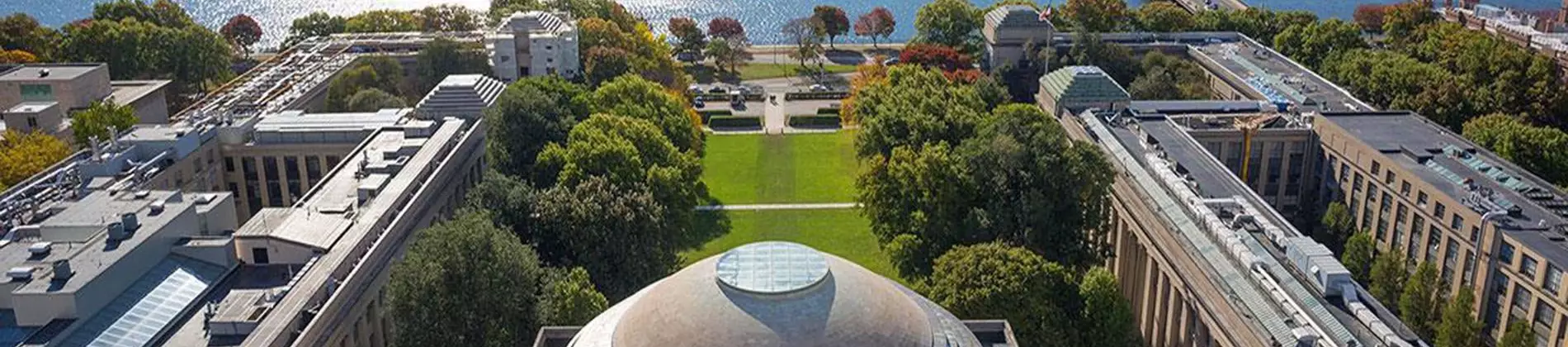
Bachelor of Science in Music (Course 21M) - Music and Theater Arts at Massachusetts Institute of Technology

The Bachelor of Science in Music (Course 21M) - Music and Theater Arts at Massachusetts Institute of Technology is a Full Time Bachelor program offered at the university's main campus in Cambridge , United States of America. The program is delivered on campus in English and can be completed in 4 year(s). Students develop academic knowledge and practical skills that prepare them for future careers in this field.
About Bachelor of Science in Music (Course 21M) - Music and Theater Arts
Requirements and Admission Criteria for Bachelor of Science in Music (Course 21M) - Music and Theater Arts at Massachusetts Institute of Technology
Entry Requirements
Most U.S. students apply to MIT at the beginning of their final year of high/secondary school, and international applicants should do the same. Most applicants are 17–19 years of age. Some may be younger, especially if they have studied ahead; some may be older, especially if their countries have mandatory military service after secondary school.
Students who have already enrolled02 Exceptions may be granted to students in the southern hemisphere, on an alternate calendar, who begin their college education <em>while</em> undergoing our application process. at another university—either in America or abroad—must apply to MIT as a transfer student.
What grades, coursework, and transcripts do I need to apply?
If you attended high school outside of the United States, your grades and subjects of study might have been very different from those of most American students. However, this will not negatively impact your application to MIT.
MIT admissions counselors are trained to understand the educational system in your part of the world. We do not try to convert your grades to the American system, or to find other sorts of equivalence. You will not be competing against your classmates or students in other parts of the world; we do not have caps or quotas for countries. We consider each student as an individual as they proceed through our process.
We do not have any required high school classes for domestic or international applicants. However, all students need to demonstrate minimum competence in fields they will continue to study at MIT. Visit our What to do in high school page to see what we recommend that all students study.
We require a Secondary School Report (SSR) with transcript to be sent by your high school counselor — if you don’t have a high school counselor, you can ask another equivalent school official to fulfill the requirement. Your high school transcript should include three years of grades and the results of any external examinations such as the International Baccalaureate, A Levels, French Baccalaureate, or CBSE, which are required for entrance to universities in your home country. We understand that many grades are not available until after decisions are made and ask that predicted grades be sent if available. Only admitted students are required to send final grades, and we understand that they will not be available until the summer months.
What tests do I need to take?
We require the SAT or the ACT from both prospective first-year and transfer students. We do not require the ACT writing or science sections or the SAT optional essay. We accept both the paper and digital SAT.
For non-native English speakers, we strongly recommend providing the results of an English proficiency exam if you have been using English for fewer than five years or do not speak English at home or in school, so that we may consider that information alongside the rest of your application
English Program Requirements
We do not have cutoff or recommended scores for the ACT or SAT as scores are evaluated within an applicant’s context. To view test score statistics from the most recent admissions year, visit our admissions statistics page.
We do have minimum and recommended scores for our English language tests. These minimums are in place to ensure your level of English proficiency. Because English is the language of instruction at MIT, all students must show that they will thrive in our community.
TOEFL (Taken before 1/21/26) — Minimum: 90 — Recommended: 100
TOEFL (Taken on or after 1/21/26)03 Effective January 21, 2026, TOEFL will adopt a 1–6 score scale (in 0.5 increments) to better align with global standards and simplify score interpretation. Visit the <a href="https://www.ets.org/toefl/test-takers/ibt/scores/understand-scores.html" target="_blank" rel="noopener">TOEFL Scores page</a> for more information. — Minimum: 5 — Recommended: 5.5
IELTS — Minimum: 7 — Recommended: 7.5
Pearson Test of English (PTE) Academic — Minimum: 65 — Recommended: 70
Cambridge English Qualifications (C1 Advanced or C2 Proficiency) — Minimum: 185 — Recommended: 190
Duolingo English Test (DET) — Minimum: 120 — Recommended: 125
Tuition and Fee Information for Bachelor of Science in Music (Course 21M) - Music and Theater Arts at Massachusetts Institute of Technology

United States of America, Cambridge