

Nursing - Master of Science at Michigan State University

University Rank:#161
Nursing - Master of Science at Michigan State University
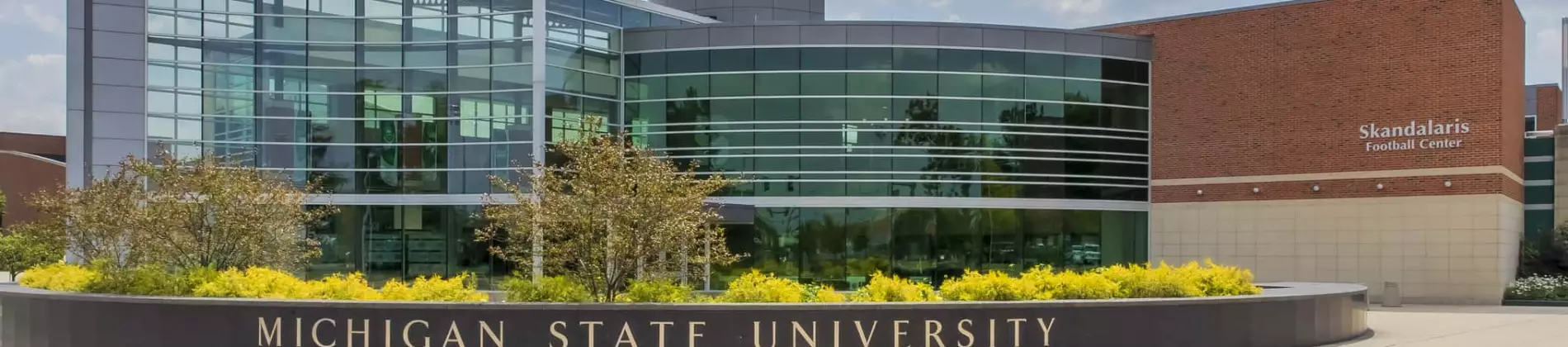
The Nursing - Master of Science is a Master degree offered by Michigan State University at its main campus in East Lansing , United States of America. The program is delivered on campus as a Full Time course in English and requires approximately 2 years to complete. Students study at the university's main campus while gaining the knowledge and practical experience expected for this area of study. The next intake is available from July 5, 2027.
About Nursing - Master of Science
The Master of Science in Nursing degree prepares graduates for roles that reflect current, emerging and expanding roles of nurses as providers and educators. The curricula for these advanced practice roles are designed in the context of related challenges, needs and increasing complexities within the systems of health care delivery, higher education, and professional nursing. The Master of Science in Nursing degree has been fully accredited by the Commission on Collegiate Nursing Education (CCNE).
The Master of Science in Nursing degree program consists of four concentrations. The Nurse Practitioner-Family, Nurse Practitioner-Adult Gerontology Primary Care, and Nurse Practitioner Psychiatric Mental Health concentrations focus on the preparation of advanced practice registered nurses as nurse practitioners. The Adult-Gerontology Clinical Nurse Specialist focuses on the preparation of advanced practice registered nurses specialized in acute care adult-gerontology practice.
Nurse practitioners are in a direct-care provider role, and use specialty skills and knowledge in providing care to clients of all ages and stages of development in primary care settings. The nurse practitioner curriculum prepares nurses to function interdependently with other health care providers to provide primary care. They assess the physical, socio-emotional, and developmental states of individual clients and their families, analyze health behavior, apply clinical judgment, and intervene in a manner to improve the quality and effectiveness of health care delivery. Nurse practitioners provide health promotion therapeutics, as well as early recognition and prompt treatment and management of illness, prevention of complications, and needed rehabilitation. Client and family education, guidance, and advocacy are vital characteristics of the nurse practitioner's role. Graduates of the program will be eligible for certification as a nurse practitioner in their population focus area.
The Adult-Gerontology Clinical Nurse Specialist concentration is designed to prepare registered nurses to assume an advanced practice role as a clinical nurse specialist. This graduate assumes a professional leadership role to inform nursing practice, education, and health care delivery systems in the design and implementation of strategies to improve organizational, educational, and individual client, student, and nurse provider outcomes. Advanced practice clinical expertise is reflected in the application of innovative evidence-based practice interventions and the development of collaborative relationships in order to address the health care needs of a diverse population. Graduates of the program will be eligible for certification as a Adult-Gerontology Clinical Nurse Specialist.
Students must meet the requirements of the university as described in the Graduate Education section of this catalog, in addition to the requirements of the College of Nursing specified below.
Students who are enrolled in the Master of Science in Nursing degree program may elect a specialization in Infancy and Early Childhood. For additional information, refer to the statement on Interdepartmental Graduate Specialization in Infancy and Early Childhood in the College of Social Science section of this catalog.
Requirements and Admission Criteria for Nursing - Master of Science at Michigan State University
Entry Requirements
To be considered for to the Master of Science in Nursing program, an applicant must have:
- Submitted a university application for and a curriculum vita.
- Completed a Bachelor of Nursing degree from an accredited college or university.
- Current unrestricted RN license without probationary status in the applicant’s state or country. For those applicants practicing in Michigan, a current Registered Nurse Michigan license is required. Applicants who hold Registered Nurse licensure from other states or countries and who are in the Nurse Practitioner concentration may be admitted provisionally with the requirement that a United States and Michigan Registered Nurse license must be obtained prior to progression to clinical courses.
- A minimum grade-point average of 3.0 (4.0 scale) for total credits completed during the second-half of the four-year baccalaureate nursing program.
- Completed a 3-credit undergraduate statistics course with a grade of 2.0 (4.0 scale) or better within the last five years or completed a 3-credit graduate statistics course with a grade of 3.0 (4.0 scale) or better within the last five years.
- Submitted a written essay that addresses the applicant’s career goals and motivations for graduate study in the selected area of specialty nursing practice: nurse practitioner or adult-gerontology clinical nurse specialist.
- Submitted three letters of recommendations. The reference letters must be from a source that has direct knowledge of the applicant’s work and educational experience specifying the applicant’s ability to do graduate work.
- Completed an interview with the College of Nursing faculty. Recommendations for are made by the faculty committee to the Dean of the College based on the requirements for and the personal interview.
- If the applicant’s native language is not English, the applicant must complete the Test of English as a Foreign Language (TOEFL) with a minimum average score of 550, no subscore below 52 on the paper-based test (PBT). If the applicant completes the Internet-based test (iBT), no subscore below 19 for reading, listening, and speaking; no writing subscore below 22 and a minimum average score of 80. Applicants should have all test scores sent from the testing agency directly to Michigan State University Office of s.
Provisional Status
Applicants who do not meet the requirements for regular to the Master of Science in Nursing program may be accepted provisionally. Provisionally admitted students are required to satisfy deficiencies as specified in the letter of and will be formally removed from provisional status once the deficiencies are satisfied. Students on provisional status may not progress in the program if deficiencies are not satisfied in the specified time frame.
Requirements for the Master of Science in Nursing Degree in Nursing
A total of 54 credits is required for the degree under Plan B (without thesis) depending on the student’s area of concentration. Students must meet the requirements specified below:
English Requirements
- PTEMin 53
- IELTSMin 6.5
- TOEFLMin 79
English Program Requirements
Due to cancellations of many international English language proficiency tests, MSU will be temporarily accepting the following tests for international students applying for fall semester 2022. In addition, MSU will be expanding the ability for students to receive provisional admission. If a provisionally admitted student is able to take a test that meets our regular admission standards prior to enrollment, we will update their admission status to regular.
Tuition and Fee Information for Nursing - Master of Science at Michigan State University
How to Apply for Nursing - Master of Science at Michigan State University
Plan for application fee
The $75 application fee is required to officially submit your application for admission.
Have official transcripts sent from your school
Request that all secondary schools, colleges, universities attended and/or examination boards send original or attested copies of all transcripts, marks sheets, certificates and diplomas earned directly to the Office of Admissions at Michigan State University. These can be sent through the online services listed below or by mail. If sending by mail, any hard copy of academic records must be sent in an official, sealed envelope.
Online services:
Parchment
Common App
Coalition for College
Naviance
eScrip-Safe
National Student Clearing House
Parchment
Common App
Coalition for College
Naviance
eScrip-Safe
National Student Clearing House
Mail:
Office of Admissions
Hannah Administration Building
426 Auditorium Road, Room 250
East Lansing, MI 48824-2604
Office of Admissions
Hannah Administration Building
426 Auditorium Road, Room 250
East Lansing, MI 48824-2604
In addition, if the original documents are not issued in English, an official translation of each document must be provided along with the original language documents. Translations may be done by the school, college or university attended or an authorized/official translator in the country of study. Review MSU's International transcript requirements for country-specific transcript information.
Note: Documents submitted to MSU as part of the application process will not be returned.
Select your major preference
As a freshman you do not have to officially declare your major yet, however you will be asked to select your major preference on the application. If you are undecided, select the "Exploratory preference" option.
Changing your major preference
After submitting the application, fall freshman applicants have until May 1 to change their major preference in their account. Any student who applies, or is admitted, after May 1 cannot change their major preference until they meet with an academic adviser at New Student Orientation (NSO).
Indicate any college-level course work completed
If you anticipate the completion of any college-level course work prior to attending MSU, it is recommended that you indicate this on your application or contact the Office of Admissions to let us know.
Submit English language proficiency test results
Have the testing agency (TOEFL, IELTS, SAT, MSUELT or MELAB accepted) provide proof of English proficiency directly to MSU if your first language is not English. MSU's TOEFL code is 1465. MSU is test optional, which means international students are encouraged, though not required, to submit SAT or ACT scores. The SAT code is 1465; the ACT code is 2032.
Review our full overview on English language proficiency for details on temporary exceptions due to the impact of the novel coronavirus — including additional tests being accepted and expanded opportunities for provisional admission.
Student visa requirements
In order to obtain the documents needed to file for a student visa (I-20 or DS-2019), admitted students must show adequate proof of financial support. Upon acceptance, admitted students will be required to upload a signed affidavit of support and bank statement with the name of the account holder in English through your admissions account. Please do not send financial documents in paper form at the time of application.
Do not send letters of recommendation
Do not send letters of recommendation, photographs, portfolios or additional personal essays. Doing so will delay processing of your application.
Nursing - Master of Science at Michigan State University
Michigan State University

United States of America, East Lansing