
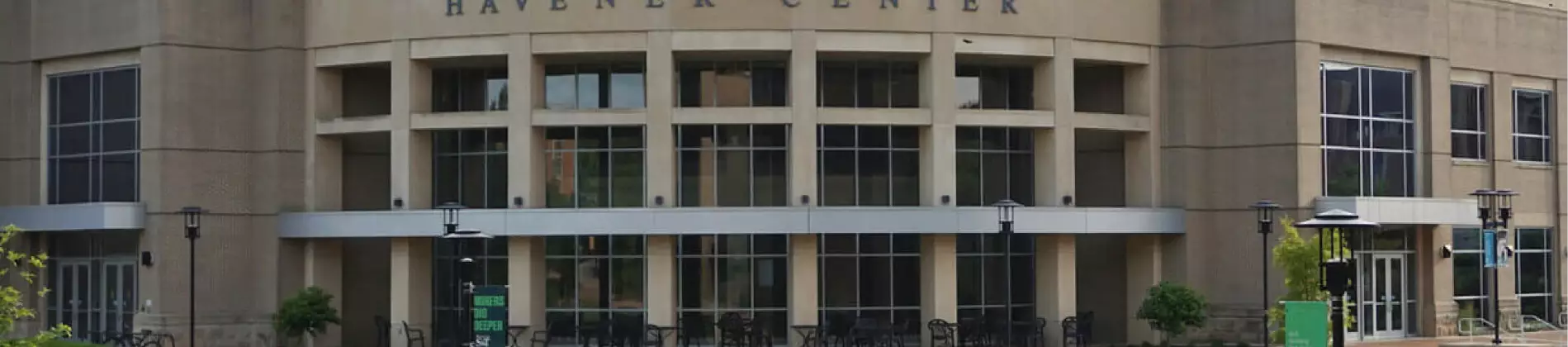

Bachelor of Environmental Engineering at Missouri University of Science and Technology

    Bachelor of Environmental Engineering at Missouri University of Science and Technology

    Bachelor of Environmental Engineering at Missouri University of Science and Technology

    The Environmental Engineering is a Bachelor degree offered by Missouri University of Science and Technology at its main campus in Rolla, United States of America. The program is delivered on campus as a Full Time course in English and requires approximately 4 years to complete. Students study at the university's main campus while gaining the knowledge and practical experience expected for this area of study. The next intake is available from August 21, 2027.

    About Bachelor of Environmental Engineering

    Environmental engineers uphold the dual goals of minimizing our impact on the local, regional, and global environment and concurrently improving public health and our standard of living. In this role of preserving environmental and public well-being, environmental engineers face unique issues and must have a strong background in the earth sciences to understand complex environmental problems and then pose and design appropriate engineering solutions. As problem solvers for something as diverse as "the environment," environmental engineers also need to understand the most current technologies used in practice and have a desire to maintain a high level of learning in this rapidly evolving field.

    Drinking water and wastewater treatment are cornerstones of the environmental engineering field, and students' education in these areas is thorough. Turning river, lake, or even sea water into drinking water requires a unique expertise because each water source offers distinctive challenges. Air pollution is a growing concern on scales ranging from the global atmosphere to the indoor environment. From a fundamental understanding of the chemistry and dynamics of air pollution, students learn how human activities degrade air quality and also how to evaluate and design control technology to reduce emissions from industry and other sources. The geology of a location greatly impacts its water resources, and comprehension of hydrogeology is important to an environmental engineer. The amount and quality of water a geologic formation can produce can influence and limit development of a region. Subsurface hydrology can be the most critical aspect in remediation of contaminated groundwater. Sustainable infrastructure, in themes of energy and environment, is yet another challenge that environmental engineers will have the opportunity to address in their careers and our faculty are engaged in the S&T sustainability minor and teach the core coursework in sustainability at S&T.

    The environmental engineering work place is diverse. Consulting firms represent a large portion of the work force and many specialize in areas of drinking water and wastewater treatment. The U.S. Environmental Protection Agency, state departments of natural resources, departments of health, and the U.S. Departments of Energy and Defense all have positions that require a wide array of skills and expertise.

    The courses and skills learned as an undergraduate student also provide preparation for graduate studies and advanced leadership roles. Many specialized positions require a graduate education. Within the Missouri S&T environmental engineering program, elective courses include topics such as water and wastewater; geo-environmental; air pollution and control; environmental chemistry and processes; environmental laws and regulation; and environmental microbiology and processes. Some courses are required in each of these areas to provide breadth, which allows graduates to interact with the wide range of professionals in this particularly interdisciplinary field. Project teams may include health care professionals, city planners, developers, and all types of engineers. Additionally, the ever-developing field of environmental engineering is saturated with legal issues, many of which are yet to have precedents or legal statutes established.

    Many courses include laboratory exercises in the environmental engineering program laboratories in the Butler-Carlton Civil Engineering Building. In addition to teaching laboratories, the laboratory facilities include a pilot-scale unit-operations laboratory, temperature control facilities, a roof-top greenhouse, and state of the art analytical facilities. Undergraduate-level research is encouraged and promotes participation in environmental research carried out, largely in the Center for Research in Energy and Environment. In summary, the diverse curricula, interdisciplinary faculty, and superb facilities afford students an excellent opportunity for an unparalleled education and prepare them for a bright future of solving tomorrow's problems in environmental engineering.

    Mission Statement

    The environmental engineering program will prepare students for a career in the global, interdisciplinary field of environmental engineering and for life-long development in the profession. The program's fundamental base in biological and earth sciences and development of specific engineering application skills prepares graduates to approach unique, atypical problems with a true problem-solving approach, develop solutions to benefit society and the environment, and promote these solutions.

    Environmental Engineering Program Educational Objectives

    Consistent with the mission statement, graduates of the Missouri S&T environmental engineering program will demonstrate, within a few years of graduation:

    1. professional development,
    2. technical competency,
    3. responsibility and knowledge of leadership,
    4. an ability to communicate effectively,
    5. an ability to work in teams, and
    6. a holistic view of problems within their field.

    Consistent with the program educational objectives listed above, the Missouri S&T environmental engineering program graduates will have:

    1. an ability to identify, formulate, and solve complex engineering problems by applying principles of engineering, science, and mathematics
    2. an ability to apply engineering design to produce solutions that meet specified needs with consideration of public health, safety, and welfare, as well as global, cultural, social, environmental, and economic factors
    3. an ability to communicate effectively with a range of audiences
    4. an ability to recognize ethical and professional responsibilities in engineering situations and make informed judgments, which must consider the impact of engineering solutions in global, economic, environmental, and societal contexts
    5. an ability to function effectively on a team whose members together provide leadership, create a collaborative and inclusive environment, establish goals, plan tasks, and meet objectives
    6. an ability to develop and conduct appropriate experimentation, analyze and interpret data, and use engineering judgment to draw conclusions
    7. an ability to acquire and apply new knowledge as needed, using appropriate learning strategies

    Requirements and Admission Criteria for Bachelor of Environmental Engineering at Missouri University of Science and Technology

    Entry Requirements

    • Missouri S&T seeks international students who have a strong probability of succeeding at the university. Admission is selective and based on a combination of secondary school core curriculum (a set of required secondary school classes), ACT and/or SAT composite scores (if available), grade point average (GPA), and class rank percentile. (For non-ranking schools, GPA will be used to evaluate your application).
    • International students must fulfill the same admission requirements as domestic applicants, but standardized test scores (ACT or SAT) are not required but should be submitted if available. Meeting the minimum requirements, however, does not guarantee admission, nor does it guarantee admission to a particular program. Missouri S&T appreciates well-rounded students and evaluates each application individually.
    • In addition, international students must fulfill Missouri S&T's English language proficiency requirement. To view a list of countries who are exempt from providing English test scores, please click here. Minimum English proficiency test score requirements are 80 for TOEFL, 6.5 for IELTS, 58 for PTE, or 105 for Duolingo. We also accept SAT English score minimum of 500.
    • Missouri S&T may request that you provide an official transcript evaluation from the World Education Services (WES). If this is required, it will be visible on your application checklist after submission of your application, or an admissions representative will contact you to request it.

    English Requirements

    • PTEMin 58
    • IELTSMin 6.5
    • TOEFLMin 80

    Tuition and Fee Information for Bachelor of Environmental Engineering at Missouri University of Science and Technology

    Application Fee 75

    How to Apply for Bachelor of Environmental Engineering at Missouri University of Science and Technology

      1. Complete the online application, which will take you through several screens. Note that once you start filling out the application, you can save it at any time and return to it later. Follow the instructions on each screen and note the following:
        • First-time applicants will need to create an account. When you submit your name and email, you will receive a temporary PIN/password sent to your email. Next, you activate your account and change your password. Note your email and password you entered for your account, as you will use this to log into the application portal to complete your application or check your status.
          • Start a new application and select the following:
            • Application type: Undergraduate Application
            • Application category: First-Time College Student
            • Degree level: Bachelor’s Degree
            • Area of Study: Select the major you wish to pursue. Please select a specific area of study – do not select Undecided or Undecided Engineering, since upon admission your specific degree program will need to be listed on your I-20 or DS-2019.
          • Enter personal background information, including:
            • Your permanent and mailing addresses: note that as an international student, your permanent address should be your address in your home country.
            • Citizenship information – enter your citizenship and specify which type of visa you will request (F-1, for which you will receive an I-20; J-1, for which you will receive a DS-2019). Please contact the International Enrollment office at [email protected].
          • On the Test Scores screen, choose Add Test and enter information for the specific tests you have taken (TOEFL, IELTS, PTE, Duolingo, ACT, SAT).
          • An admission decision can be made based on unofficial transcripts. Students can upload transcripts through their Application Status Page. Transcripts must be received from all secondary schools you have attended that show courses taken, grades earned, rank in class, grade point average and class of division earned, if applicable.
          • On the Personal Statement screen, you may optionally submit a statement of 500 words or less, discussing a topic you wish the admissions committee to review. This statement may include your educational goals, discussion of personal circumstances, and so on.
          • The final screen, Review, will list any errors with your application (for example, if required information is missing). Once your application is complete, choose SubmitApplication.
          • Please note that an application fee will be required once your application has been submitted.
          • We accept unofficial transcripts and test scores during the application process. Your official transcripts and ACT/SAT test scores will be required after an offer of admission is made.
      2. If available, request ACT or SAT scores be sent directly to Missouri S&T. Missouri S&T’s codes are as follows: ACT – 2398; SAT – 6876.
      3. Official transcripts must be sent after admission. Please note the following:
        • Official transcripts must be sent directly from the issuing institution to Missouri S&T and must bear the institution’s seal and appropriate signature. Transcripts may be sent electronically to [email protected] or by mail to Office of Admissions, 205 Centennial Hall, 300 W. 12th Street, Rolla, MO 65409-1060 USA.
        • Request these documents be sent directly to Missouri University of Science and Technology, Office of Admissions, 106 Parker Hall, 300 West 13th Street, Rolla, MO 65409 – USA.
        • Transcripts must show your most recent semester of completed coursework.
        • If you are currently enrolled, Missouri S&T will request a final transcript upon completion of your semester.
        • Please note that we only accept evaluations for U.S. equivalency. We do not accept Canadian equivalency evaluations.
        • If you have questions about your transcripts, please contact admissions at [email protected].

    After you have submitted your online application, you can check the status of your application at any time. To do so, enter the email address and password you gave us on your application for admission.

    Lastly, please note that while your admission application will be processed without financial documents, in order to be issued immigration documents students must submit a statement verifying ability to provide financial support, such as a financial statement made by the sponsor or bank, indicating source and amount of funds available. More information will be provided upon admission to Missouri S&T.

    Bachelor of Environmental Engineering at Missouri University of Science and Technology
    Missouri University of Science and Technology
    Missouri University of Science and Technology
    United States of America

    United States of America, Rolla

    WhatsApp student consultation with YouApply