
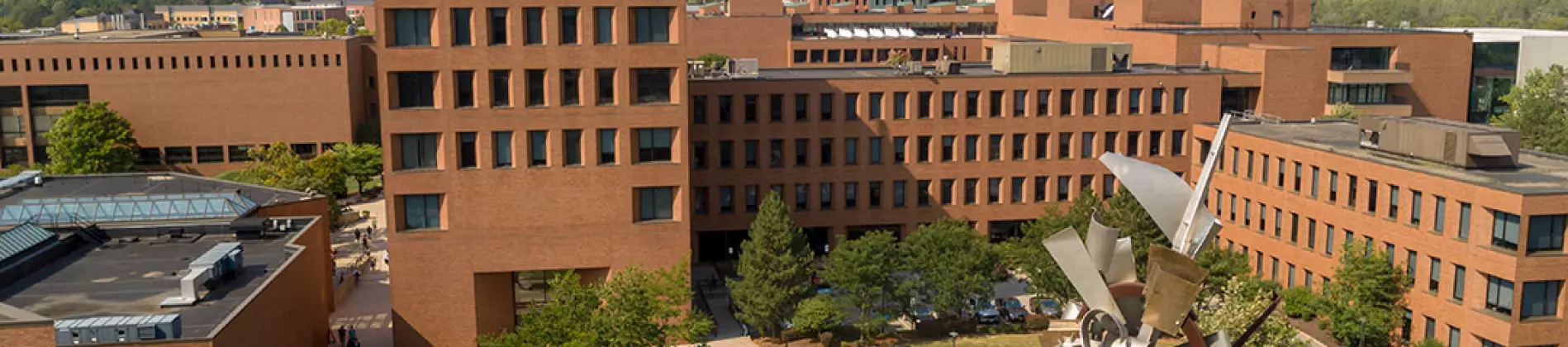
Bachelor of Bioinformatics and Computational Biology at Rochester Institute of Technology

    Bachelor of Bioinformatics and Computational Biology at Rochester Institute of Technology

    Bachelor of Bioinformatics and Computational Biology at Rochester Institute of Technology

    The Bioinformatics and Computational Biology at Rochester Institute of Technology is a Bachelor program designed for students who want to build the knowledge and skills required for careers in this field. Delivered on campus at the university's main campus in Rochester , United States of America, the program is taught in English and takes 4 years to complete. Students study in a Full Time environment while preparing for future professional opportunities. The next intake starts on September 2, 2027.

    About Bachelor of Bioinformatics and Computational Biology

    • The Genomics Lab includes an Illumina MiSeq where undergraduate students sequence and annotate whole-genomes of a variety of organisms.
    • Recent bioinformatics graduates are employed at the Cleveland Clinic, Newport Labs, and the Dana-Farber Cancer Institute.
    • Bioinformatics students gain career exposure and hands-on experience through a required co-op experience.
    • With a 100% outcomes rate, bioinformatics graduates jump into a number of exciting careers immediately after graduation. They utilize their analytical and computational skills to solve real-world problems.

    Bioinformatics is the intersection of biology and computer science. In this major, you'll analyze big data collected by the healthcare industry to discover, diagnose, and treat a wide range of medical conditions. A rapidly growing field that requires professionals to possess problem-solving skills, you'll gain hands-on learning through distinct undergraduate research opportunities. Graduates pursue graduate degrees and go on to successful careers in bioinformatics software development, biomedical research, biotechnology, comparative genomics, genomics, molecular imaging, pharmaceutical research and development, proteomics, and vaccine development.

    Bioinformaticists use computers to analyze, organize, and visualize biological data in ways that increase the understanding of this data and lead to new discoveries. In laboratory exercises and assignments, you'll learn to sequence DNA and use computer programs to analyze DNA sequences and predict molecular models.

    The bioinformatics degree was developed by faculty in the departments of biological sciences, chemistry, computer science, mathematics and statistics, and information technology, with the guidance from leaders in the bioinformatics and biotechnology industries. The major meets the needs of prospective employers in this challenging and rapidly changing and growing field.

    Bioinformatics is a field that has been developing over the last thirty years. It is a discipline that represents a marriage between biotechnology and computer technologies and has evolved through the convergence of advances in each of these fields. Today bioinformatics is a field that encompasses all aspects of the application of computer technologies to biological data. Computers are used to organize, link, analyze and visualize complex sets of biological data.

    With the advent of high-throughput technologies such as Next Generation Sequencing and proteomics, bioinformatics has become essential to the biological sciences in general. In the past, laboratories were able to manage and analyze their experimental data in spreadsheets. Many research labs now require the expertise of dedicated bioinformatics core centers or their own in-house bioinformaticists.

    Graduates of our programs have entered such laboratories, both in industry and academia, as bioinformaticists. Some have also gone on to leverage their biotechnology experiences as wet lab experimentalists themselves. The diversity of skills our students cultivate has given them access to a wide range of career choices.

    Nature of Work

    Bioinformatics jobs come with several different areas of focus, which are less strictly hierarchical than bioscience discovery research jobs. The analyst/programmer job provides more focused computational analysis support. Analyst/programmers design and develop software, databases, and interfaces used to analyze and manipulate genomic databases. They collaborate with production to develop high-throughput data processing and analysis capability and to design and implement data queries, novel algorithms, and/or visualization techniques. Analyst/programmers also maintain large-scale DNA databases, prepare data for other scientists, monitor new data from integrating sequence-based/ functional knowledge about genes to help scientists analyze and interpret gene-expression data. They also analyze DNA information and identify opportunities for innovative solutions to analyze and manage biological data. In addition, they often assist in developing software and custom scripts to automate data retrieval, manipulation, and analysis; application of statistics; and visualization tools. (Source: Vault Career Guide to Biotech; The Jobs in Lab Research)

    Training/Qualifications

    Within the bioinformatics field employers tend to look for the following skills/strengths: fundamental training/knowledge in molecular biology, biochemistry and biotechnology, particularly, genomics, relational database administration, and programming skills/e.g. using SQL, PERL, C, C++, etc. on a UNIX operating system, strong analytical abilities using relevant mathematical/statistical tools, a strong interest in utilizing computational skills to leverage the data outcomes of those working in the laboratory, meticulous, independent, patient to do the same task repetitively and multitask.

    Combined Accelerated Bachelor's/Master's Degrees

    Today's careers require advanced degrees grounded in real-world experience. RIT's Combined Accelerated Bachelor's/Master's Degrees enable you to earn both a bachelor's and a master's degree in as little as five years of study, all while gaining the valuable hands-on experience that comes from co-ops, internships, research, study abroad, and more.

    +1 MBA: Students who enroll in a qualifying undergraduate degree have the opportunity to add an MBA to their bachelor's degree after their first year of study, depending on their program. Learn how the +1 MBA can accelerate your learning and position you for success.

    Read More

    In this dynamic bioinformatics degree, biology and computing combine to analyze big data collected by the health industry to discover, diagnose, and treat a wide range of medical conditions.

    Requirements and Admission Criteria for Bachelor of Bioinformatics and Computational Biology at Rochester Institute of Technology

    Entry Requirements

    For all bachelor’s degree programs, a strong performance in a college preparatory program is expected. Generally, this includes:

    • 4 years of English
    • 3 years of social studies and/or history
    • 3-4 years of mathematics
      • Specific math requirements are detailed by college below
    • 2-3 years of science
      • Specific science requirements are detailed by college below
    • Completion of a High School Diploma or its equivalence

    Homeschooled Students
    RIT has a history of admitting academically talented students from homeschool settings. In the absence of consistent homeschooling standards nationally and globally, guidelines have been developed for homeschooled students seeking RIT admission.

    English Requirements

    • PTEMin 58
    • IELTSMin 6.5
    • TOEFLMin 79

    Career Opportunities after Completing Bachelor of Bioinformatics and Computational Biology

    Typical Job Titles

    Bioinformatics AnalystBiomedical Researcher
    BiostatisticianComputational Biologist
    GeneticistResearch Technician
    Laboratory TechnicianSoftware Programmer
    Technical Support Specialist

    Salary and Career Information for Bioinformatics and Computational Biology BS

    Cooperative Education

    What's different about an RIT education? It's the career experience you gain by completing cooperative education and internships with top companies in every single industry. You'll earn more than a degree. You'll gain real-world career experience that sets you apart. It's exposure–early and often–to a variety of professional work environments, career paths, and industries. 

    Co-ops and internships take your knowledge and turn it into know-how. Science co-ops include a range of hands-on experiences, from co-ops and internships and work in labs to undergraduate research and clinical experience in health care settings. These opportunities provide the hands-on experience that enables you to apply your scientific, math, and health care knowledge in professional settings while you make valuable connections between classwork and real-world applications.

    Students in the bioinformatics and computational biology degree are required to complete one cooperative education experience.

    National Labs Career Events and Recruiting

    The Office of Career Services and Cooperative Education offers National Labs and federally-funded Research Centers from all research areas and sponsoring agencies a variety of options to connect with and recruit students. Students connect with employer partners to gather information on their laboratories and explore co-op, internship, research, and full-time opportunities.  These national labs focus on scientific discovery, clean energy development, national security, technology advancements, and more. Recruiting events include our university-wide Fall Career Fair, on-campus and virtual interviews, information sessions, 1:1 networking with lab representatives, and a National Labs Resume Book available to all labs.

    Tuition and Fee Information for Bachelor of Bioinformatics and Computational Biology at Rochester Institute of Technology

    Application Fee 65

    How to Apply for Bachelor of Bioinformatics and Computational Biology at Rochester Institute of Technology

    Ways to Apply

    • Common Application
    • RIT Application


    Statement on Ethical and Fair Admissions Practices
    The Office of Undergraduate Admissions continues to put students first in the admissions process. We continue to use fair and ethical practices as we recruit, review applications and counsel our prospective students and their families. Our admissions officers support and promote ethical responsibility with our colleagues in the admission profession.

    Manage Application

    Whichever method you choose to apply, we invite you to create an RIT Admissions account to monitor your application, track the status of your application credentials, receive your admissions decision, and more.

    Bachelor of Bioinformatics and Computational Biology at Rochester Institute of Technology
    Rochester Institute of Technology
    Rochester Institute of Technology
    United States of America

    United States of America, Rochester

    WhatsApp student consultation with YouApply