
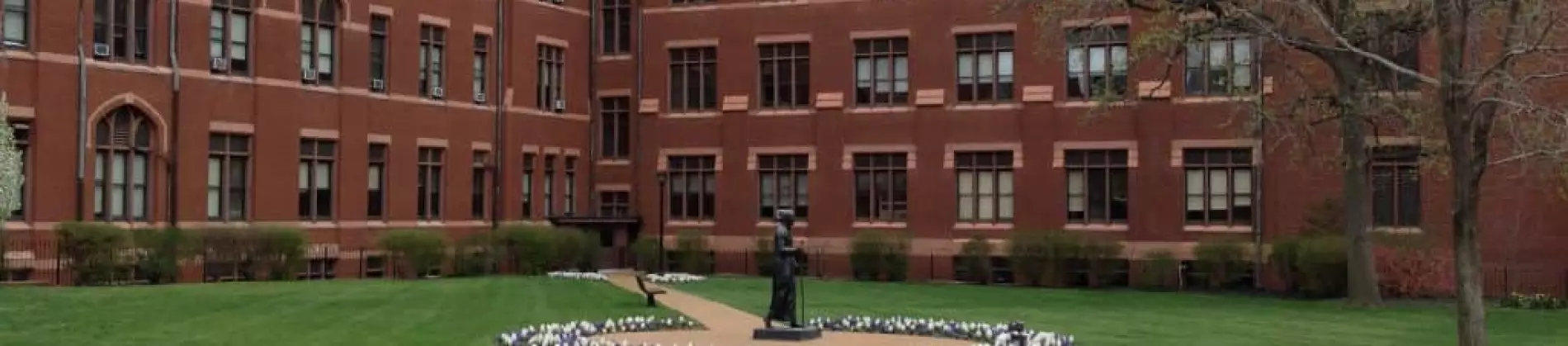
Bachelor of Magnetic Resonance Imaging at Saint Louis University

    Bachelor of Magnetic Resonance Imaging at Saint Louis University

    Bachelor of Magnetic Resonance Imaging at Saint Louis University

    Saint Louis University offers the Bachelor of Magnetic Resonance Imaging as a full-time degree delivered on campus at its main campus in Saint Louis , United States of America. Taught in English and completed over 4 years, the program equips students with the theoretical knowledge and practical skills required for magnetic resonance imaging and related professional fields. The next available intake begins on August 23, 2027.

    About Bachelor of Magnetic Resonance Imaging

    Saint Louis University's Bachelor of Science in Magnetic Resonance Imaging is one of only two programs of its kind in the country. SLU's MRI program contains a strong science curriculum that prepares students for immediate job placement as well as graduate study.

    Magnetic resonance imaging (MRI) is a medical imaging technique that uses a large magnet and radio waves to create clear pictures of internal body structures. MRI provides excellent contrast between the different soft tissues of the body and is especially useful in imaging the brain, spine, joints, muscles and other structures. The superior resolution of the images and advancing technology is rapidly increasing the variety of exams an MRI technologist will perform.

    MRI technologists are educated and trained to work with patients and other members of the health care team to obtain high-quality images in a safe and effective manner. MRI offers procedures that are helpful to a broad span of medical specialties. These specialties include neurology, sports medicine, cardiology, pediatrics and more. 

    Advantages to earning your B.S. in MRI at Saint Louis University include:

    • A tailored curriculum that allows for diverse areas of concentration
    • Clinical training sites within the St. Louis metropolitan area
    • An interprofessional focus that emphasizes a team approach to health care
    • Instruction and individual mentorship by professionally credentialed MRI faculty
    • Medically relevant coursework ideal for pre-professional curriculum options, including pre-med and pre-physician assistant
    • Opportunities to participate in professional conferences with faculty and fellow students
    • Undergraduate opportunities to conduct research and produce projects/papers acceptable for publication and presentation at professional conferences

    Program Effectiveness Data

    Doisy College of Health Sciences Learning Outcomes
    1. Graduates will be able to demonstrate the Jesuit mission by caring for the whole patient.
    2. Graduates will be able to demonstrate effective communication skills when interacting in the MRI profession.
    3. Graduates will be able to apply critical reasoning as it relates to the MRI setting.
    4. Graduates will be able to demonstrate application of professional knowledge.
    5. Graduates will be able to recognize ethical practices in the health care setting.
    Magnetic Resonance Imaging Program Learning Outcomes and Goals
    1. Students will be clinically competent.
      1. Students will appropriately  use, record, and verify patient data.
      2. Students will position patients as directed.
      3. Students will use the proper imaging sequences for ordered exam.
      4. Students practice proper MRI and patient safety.
    2. Students will demonstrate problem solving and critical thinking skills.
      1. Students will complete imaging procedures, explaining steps in detail.
      2. Students will present case studies and MRI final capstone project.
    3. Students will demonstrate effective communication skills.
      1. Students will appropriately communicate with patients.
      2. Students will demonstrate appropriate written communication
      3. Students will demonstrate proper presentation skills
    4. Students will demonstrate professional growth and development.
      1. Students will demonstrate professional behaviors.
      2. Students will have knowledge of ethical behaviors.
      3. Students will demonstrate professional growth through critical thinking

    The program annually tracks student learning outcomes as they relate to the above student goals.

    Requirements and Admission Criteria for Bachelor of Magnetic Resonance Imaging at Saint Louis University

    Entry Requirements

    Send transcripts of all secondary work.

    Find out from your admission counselor what secondary credentials are required. We’ll evaluate how you’ve done in school up to this point, so please send all transcripts for secondary work, along with their English language translations.

    Submit proof of your English language proficiency.

    These are scores from any standardized test you may have taken to prepare for college — TOEFL, IELTS, PTE, SAT, ACT or Duolingo score. All of our international applicants are required to demonstrate their English proficiency, and these tests can help us make that determination.

    If you do not meet SLU’s direct entry requirements, we encourage you to apply to the Pathway or English Language programs offered by INTO Saint Louis University.

    Recommended items.

    Though not required for admission, submission of a resume of activities and letters of recommendation is encouraged. All undergraduate applicants are also encouraged to complete an admission interview.

    English Requirements

    • PTEMin 54
    • IELTSMin 6.5
    • TOEFLMin 80

    Career Opportunities after Completing Bachelor of Magnetic Resonance Imaging

    The practice of MRI encompasses multidisciplinary skills. The responsibilities of the MRI technologist include:

    • Operation of imaging, laboratory and computer instrumentation
    • Empathetic and instructional approach to patient care
    • Preparation of contrast agents
    • Performance of quality control procedures
    • Application of accepted standards of MRI safety and protection

    Jobs can be found in the following settings:

    • Medical and surgical hospitals
    • Freestanding clinics
    • Physician offices
    • Research institutions

    Some jobs are classified as traveling jobs where the employee provides temporary help to short-staffed departments for a while. These technologists regularly travel, with the length of stay and location varying.

    Career advancement opportunities from the position of staff technologist may lead to areas of administration, education, sales or research.

    The salary range for an MRI technologist depends on geographic location, years of experience and education. According to the Bureau of Labor Statistics, the median annual wage is $74,690.

    Tuition and Fee Information for Bachelor of Magnetic Resonance Imaging at Saint Louis University

    How to Apply for Bachelor of Magnetic Resonance Imaging at Saint Louis University

    The online application will ask about your educational background and citizenship to help determine your eligibility. If you are applying to enter SLU as a first-time, freshman student, we’ll also ask you to complete an essay. There is no application fee to apply for undergraduate admission to SLU. 

    Bachelor of Magnetic Resonance Imaging at Saint Louis University
    Saint Louis University
    Saint Louis University
    United States of America

    United States of America, Saint Louis

    WhatsApp student consultation with YouApply