

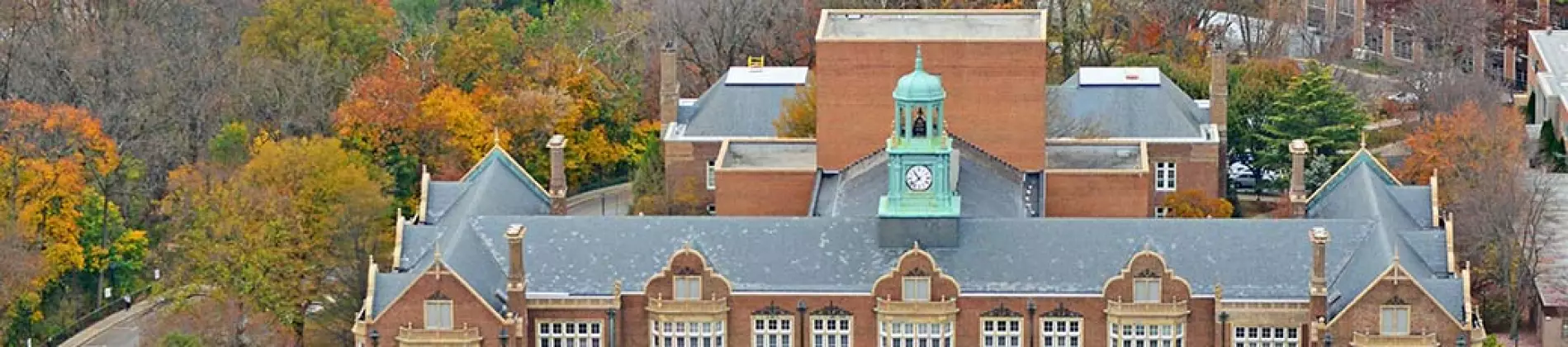


Liberal Arts Building 3210
Phone: 410-704-2852
Fax: 410-704-2854
Email: [email protected]
Programs of the Department
The Department of Sociology, Anthropology & Criminal Justice offers the following programs: the major in Sociology-Anthropology (SOAN) with a concentration in Anthropology, Criminal Justice, or Sociology; the minor in Anthropology; and the minor in Sociology.
Sociology-Anthropology majors learn social science methods and perspectives needed to understand culture and society. All three concentrations emphasize theory, research methods, and the linkages between individual experiences and social contexts. Students in the major develop important problem-solving, critical thinking, writing, and analytical skills, in addition to learning valuable content knowledge. The major's three concentrations offer different perspectives on these general areas of knowledge and expertise. Students in the Anthropology Concentration examine the social and cultural patterns and the biological and cultural development of humans through time. Students in the Criminal Justice Concentration pursue the theoretical and empirical study of crime and criminality, other forms of social deviance, and official responses to crime. Students in the Sociology Concentration study the scientific explanation and analysis of social processes and interaction, social structures and institutions, and social issues and problems.
Our major and minors encourage and empower students to be informed, engaged, and responsible citizens in our increasingly complex and changing world. In addition, study in the department prepares students for entry into a variety of occupations and for further study in many types of professional and graduate education programs. Examples of career areas (some requiring a graduate degree) pursued by recent Sociology-Anthropology graduates include nonprofit and community organizations, K-12 education, research institutes, contract archaeology, museums, government agencies, politics, social services, social work, law, law enforcement, juvenile justice, victim assistance, conflict resolution and mediation, journalism and the mass media, and business.
The department actively encourages Sociology-Anthropology majors to pursue experiential learning opportunities, including course-based service learning projects, independent research, study abroad and away, and internships. Internships provide students with opportunities to apply what they have learned in the classroom to workplace settings, allowing them to explore possible career avenues while adding valuable practical experience to their resumes. Students in the department can complete internships for course credit (ANTH 491/ANTH 492, CRMJ 491/CRMJ 492, SOCI 491/SOCI 492) in a variety of organizations and settings, including the American Red Cross; Baltimore Center for Urban Archaeology; the House of Ruth; local/regional circuit courts; local, regional and federal police and sheriff departments; the Neighborhood Design Center; Prisoner's Aid; Sheppard Pratt; the Smithsonian Institution (Museum Support Center); and a variety of city, county, state and federal agencies. Interested students should contact the department for more information and to be directed to the appropriate internship coordinator.
The Departmental Honors Program (distinct from the Honors College and its requirements) provides students an opportunity to conduct an in-depth yearlong independent research study under faculty guidance, culminating in an honors thesis. Students who complete the program graduate with honors in the department. Interested students should contact the department for more information. The department also has chapters of Alpha Kappa Delta, the national honor society in sociology (Theta Chapter of Maryland, founded 1987), and Alpha Phi Sigma, the national honor society in criminal justice (Theta Delta Chapter, established 2006). The department annually recognizes the outstanding achievements of students with the Lieberman Awards for the most distinguished student scholars in the major and for the most outstanding student interns, the Irwin Goldberg Award for Outstanding Achievement in Sociological Research, the Social Responsibility/Social Praxis (Action) Award, and the Award for Special Contribution to the Environment of Learning.
Major in Sociology-Anthropology
A minimum of 39 units with a grade equivalent of 2.00 or higher in each course is required for the major in Sociology-Anthropology (total units required varies by concentration). No "pass" grades are accepted for the major. While courses in each concentration may be listed in more than one required section, each course taken for the major will count toward one required section of the concentration only. Students may enroll in a maximum of 6 units of ANTH 495/CRMJ 495/SOCI 495.
The major degree students normally receive is the Bachelor of Science, but the Bachelor of Arts degree may be earned by completing the intermediate courses of a foreign language or the equivalent. The Bachelor of Science degree is earned by completing department major and university degree requirements without meeting the foreign language requirements.