



Website: http://bsen.unl.edu/
Biological systems engineering (BSEN) is one of two engineering degree programs offered in the Department of Biological Systems Engineering. Biological systems engineers need to understand biological phenomena and apply engineering principles to solve challenges faced by society. To solve complex problems, a biological systems engineer needs not only to develop expertise in a specific discipline but also be prepared to work across disciplinary boundaries in diverse professional communities. As such, BSEN students develop both depth through engineering coursework in one of three emphasis areas (biomedical engineering, food, and bioprocess engineering, or ecological and environmental engineering) and breadth through purposefully selected coursework in the other areas. Biological systems engineers with an emphasis in biomedical engineering might work on systems to micropropagate tissue culture, design devices for monitoring and correcting heart arrhythmias, or develop biological sensors and imaging devices for detecting diseases in humans. Biological systems engineers with an emphasis in food and bioprocess engineering might advance products and manufacturing practices through the design of equipment and processes for producing foods and biofuels. Biological systems engineers with an emphasis in ecological and environmental engineering might restore streams, lakes, and wetlands; design and manage ecosystems; minimize nonpoint source pollution; or design systems for stormwater bioretention or animal waste management.
By three to five years after graduation, BSEN alumni will share the attribute of improving the organization for which they work and the community and country in which they live. They will do this whether they are involved in biomedical engineering, ecological and environmental engineering, food and bioprocess engineering, or other professional endeavors such as business, law, or medicine. In doing so, our graduates will be:
- Confidently using engineering skills in solving problems and providing design solutions in the context of agricultural systems.
- Continuing their professional development, and professional and community service through various opportunities provided by institutions, professional organizations, and other venues in an inclusive manner respecting diversity.
- Responsibly addressing issues of health and safety, ethics, and environmental impacts of engineering decisions in the context of agricultural systems.
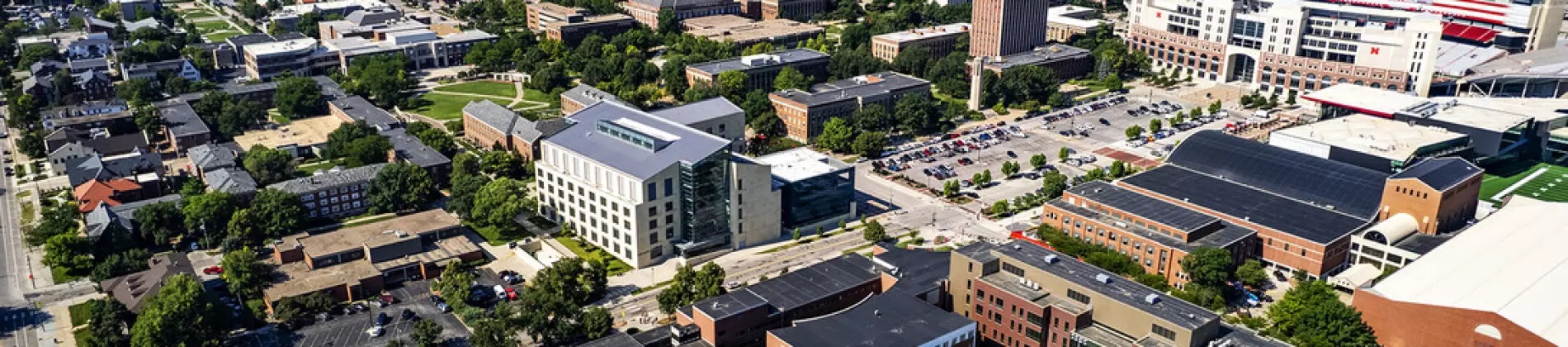
The Department of Biological Systems Engineering is located in Chase Hall on East Campus. BSEN students participate in classes and laboratories on both East and City Campuses. BSEN courses are offered on East Campus. Basic courses in math, chemistry, physics, engineering sciences, computers, and electives in mechanical, civil, electrical, and chemical engineering are taken on City Campus. Convenient bus transportation is available between campuses.
Students benefit from small classes and personal acquaintances with faculty. In consultation with their advisor, students select electives that permit specialization in an emphasis area applicable to their career aspirations. Many students work part-time on departmental research projects, gaining valuable experience for employment in industry and for graduate or professional studies. Students also benefit from summer jobs, internships, and co-op programs. These opportunities give students practical experience to learn about careers in engineering. Students also gain valuable experience through participation in professional organizations such as the American Society of Agricultural and Biological Engineers, the Water and Environmental Federation, the UNL Soil and Water Resources Club, the Biomedical Engineering Society, the Nebraska Society of Professional Engineers, the Fountain Wars Club, and the Society for Women Engineers.
Pre-professionally admitted College of Engineering (COE) students majoring in biological systems engineering (BSEN) have their records examined for advancement to professionally-admitted status during the fall, spring, and summer immediately following the term in which:
- They have completed 43 credit hours applicable to the degree including 6 hours of BSEN subject coursework.
- Are enrolled in or have completed MECH 223.
- Have removed all admissions deficiencies, except they may be currently completing the last class to remove the foreign language deficiency.
Students must be professionally admitted in order to enroll in some upper-division courses including AGEN 470/BSEN 470 Design I in Agricultural and Biological Systems Engineering.
To be professionally admitted to BSEN, the student must meet the general professional admission criteria of the College of Engineering and not already have been denied admission by two other engineering majors or twice by the BSEN program, and have removed all admissions deficiencies within the first 30 hours of enrollment at Nebraska, except for the foreign language deficiency which must be completed within the first 60 hours of enrollment at Nebraska.
- Students who meet the above criteria with a cumulative GPA of 2.8 or greater will be professionally admitted without further review.
- Students with a cumulative GPA of at least 2.5 but less than 2.8 will have their record reviewed by Department faculty for a decision of professional admission, conditional professional admission, or denial of professional admission.
- Students with a cumulative GPA less than 2.5 will be denied professional admission to the BSEN program.
Students who have been denied professional admission to the BSEN program once and not also been denied professional admission to another engineering program may continue taking courses in the BSEN program and will be reconsidered for professional admission again the next term. Students who have twice been denied professional admission to the BSEN program are not allowed to continue in the program.
The Department faculty may recommend conditional admission and specify deficiencies and performance criteria required to transition out of conditional status. If a student has not met the professional admission criteria and has not, in the opinion of the Department faculty, demonstrated a minimum standard of good professional judgment in the pursuit of their academic program as expected of degreed engineers, they may be denied professional admission to the degree program. The student may appeal this decision to the biological systems engineering department head and then, if necessary, to the College of Engineering Curriculum and Academic Standards Committee.
All students must fulfill the Achievement-Centered Education (ACE) requirements. Information about the ACE program may be viewed at ace.unl.edu.
The minimum requirements of the BSEN program include courses involving ACE outcomes 1, 2, 3, 4, 8, and 10. Students should work with their advisor to select courses that satisfy ACE outcomes 5, 6, 7, and 9.
Graduates of the biological systems engineering program will have:
- An ability to identify, formulate, and solve complex engineering problems by applying principles of engineering, science, and mathematics.
- An ability to apply engineering design to produce solutions that meet specified needs with consideration of public health, safety, and welfare, as well as global, cultural, social, environmental, and economic factors.
- An ability to communicate effectively with a range of audiences.
- An ability to recognize ethical and professional responsibilities in engineering situations and make informed judgments, which must consider the impact of engineering solutions in global, economic, environmental, and societal contexts.
- An ability to function effectively on a team whose members together provide leadership, create a collaborative and inclusive environment, establish goals, plan tasks, and meet objectives.
- An ability to develop and conduct appropriate experimentation, analyze and interpret data, and use engineering judgment to draw conclusions.
- An ability to acquire and apply new knowledge as needed, using appropriate learning strategies.
The above student outcomes have been approved by the ABET Engineering Area Delegation for use beginning with the 2019-20 academic year, and have been adopted by the faculty of the Department of ÂÂÂÂÂÂÂÂBiological Systems Engineering.