
Bachelor of Environmental Sciences: Soil and Watersheds at University of New Hampshire

    Bachelor of Environmental Sciences: Soil and Watersheds at University of New Hampshire

    Bachelor of Environmental Sciences: Soil and Watersheds at University of New Hampshire

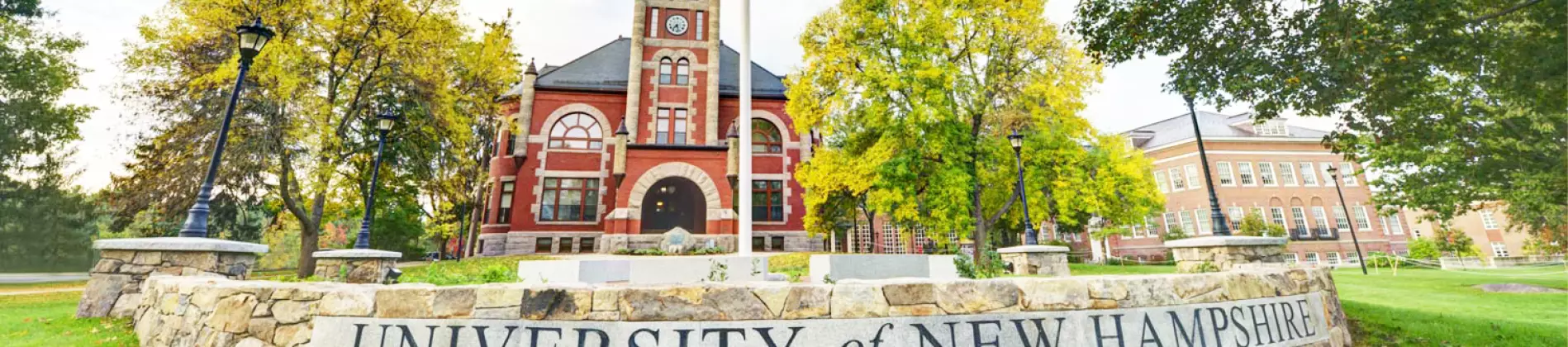
    The Environmental Sciences: Soil and Watersheds at University of New Hampshire is a Bachelor program designed for students who want to build the knowledge and skills required for careers in this field. Delivered on campus at the university's main campus in Durham , United States of America, the program is taught in English and takes 4 years to complete. Students study in a Full Time environment while preparing for future professional opportunities. The next intake starts on August 28, 2027.

    About Bachelor of Environmental Sciences: Soil and Watersheds

    The College of Life Sciences and Agriculture (COLSA) and the College of Engineering and Physical Sciences (CEPS) jointly offer a bachelor of science degree in environmental sciences. Environmental science is an interdisciplinary field concerned with the interaction of biological, chemical, and physical processes that shape the environment, and control the response of natural systems to human activities.    Students graduating with a degree in environmental sciences will have an understanding of these interacting processes, experience working in interdisciplinary teams to apply this understanding, and the ability to communicate effectively with both scientific and lay audiences.  While in this program, students will acquire significant experience with field, laboratory and analytical methods appropriate for employment in professional environmental science positions as well as a basic understanding of environmental policy.  The University of New Hampshire is a recognized leader in environmental sciences research, and the environmental sciences program capitalizes on faculty expertise in this area. Program faculty emphasize teaching and research in the areas of biogeochemical cycling, environmental chemistry, ecosystem science, global change, hydrology, plant ecology, soil science, and water resource management among many other fields.

    Employment opportunities include environmental consulting firms; educational facilities (e.g., science centers), environmental monitoring laboratories (e.g., water treatment plants, the Environmental Protection Agency), government agencies (e.g., the U.S. Geological Survey, Bureau of Land Management, Natural Resource Conservation Service), university and government research laboratories, and nongovernment environmental organizations. The environmental sciences program also constitutes an excellent preparation for graduate programs in several areas relating to the environment.

    The Program has four options, and specific course requirements for the major vary by option. The ecosystems and soils and watersheds options are both managed by the Department of Natural Resources and the Environment in COLSA, and the geosystems and hydrology options are both managed by Earth Sciences in CEPS. 

    Key Learning Objectives: The primary Learning Outcome for the Environmental Science Program will be that students will master the content offered in the courses specified in the curriculum as assessed by performance on exams, labs and written assignments. This will include an understanding of the physical, chemical and biological processes central to the function of environmental systems, the mathematical concepts required to understand, explain and predict those processes, and the ability to determine the significance of results, both in terms of statistical probability and impact on the larger world.

    The learning process leading to this mastery will require that students will have:

    • Knowledge of how physical, chemical, and biological factors interact with human activities to shape the environment;
    • Proficiency with environmental techniques including field, lab, GIS, or modeling;
    • The ability to solve environmental problems;
    • The ability to communicate orally or in writing about environmental dynamics.

    Requirements and Admission Criteria for Bachelor of Environmental Sciences: Soil and Watersheds at University of New Hampshire

    Entry Requirements

    Official Transcripts

    Secondary and/or university transcript(s) of any coursework taken prior to applying to UNH, with English translations, are required. International documents received by UNH Admissions are verified, scanned, and confidentially destroyed. Official documents submitted will not be returned to the student.

    Letter of Recommendation

    Ideally, the letter should be from a student's school counselor or teacher. UNH does not require more than one recommendation and our preference is to receive no more than two. Excess recommendations may delay the admissions review process.

    English Requirements

    • PTEMin 59
    • IELTSMin 6.5
    • TOEFLMin 80

    Tuition and Fee Information for Bachelor of Environmental Sciences: Soil and Watersheds at University of New Hampshire

    Application Fee 65

    How to Apply for Bachelor of Environmental Sciences: Soil and Watersheds at University of New Hampshire

    Students may apply for UNH admission using the online Common Application. Further instructions and details about the application process are outlined on the site.

    Application Fee

    $65 for non-residents
    Fee waivers can be requested through the Common Application.

    Pay online at the time you submit your Common Application. Or you can mail a check, made payable to the University of New Hampshire. Please reference the student’s name and date of birth in the memo. Please mail your payment to the UNH Undergraduate Admissions Office.

    Additional Documentation

    The University of New Hampshire will accept unofficial documents for undergraduate international students to complete their application. Upon confirmation of enrollment, UNH will require official copies of documents that were previously submitted as unofficial. All official documents must be received by June 30.

    All paper materials for any undergraduate application should be sent to the following address:

    UNH Admissions
    3 Garrison Avenue
    Durham, NH 03824

    • Please use black ink when submitting any paper materials, and be sure to include a date of birth on all paper materials.
    • There are no interviews as part of the application process.
    • International Students should include a photocopy of the passport page with biographic information.
    • All offers of admission are considered conditional and are subject to the verification of satisfactory achievement when final transcripts are reviewed by the Admission Committee.
    Bachelor of Environmental Sciences: Soil and Watersheds at University of New Hampshire
    University of New Hampshire
    University of New Hampshire
    United States of America

    United States of America, Durham

    WhatsApp student consultation with YouApply