
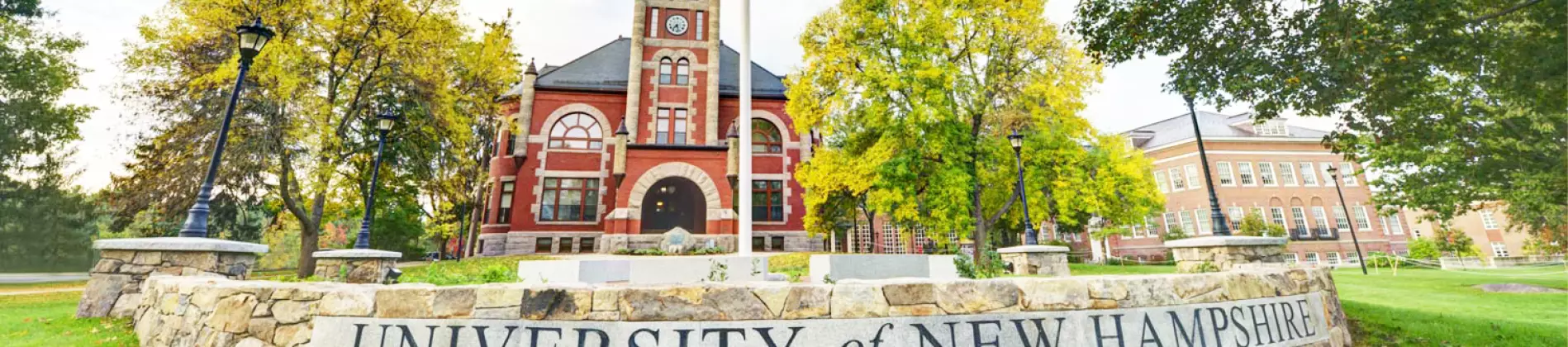
Bachelor of Neuroscience and Behavior at University of New Hampshire

    Bachelor of Neuroscience and Behavior at University of New Hampshire

    Bachelor of Neuroscience and Behavior at University of New Hampshire

    The Neuroscience and Behavior at University of New Hampshire is a Full Time Bachelor program offered at the university's main campus in Durham , United States of America. The program is delivered on campus in English and can be completed in 4 years. Students develop academic knowledge and practical skills that prepare them for future careers in this field. The next available intake starts on August 28, 2027.

    About Bachelor of Neuroscience and Behavior

    The major in neuroscience and behavior (NSB) offers an interdisciplinary approach to human and non-human behavior, focusing on the evolution and adaptiveness of certain behaviors, as well as their underlying neural mechanisms. Students who have always been fascinated by how the brain functions will be well served by this major, as will those who love wild animals and wish to better understand their behavior. The B.S. in neuroscience and behavior is based on a solid foundation in biology, chemistry, physics, statistics, and genetics (foundation courses). These are followed by a two-semester course sequence that covers the fundamentals of neuroscience and behavior. Students can then pick five or more electives focusing on areas of interest.

    NSB students are encouraged to take advantage of research experiences in the laboratories of the psychology and biology faculty in the program. This provides valuable experience with cutting-edge equipment and techniques. Some students may share aspects of a larger project, whereas others may be relatively independent and design their own project under supervision. In either case, important skills are gained by the discipline of gathering data, analyzing and interpreting it, and presenting it to a broader audience.

    The curriculum provides most of the requirements and recommended courses for students seeking admission to graduate school and to professional schools in medicine and veterinary medicine. Students who might choose not to go on to advanced degrees are well-prepared for employment as skilled technicians in research laboratories or, if their interests are in animal behavior, as field research assistants or animal trainers. With additional courses in education, the B.S. in NSB also qualifies graduates to teach at the elementary, junior high, and high school levels.

    Faculty participating in the NSB major combine a love of teaching and student mentoring with a passion for research, and encourage student participation. Research facilities that students can use include the Integrative Animal Behavior and Ecoacoustics laboratory, the confocal imaging center, the Hubbard Center for Genomic Studies, and the many marine, freshwater, and estuarine laboratories associated with UNH programs. Students can also take summer courses at the Shoals Marine Laboratory.

    Students demonstrate that they understand basic principles of neuroscience and behavior.

    • Apply the core principles of biology, chemistry, physics, and statistics to more advanced concepts in neuroscience and behavior.
    • Apply the principles of evolution and genetics to understand how genotype and phenotype affect the structure and function of animal nervous systems and behavior.
    • Describe the basic features of animal nervous system development, organization, signaling, integration, and higher-level processing, and how these are altered in diseases of the nervous system.
    • Explain the four levels of analysis emphasized in modern animal behavior research: causation, development, function, and evolution.
    • Describe molecular and cellular approaches to the study of brain structure, function, and development, as well as behavioral and cognitive neuroscience approaches to studying higher level brain functions.

    Students demonstrate that they can undertake scientifically valid methods of inquiry.

    • Apply appropriate research methods, laboratory techniques, and statistical methods to investigate scientific questions in neuroscience and behavior.

    Students demonstrate that they can think critically and analytically.

    • Read and critique primary research literature related to the nervous system, how nervous system function generates behavior, and how behavior addresses fitness-related challenges across a diversity of species.

    Students demonstrate that they can communicate effectively.

    • Demonstrate scientific writing skills, and proficiency in delivering oral presentations related to both the primary literature and findings from student investigations in neuroscience and behavior.

    Students practice science responsibly and ethically, and acknowledge the influence of cultural and historical biases in the sciences.

    Requirements and Admission Criteria for Bachelor of Neuroscience and Behavior at University of New Hampshire

    Entry Requirements

    Official Transcripts

    Secondary and/or university transcript(s) of any coursework taken prior to applying to UNH, with English translations, are required. International documents received by UNH Admissions are verified, scanned, and confidentially destroyed. Official documents submitted will not be returned to the student.

    Letter of Recommendation

    Ideally, the letter should be from a student's school counselor or teacher. UNH does not require more than one recommendation and our preference is to receive no more than two. Excess recommendations may delay the admissions review process.

    English Requirements

    • PTEMin 59
    • IELTSMin 6.5
    • TOEFLMin 80

    Tuition and Fee Information for Bachelor of Neuroscience and Behavior at University of New Hampshire

    Application Fee 65

    How to Apply for Bachelor of Neuroscience and Behavior at University of New Hampshire

    Students may apply for UNH admission using the online Common Application. Further instructions and details about the application process are outlined on the site.

    Application Fee

    $65 for non-residents
    Fee waivers can be requested through the Common Application.

    Pay online at the time you submit your Common Application. Or you can mail a check, made payable to the University of New Hampshire. Please reference the student’s name and date of birth in the memo. Please mail your payment to the UNH Undergraduate Admissions Office.

    Additional Documentation

    The University of New Hampshire will accept unofficial documents for undergraduate international students to complete their application. Upon confirmation of enrollment, UNH will require official copies of documents that were previously submitted as unofficial. All official documents must be received by June 30.

    All paper materials for any undergraduate application should be sent to the following address:

    UNH Admissions
    3 Garrison Avenue
    Durham, NH 03824

    • Please use black ink when submitting any paper materials, and be sure to include a date of birth on all paper materials.
    • There are no interviews as part of the application process.
    • International Students should include a photocopy of the passport page with biographic information.
    • All offers of admission are considered conditional and are subject to the verification of satisfactory achievement when final transcripts are reviewed by the Admission Committee.
    Bachelor of Neuroscience and Behavior at University of New Hampshire
    University of New Hampshire
    University of New Hampshire
    United States of America

    United States of America, Durham

    WhatsApp student consultation with YouApply