
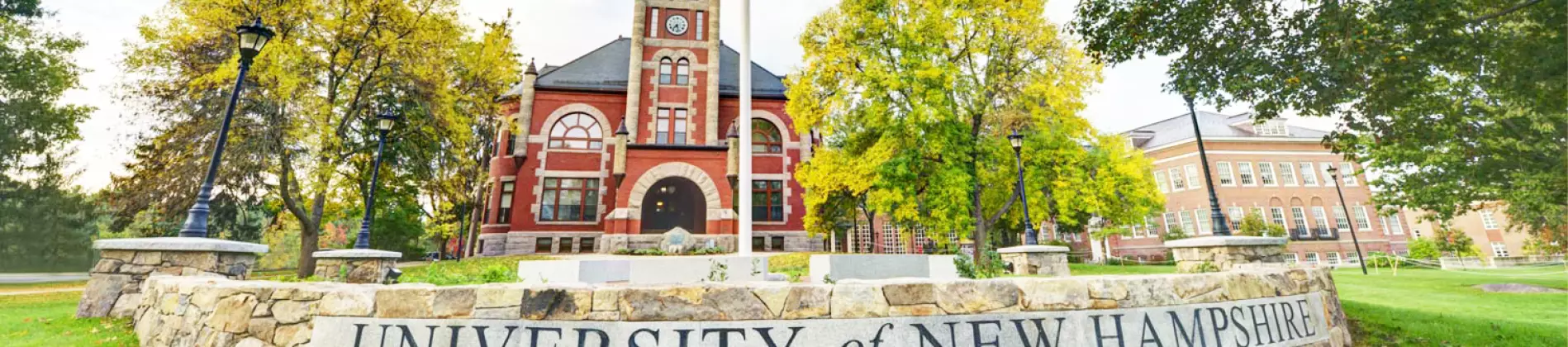
Bachelor of Wildlife and Conservation Biology at University of New Hampshire

    Bachelor of Wildlife and Conservation Biology at University of New Hampshire

    Bachelor of Wildlife and Conservation Biology at University of New Hampshire

    Study Wildlife and Conservation Biology at University of New Hampshire, a Bachelor degree offered at its main campus in Durham , United States of America. This Full Time program is delivered on campus in English and takes approximately 4 years to complete. Students benefit from a structured learning experience designed to build both theoretical knowledge and practical experience. The next intake is scheduled for August 28, 2027.

    About Bachelor of Wildlife and Conservation Biology

    The Wildlife & Conservation Biology major provides students with the knowledge and tools to study, conserve, and manage wildlife and their habitats. 

    Our students combine science with their passion for nature and the outdoors.  Our courses emphasize hands-on experience and place fundamental principles within an applied context. Students are encouraged to conduct research alongside faculty, and faculty actively assist students in obtaining internships.

    Our students become wildlife biologists and resource managers at state/federal agencies and non-profit organizations, conservation law officers, and environmental educators. Many go on to obtain an advanced degree.

    Students will:

    • Understand the ecological and societal value of biodiversity, sustainability, and environmental stewardship;
    • learn/understand ecological concepts and fundamental principles and techniques to manage and conserve wildlife habitat and populations;
    • know the taxonomy, ecology, and natural history of the majority of native flora and fauna in New England;
    • locate, evaluate, and summarize information from both print and electronic media relevant to wildlife and conservation biology issues;
    • effectively communicate scientific information in written and oral formats;
    • master mathematical, statistical, and study design knowledge and skills, and use state-of-the-art software, hardware, and analytical techniques relevant to wildlife and conservation biology;
    • be familiar with a variety of natural resource laws and regulations;
    • understand how to integrate relevant social sciences and human dimensions approaches to address wildlife and conservation biology issues as part of multidisciplinary teams.

    Requirements and Admission Criteria for Bachelor of Wildlife and Conservation Biology at University of New Hampshire

    Entry Requirements

    Official Transcripts

    Secondary and/or university transcript(s) of any coursework taken prior to applying to UNH, with English translations, are required. International documents received by UNH Admissions are verified, scanned, and confidentially destroyed. Official documents submitted will not be returned to the student.

    Letter of Recommendation

    Ideally, the letter should be from a student's school counselor or teacher. UNH does not require more than one recommendation and our preference is to receive no more than two. Excess recommendations may delay the admissions review process.

    English Requirements

    • PTEMin 59
    • IELTSMin 6.5
    • TOEFLMin 80

    Tuition and Fee Information for Bachelor of Wildlife and Conservation Biology at University of New Hampshire

    Application Fee 65

    How to Apply for Bachelor of Wildlife and Conservation Biology at University of New Hampshire

    Students may apply for UNH admission using the online Common Application. Further instructions and details about the application process are outlined on the site.

    Application Fee

    $65 for non-residents
    Fee waivers can be requested through the Common Application.

    Pay online at the time you submit your Common Application. Or you can mail a check, made payable to the University of New Hampshire. Please reference the student’s name and date of birth in the memo. Please mail your payment to the UNH Undergraduate Admissions Office.

    Additional Documentation

    The University of New Hampshire will accept unofficial documents for undergraduate international students to complete their application. Upon confirmation of enrollment, UNH will require official copies of documents that were previously submitted as unofficial. All official documents must be received by June 30.

    All paper materials for any undergraduate application should be sent to the following address:

    UNH Admissions
    3 Garrison Avenue
    Durham, NH 03824

    • Please use black ink when submitting any paper materials, and be sure to include a date of birth on all paper materials.
    • There are no interviews as part of the application process.
    • International Students should include a photocopy of the passport page with biographic information.
    • All offers of admission are considered conditional and are subject to the verification of satisfactory achievement when final transcripts are reviewed by the Admission Committee.
    Bachelor of Wildlife and Conservation Biology at University of New Hampshire
    University of New Hampshire
    University of New Hampshire
    United States of America

    United States of America, Durham

    WhatsApp student consultation with YouApply