
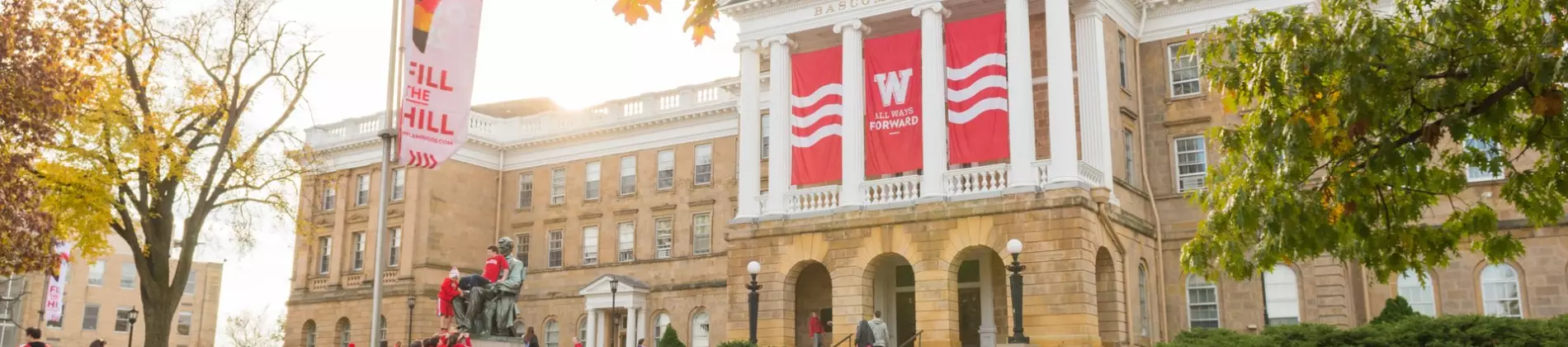
Forest Science, B.S. at University of Wisconsin Madison

    Forest Science, B.S. at University of Wisconsin Madison

    Forest Science, B.S. at University of Wisconsin Madison

    The Forest Science, B.S. at University of Wisconsin Madison is a Full Time Bachelor program offered at the university's main campus in Madison , United States of America. The program is delivered on campus in English and can be completed in 4 years. Students develop academic knowledge and practical skills that prepare them for future careers in this field. The next available intake starts on September 7, 2027.

    About Forest Science, B.S.

    Forest ecosystems cover one third of the worlds land area and nearly half of Wisconsin. They provide a range of benefits to society including wood and fiber, wildlife habitat, biological diversity, clean water, carbon storage, recreation, beauty, and cultural values. The Department of Forest and Wildlife Ecology trains foresters to sustainably manage forests toward sustainable ecological, social, and economic outcomes. Forest science students also learn how to respond to forest disturbances from insects, diseases, fire, and other changes. Beyond a core of basic science and forestry coursework, students have flexibility to customize their learning experience within one of three tracks: forest conservation, forests and the environment, and forest management. All three tracks meet accreditation standards of the Society of American Foresters, a key credential that employers seek. Students are also well positioned to pursue graduate training in forestry, ecology, remote-sensing, natural resource policy, and related fields.

    Students learn through a mix of classroom, laboratory, and field instruction that emphasizes independent thinking and problem-solving. Students make frequent visits to forests to develop and hone their skills, essential for future job opportunities. Students also engage professional and student-led trainings and networking that further build skills. Graduates go on to jobs in private, public, and non-governmental sectors or pursue graduate degrees.

    1. (Ecology) Understanding of taxonomy and ability to identify forest and other tree species, their distribution, and associated vegetation and wildlife.
    2. (Ecology) Understanding of soil properties and processes, hydrology, water quality, and watershed functions.
    3. (Ecology) Understanding of ecological concepts and principles including the structure and function of ecosystems, plant and animal communities, competition, diversity, population dynamics, succession, disturbance, and nutrient cycling.
    4. (Ecology) Ability to make ecosystem, forest, and stand assessments.
    5. (Ecology) Understanding of tree physiology and the effects of climate, fire, pollutants, moisture, nutrients, genetics, insects and diseases on tree and forest health and productivity.
    6. (Forest Resources Measurement and Management) Ability to identify and measure land areas and conduct spatial analysis.
    7. (Forest Resources Measurement and Management) Ability to design and implement comprehensive inventories that meet specific objectives using appropriate sampling methods and units of measurement.
    8. (Forest Resources Measurement and Management) Ability to analyze inventory data and project future forest, stand, and tree conditions.
    9. (Forest Resources Measurement and Management) Ability to develop and apply silvicultural prescriptions appropriate to management objectives, including methods of establishing and influencing the composition, growth, and quality of forests, and understand the impacts of those prescriptions.
    10. (Forest Resources Measurement and Management) Ability to analyze the economic, environmental, and social consequences of forest resource management strategies and decisions.
    11. (Forest Resources Measurement and Management) Ability to develop management plans with specific multiple objectives and constraints.
    12. (Forest Resources Measurement and Management) Understanding of the valuation procedures, market forces, processing systems, transportation and harvesting activities that translate human demands for timber-based and other consumable forest products into the availability of those products.
    13. (Forest Resources Measurement and Management) Understanding of the valuation procedures, market, and non-­market forces that avail humans the opportunities to enjoy non-­consumptive products and services of forests.
    14. (Forest Resources Measurement and Management) Understanding of the administration, ownership, and organization of forest management enterprises.
    15. (Forest Resource Policy, Economics, and Administration) Understanding of forest policy and the processes by which it is developed.
    16. (Forest Resource Policy, Economics, and Administration) Understanding of how federal, state, and local laws and regulations govern the practice of forestry.
    17. (Forest Resource Policy, Economics, and Administration) Ability to understand the integration of technical, financial, human resources, and legal aspects of public and private enterprises.

    Requirements and Admission Criteria for Forest Science, B.S. at University of Wisconsin Madison

    Entry Requirements

    All undergraduate students at UW–Madison must complete the university-wide General Education Requirements, which are designed to convey the essential core of an undergraduate education. This core establishes a foundation for living a productive life, being a citizen of the world, appreciating aesthetic values, and engaging in lifelong learning in a continually changing world. These requirements provide for breadth across the humanities and arts, social studies, and natural sciences; competence in communication, critical thinking, and analytical skills necessary for success in college and beyond; and investigation of the issues raised by living in a culturally diverse society. This core is intended to provide students with intellectual and practical skills, basic knowledge of human cultures and the physical world, strategies for understanding these topics, and tools intended to contribute to their sense of personal and social responsibility. General Education complements the work students do in their majors and degrees. Together, these requirements help students learn what they need to know not just for making a living, but also for making a life.

    Completing the General Education Requirements is an important part of achieving these competencies, and to do so, students choose from many courses in communication, ethnic studies, quantitative reasoning, and breadth of study across disciplines in the natural sciences, humanities, literature, and arts, and social and behavioral sciences.

    Completing the General Education Requirements is an important part of achieving these competencies, and to do so, students choose from many courses in communication, ethnic studies, quantitative reasoning, and breadth of study across disciplines in the natural sciences, humanities, literature, and arts, and social and behavioral sciences.

    Each school and college may choose to allow General Education courses to count toward other degree and/or major requirements. Students should always check with their advisors to discuss any additional degree requirements and determine if students are required to take specific General Education courses or to complete the requirements in a particular order. Students should review their Degree Audit (DARS) report to see how they are progressing toward fulfilling the General Education requirements. Please refer to.

    English Requirements

    • IELTSMin 6.5
    • TOEFLMin 80

    English Program Requirements

    Freshman applicants educated in non-English speaking countries must submit an official TOEFL, IELTS, or Duolingo English Test (DET) score, unless English was the primary language of instruction in all four years of secondary school.

    All English proficiency exams should be sent electronically, directly from the testing service.

    We do not superscore any English Proficiency exam and score reports cannot be older than two years from the time you apply.

    How to Send Official Test Scores

    Duolingo English Test (DET)

    • Minimum accepted score: 105+
    • When submitting your score(s): Search category should be “Undergraduate,” then select “University of Wisconsin–Madison”
    • Please do not send to offices listed under “Other,” as we are unable to retrieve those scores
    • The DET should be sent with sub-scores

    IELTS

    • Minimum accepted score: 6.5+
    • When submitting your score(s): IELTS does not require a code, so please select our account name, “University of Wisconsin, Madison Undergraduate”
    • Please do not send paper copies of your IELTS scores
    • We do accept the IELTS Indicator

    TOEFL iBT:

    • Minimum accepted score: 80+
    • When submitting your score(s): TOEFL test code is 1846
    • We do not accept “MyBest” score from TOEFL nor any English Proficiency exam
    • For each TOEFL you submit, we will require the full score report
    • We do not accept the TOEFL iTP Plus for China, but we will accept the iBT Special Home Edition

    If you feel that you qualify for an English Proficiency Exam waiver based upon the requirements above, please submit all required transcripts to our office. Other test scores such as ACT, SAT, or AP (Advanced Placement) scores do not meet the requirements for a waiver. Once your transcripts are received in our office (are no longer displayed on your to-do list in your Student Center), we will determine your waiver eligibility. Waivers will not be processed prior to receipt of both the admissions application and transcripts.

    Career Opportunities after Completing Forest Science, B.S.

    Undergraduate Advising in Forest Science

    All undergraduate students in forest science are assigned to an advisor when they declare the major. Students in the forest science major are required to meet with their advisor before they can enroll for the upcoming term. Undergraduate students are assigned to a faculty advisor and Allee Hochmuth, the Student Services Coordinator. If you have questions about advising or declaring the major, please contact Allee Hochmuth at [email protected].

    For more information about the forest science B.S. or the department in general, please contact Dr. Adena Rissman ([email protected]).

    Careers and Professional Development

    For more information on careers available to forest science and wildlife ecology students, please visit our Internship & Job Resources page. For more information on other academic, co-curricular, financial aid, and career opportunities and services available to forest science B.S. students, please visit the CALS Career Services page. Students in the major are welcome to make an individual appointment with their advisor to discuss a number of career-related topics such as career exploration, search strategies, graduate school, and review of application materials (resume, CV, letters, etc.).

    The federal Bureau of Labor Statistics updated its Career Outlook: Careers in Forestry page in August 2016 and it gives a great overview of the types of jobs related to forestry. This website is an excellent way to learn more about careers in forestry, upcoming trends, and related careers.

    Tuition and Fee Information for Forest Science, B.S. at University of Wisconsin Madison

    Application Fee 60

    How to Apply for Forest Science, B.S. at University of Wisconsin Madison

    Every year, we are fortunate to receive thousands of applications from a diverse range of students who are incredibly bright, engaged, and passionate. They have challenged themselves and those around them to make a difference in the world. They know that the University of Wisconsin–Madison is their next step toward something extraordinary—a place where they can lead, make discoveries, tackle key issues, gain knowledge, and establish lifelong friendships.

    Starting on August 1 every year, you can begin applying to the University of Wisconsin–Madison.

    The following deadlines pertain to both domestic and international applicants.

    Applications and all required application materials must arrive in our office by 11:59 p.m. Pacific time on the noted deadline dates.

    We cannot begin to review your application until all required materials are received.

    We strongly recommend that you apply with an email that is not affiliated with your high school and that you check often. This will ensure that you have continued access to your email account after graduation from high school.

    You can apply using either the Common Application or the UW System Application.

    Forest Science, B.S. at University of Wisconsin Madison
    University of Wisconsin Madison
    University of Wisconsin Madison
    United States of America

    United States of America, Madison

    WhatsApp student consultation with YouApply