



The Division of Pharmaceutical Sciencesat the School of Pharmacyoffers the doctor of philosophy (Ph.D.) degree in pharmaceutical sciences. The program provides a rigorous background in a range of scientific disciplines that are critical to the success of the next generation of pharmaceutical scientists. The programs interdisciplinary training combines pharmaceutically relevant aspects of classical disciplines such as chemistry, biology, and engineering. Students earn a Ph.D. in Pharmaceutical Sciences, concentrating in one of three research cores: Drug Discovery, Drug Action, or Drug Delivery. Extensive communication and collaboration occur between these cores, mirroring the importance of interdisciplinary research teams in the pharmaceutical field. See this program overview flyerfor more detailed information regarding current faculty research directions.
Research in Drug Discoveryfocuses on areas related to medicinal chemistry, such as small molecule development, natural products isolation and characterization, organic synthesis, chemical biology, and rational drug design.
Drug Action focuses on areas related to pharmacology, toxicology, cellular differentiation, development, and disease. Interests include the impact of drugs and toxins on biological systems, mechanisms of normal biology, and mechanisms of disease. These are studied at the cellular, genetic, molecular, and biochemical levels using diverse model systems.
Drug Delivery (pharmaceutics) emphasizes principles in physical chemistry and drug transport, aiming for advances in formulation, drug targeting, and multi-modal therapy. Delivery research includes the solid-state chemistry of drugs, nano-pharmacy, biocompatibility, molecular recognition, computational chemistry, pharmacokinetics, and molecular imaging.
The UWMadison Pharmaceutical Sciences Division has been recognized for its research productivity, extramural funding support, publication record and teaching.
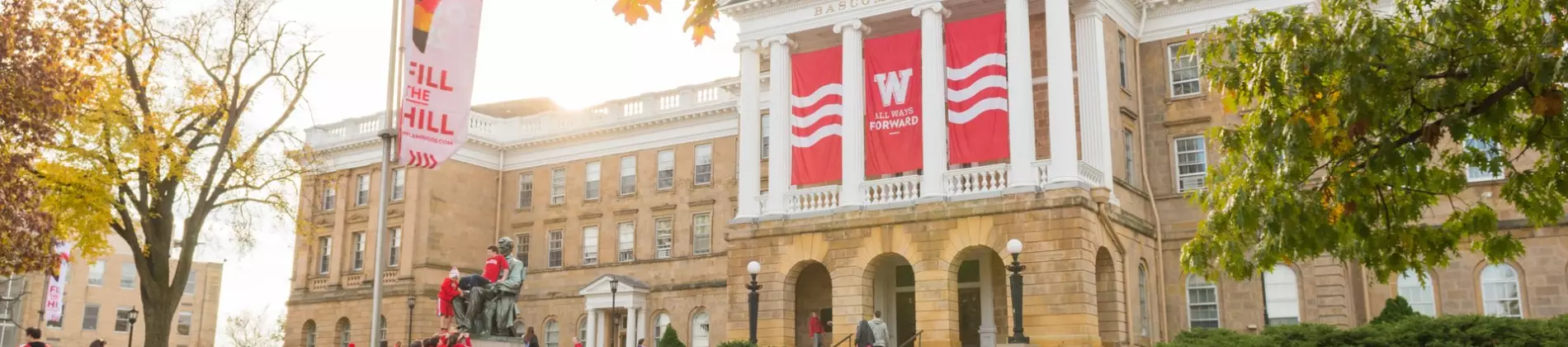
UWMadisonis one of the nation's most prolific research universities, located on the shore of Lake Mendota in the state's vibrant capital city. Thecity of Madisonis consistently recognized as one of the best cities in the nation in multiple categories for quality of life. Visitgrad.wisc.eduto learn more about the many reasons to choose UWMadison for graduate study.
Postgraduate Information
Recent program graduates have found employment in a variety of industrial settings or in prestigious postdoctoral academic research labs. Opportunities in research and development roles for pharmaceutical, chemical, biotechnology and other innovation-minded companies are a common postgraduate path; some graduates eventually achieve faculty positions at small colleges or at larger research institutions. By partnering with other units on campus, the program has increased career services such that students can sharpen their professional and communication skills and reach a larger network of potential employers. The program graduated 46 Ph.D.s from 2012 to 2017; over 90 percent of these recent alumni were professionally placed (i.e., working in the field) within six months of graduation. For more information on first professional placement following graduation, see employers of recent PharmSci graduates. The School's Graduate Coordinator can be consulted for specific career information (both initial placement and longer-term employment information regarding Ph.D. alumni).
Facilities
The Pharmaceutical Sciences Division is housed in Rennebohm Hall, a seven-story, state-of-the-art facility that opened in 2001and offers 120,000 assignable square feet. The Pharmaceutical Sciences Division comprises floors 4 to 7 of Rennebohm Hall and features 34 laboratories; affiliate Pharmaceutical Sciences graduate faculty and their labs are housed in other campus buildings. Located on the northwest edge of campus, Rennebohm Hall is in close proximity to the Health Sciences Learning Center (home of the UW School of Medicine and Public Health, or SMPH), UW Hospital and Clinics, the UW Institute for Clinical and Translational Research (ICTR), the Waisman Center, the Wisconsin Institutes for Medical Research (WIMR), SMPH's Center for Human Genomics and Precision Medicine, the School of Veterinary Medicine, the School of Nursing, and Ebling Library for the Health Sciences. Many researchers affiliated with Wisconsin's Carbone Comprehensive Cancer Center work within these adjacent facilities.
Exceptional research facilities and equipment are highlighted by the school's Analytical Instrumentation Center (AIC), comprising mass spectrometry, nuclear magnetic resonance, spectroscopy, and spectrophotometry facilities. The AIC's high-tech instrumentation expedites the isolation and full structural elucidation of small molecules. These chemical entities can be subsequently evaluated via high throughput screening toward lead generation, or specifically utilized to prove novel biological phenomenon toward in-depth mechanistic study. The division offers centralized facilities for computer-aided drug and catalyst design, real-time PCR, gene array detectors, gas chromatographs, high-pressure liquid chromatographs, cell culture, ultra-centrifuges, scintallation counters, and animal care for a variety of species.
The School of Pharmacy's Lenor Zeeh Pharmaceutical Experiment Station is a not-for-profit, self-sustaining center of expertise serving faculty researchers across the UWMadison campus as well as private-sector drug product development. The station provides laboratory services related to compound physical/chemical characterization and basic formulation development to support preclinical development of promising drug candidates and other unmet pharmaceutical-related needs. Pharmaceutical Sciences graduate students are eligible to participate in summer project assistantships at the station. Pharmaceutical Sciences also houses the university's Medicinal Chemistry Center (MCC), whose mission is to provide drug discovery expertise to the UW medical community and drive translational research at UWMadison through designing and synthesizing novel small molecule-based therapeutics. Pharmaceutical Sciences faculty direct the MCC. A Nanotechnology Center for Drug Delivery began in 2018, aiming to improve the efficacy of new drug leads.