

Music Education at Wayne State is a rigorous degree program that combines the best of both worlds – the study of music and the art of teaching. We want our best musicians and students to become the teachers of tomorrow. To accomplish that goal our program focuses on helping our students develop the skills, knowledge, and disposition necessary to become outstanding musicians and inspiring teachers.
What will I study?
The undergraduate program in music education comprises three broad areas: courses in music, music education, and general education.
Your core music courses involve the study of music theory and ear training to help you understand the fundamentals of how music works including study of scales, triads, and intervals as well as more complex harmonic concepts. You will also study music history to broaden your understanding of how music has evolved over time, across countries, and among peoples. You will have the opportunity to develop keyboard skills through piano proficiency courses and applied lessons, skills you'll use to study scores, teach and learn music, and accompany others. Participation in performing ensembles coupled with applied lessons on your major instrument will develop your basic musicianship skills while bringing your performance skills to a new level.
Courses in music education serve to introduce you to the art of teaching. You will explore important learning theories and methods for teaching music then learn how to apply them in the music classroom. You will investigate trends in music education, learn how to work with children of all ages and abilities, and acquire effective classroom management skills. Your courses will also help you understand how to organize your classroom, select appropriate repertoire, create meaningful lesson plans, and develop a sound music curriculum. In addition you will learn to think reflectively about your own teaching and learning while developing the leadership skills necessary to build, maintain, and advocate for a successful music program.
Through the general education courses required by the university you will have the opportunity to broaden your understanding of the world around you. Courses in the liberal arts and sciences will help you develop practical skills and theoretical knowledge that can be of use in the "real world". Our best teachers and musicians are well-rounded individuals who apply their curiosity and zest for living to a lifetime of teaching and learning. Your journey begins now!
What makes Wayne State's program unique?
Students in the music education program work closely with experienced, full time faculty members as part of their program. The music department faculty comprises a diverse and talented group of regional and national experts with a strong commitment to teaching, research, and community service. Our faculty members are active performers, teachers, researchers and scholars. Full time members of the music education faculty serve as advisors for all music education students.
Beginning at the end of the sophomore year, all music education students apply for admission to the College of Education. Once accepted, you will maintain dual enrollment in the College of Fine, Performing and Communication Arts and the College of Education until graduation. Students completing the music education curriculum, which culminates in student teaching, can apply for a Michigan provisional certification as a K-12 Music specialist.
Because we believe teaching is an ongoing experience, we provide our undergraduates with opportunities to visit local schools and observe outstanding music teachers working with students in "real life" settings. Observations typically begin during your sophomore year as part of the introductory music education classes. Your field experiences continue during your junior year culminating with student teaching during your senior or final year. We are fortunate to be able to place students with outstanding cooperating teachers from all over the Metro Detroit area. Our students often develop a long-term relationship with their cooperating teacher, many of whom continue to serve as mentors for our students long after they have graduated.
Other opportunities exist for you to develop your skills as a teacher and musician. Several of our ensembles offer students a chance to serve as conductor's assistants or student leaders. If you want to increase your marketability as a teacher, you might consider pursuing a minor in jazz studies, music technology, or in disciplines outside of music. Eligible students may want to participate in the Honors program offered through WSU's Irvin D. Reid Honors College.
We are exceptionally proud our graduates and you will find many of them teaching in successful music programs throughout Michigan as well as across the country. Some of our more recent grads are currently teaching in Arizona, Florida, Idaho, and Nevada. Many of our graduates have gone on to earn masters degrees in performance, music education or conducting. We are proud that so many of our students become leaders and active participants within our state music education organizations. Attend our annual state conference for music education and you will most likely encounter WSU alumni presenting workshops, performing with their ensembles or taking advantage of the opportunity to further expand their expertise.
What does the program prepare me for?
Upon completion of the music education program at Wayne State you can apply for a provisional K-12 Music certification. This certification is good for six years and will allow you to teach music anywhere in the state of Michigan. Your Michigan certification is also valid in many other states across the country, although some states require you to take an additional course in their state history.
With your degree and certification you can be hired to teach at any grade level from kindergarten through grade twelve. Typical classes you might be asked to teach include general music, music technology, keyboards, guitar, and music theory and music appreciation. You may also find yourself conducting one or more ensembles, including the traditional band, choir, jazz band and orchestra as well as more specialized ensembles including mariachi, show choir, marching band or chamber groups. Your certification qualifies you for employment with any public or private schools, including charter and parochial schools.
Depending upon your course electives and other experience, you may also find employment as a performer, private teacher, church musician, or community ensemble director. Additionally your degree will prepare you for graduate school. A master's degree may help you earn a higher salary while a Ph.D. will help you compete for teaching positions in higher education.
For more information contact Abby Butler (Music Education).
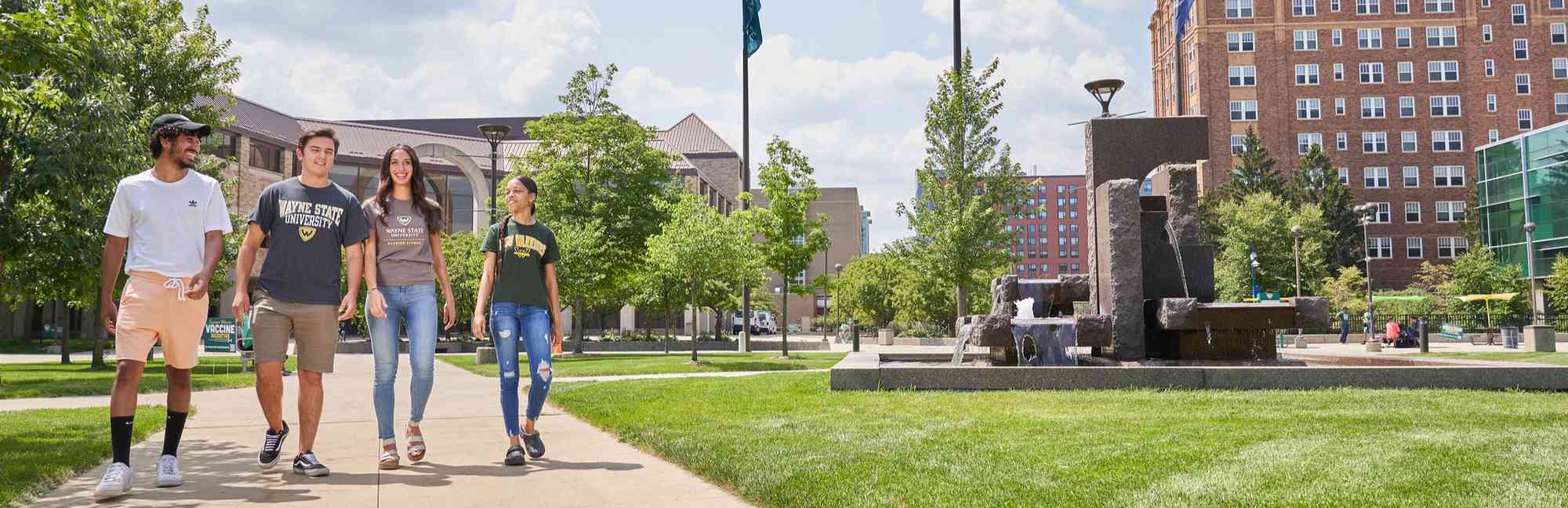
Graduate Certificate in Music Education at Wayne State University

Wayne State University offers the Graduate Certificate of Music Education as a full-time degree delivered on campus at its main campus in Detroit , United States of America. Taught in English and completed over 1 year, the program equips students with the theoretical knowledge and practical skills required for music education and related professional fields. The next available intake begins on August 28, 2027.
About Graduate Certificate in Music Education
Requirements and Admission Criteria for Graduate Certificate in Music Education at Wayne State University
Entry Requirements
International applicants must complete the equivalent of a U.S. four-year bachelor's degree, including all state and external/internal examinations required for the degree. Some three-year general degrees (from Canada, India, Pakistan, France, Lebanon, etc.) may not be equivalent to a four-year U.S. bachelor's degree. However, if you have completed an honors degree, additional undergraduate coursework beyond the three-year bachelor's degree, or a graduate degree, you may be considered for admission.
If you are applying to a master's program, your minimum undergraduate GPA must be 2.75 or its equivalent in upper division coursework. If you are applying to a doctoral program, your minimum undergraduate GPA must be 3.0 or its equivalent in upper division coursework.
Submit your transcript(s)
To begin the application review, upload unofficial copies of English-translated international transcripts from all post-secondary educational institutions from which you earned a bachelor's degree or higher, including Mark Sheets, if applicable. If you are admitted, you must submit an official course-by-course academic evaluation of your completed bachelor's degree.
Demonstrate English proficiency
Non-native speakers of English must demonstrate English proficiency by meeting the minimum requirements. You are required to submit an official qualifying score meeting minimum Graduate School requirements. Send official test scores to Wayne State University Graduate Admissions, using the school code 1898.
To begin the application review, upload an unofficial copy of your English proficiency test score(s). Once admitted, an official test score must be submitted to Graduate Admissions.
English Requirements
- IELTSMin 6.5
- TOEFLMin 80
Tuition and Fee Information for Graduate Certificate in Music Education at Wayne State University
How to Apply for Graduate Certificate in Music Education at Wayne State University
You should apply as an international student if you are not a permanent resident or citizen of the United States. You should also apply under this status if you have graduated from a secondary institution and completed pre-university educational curricula in your own country.
- International students can apply for 2023 using the undergraduate admission application.
- If you are a citizen or permanent resident of Canada, or if you are a U.S. Citizen living in Canada, apply for 2023 using the undergraduate admissions application.
Graduate students
- Those interested in pursuing a graduate degree, visit the Graduate School website and apply.
Contact the Office of Undergraduate Admissions if you have questions about the application process.

United States of America, Detroit