

- Become an outstanding secondary school Chemistry teacher with Qualified Teacher Status (QTS).
- Enjoy extensive periods of classroom experience supported by outstanding tutors and mentors.
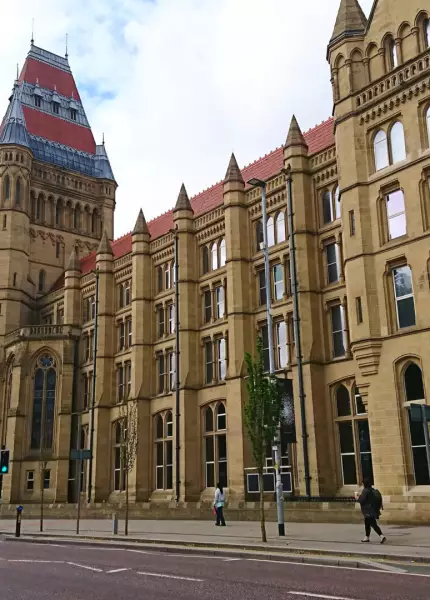
Graduate Certificate in PGCE Secondary Chemistry at The University of Manchester

University Rank:#35
Graduate Certificate in PGCE Secondary Chemistry at The University of Manchester
The PGCE Secondary Chemistry at The University of Manchester is a Graduate Certificate program designed for students who want to build the knowledge and skills required for careers in this field. Delivered on campus at the university's main campus in Manchester, United Kingdom, the program is taught in English and takes 1 year to complete. Students study in a Full Time environment while preparing for future professional opportunities. Tuition fees are USD 33,209 / year, with the next intake on September 1, 2026.
About Graduate Certificate in PGCE Secondary Chemistry
PGCE Secondary Science (Chemistry) will train you to become a chemistry teacher across the 11 to 16 or 11 to 18 age range. You will be trained to teach across all sciences up to KS3.
The course will prepare you to teach the National Curriculum and related national strategies, GCSE and A-level. Completion leads to both a postgraduate qualification and recommendation for qualified teacher status (QTS).
University-based sessions will enable you to reflect on teaching methods and engage critically with the science curriculum.
Experienced teachers will work alongside PGCE tutors, plus visitors from exam boards and the Royal Society of Chemistry.
Some sessions are run with the University's science departments to benefit fully from the University's resources, and with Manchester Museum and the Museum of Science and Industry in Manchester.
Find out more about your university Science tutors Rob Buck , Zahra Alijah , Naina Kotecha and Andy Howes .
Disciplines
Postgraduate Certificate in Education (PGCE)
Requirements and Admission Criteria for Graduate Certificate in PGCE Secondary Chemistry at The University of Manchester
Entry Requirements
- Minimum 2:2 honours degree in a science-related subject with at least half of the content strongly related to chemistry (if you are unsure, please contact us to discuss your qualifications).
- Grade B in chemistry at A-level (or equivalent), or grade C if you can demonstrate sustained academic progression since A-level, and at least one other science or maths A-level.
- Minimum grade C or 4 at GCSE (or equivalent) in English language and mathematics
English Requirements
- IELTSMin 5.5
- TOEFLMin 72
English Program Requirements
In addition to a grade C at GCSE in English Language, applicants whose first language is not English are required to meet the following language requirements:
- IELTS 6.5 overall, 6.5 in writing, no sub-section below 6.0, or
- TOEFL iBT overall score of 90 with a minimum score of 22 in writing and 20 in the other sub-sections, or
- Pearson PTE overall score of 62 with a minimum score of 62 in writing and 59 in the other sub-sections, or
- Cambridge Certificate of Advanced English (CAE) or Certificate of Proficiency in English (CPE) overall score of 176 or above, with 176 in writing and no sub-section below 169.
Career Opportunities after Completing Graduate Certificate in PGCE Secondary Chemistry
Career opportunities
Completing a PGCE is one route to becoming a fully qualified teacher. This form of teacher training is recommended for anyone with an undergraduate degree who is looking to gain Qualified Teacher Status (QTS).
You need QTS to teach in a state-maintained or special school in England and Wales. While other routes to gain QTS exist, they do not all come with the postgraduate qualification of a PGCE. A PGCE from The University of Manchester is a valued qualification regionally, nationally and internationally.
When you study a PGCE with us, we help you prepare for a successful career in education. You will be given clear direction, advice and support when making applications for teaching posts and our employment rates are consistently high.
In addition to this, a PGCE qualification can count as 60 of the 180 credits required for a master's degree, and The University of Manchester offers a range of postgraduate Education courses should you wish to continue your professional development by completing a master's as you progress further in your career.
View careers and employability for more information.
Careers support
The University has its own dedicated Careers Service that you would have full access to as a student and for two years after you graduate.
At Manchester you will have access to a number of opportunities to help boost your employability
Fee Information
Tuition Fee
33,209 / year
Graduate Certificate in PGCE Secondary Chemistry at The University of Manchester
The University of Manchester

United Kingdom, Manchester