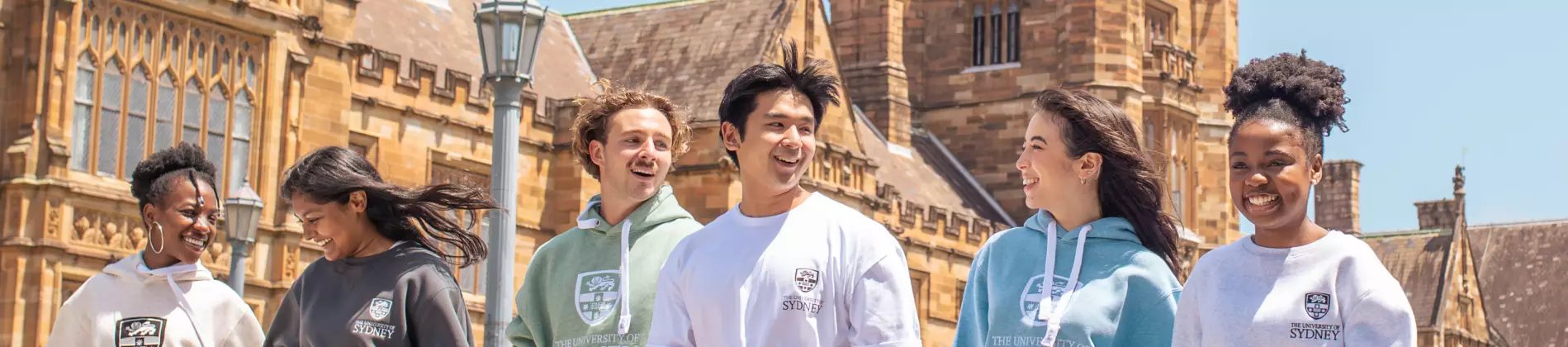

University of Sydney
University RankQs World
25

University of Sydney

Are you interested in studying at the University of Sydney?
Here is all you need to know as an international student!

About University of Sydney

The University of Sydney is a public research university in Sydney, Australia, founded in 1850. International students can use this guide to compare 561 degree programs, tuition estimates, entry requirements, scholarships and living costs before applying. Always confirm the requirements and fees for your chosen course on the university's official website.

University of Sydney: Is it really the right choice for Saudi and GCC students?

A practical guide to costs, housing, Arab and Muslim community life, admissions, scholarships, and what you should know before choosing Sydney — without sales talk or generic university marketing.

In short: The University of Sydney is a strong option if you want a globally recognised university in a major city with excellent career potential. But it is not one of the cheapest choices in Australia. Before choosing it, you need to understand the real cost, the lifestyle in Sydney, and how close you will be to Arab and Muslim community support.

Is the University of Sydney right for you?

Good fit ifyou want a highly ranked university, a major global city, strong career opportunities, and a visible Arab and Muslim community.
May not fit ifyour budget is very limited, you prefer a quieter and cheaper city, or you want smaller classes and close personal support from day one.
Main challengeSydney is expensive, and housing can become the biggest pressure for you and your family.
Biggest strengthThe university's reputation, the strength of Sydney as a city, and the diversity of student life.
#25QS World 2026
1850Founded
60,000+Students
150+Nationalities

Need to know if it fits your budget and major? YouApply can help you compare it with other universities for free.

Before rankings: ask yourself these questions

Many students start with one question: what is the University of Sydney's ranking? That matters, but it is not enough. A GCC student usually needs to know deeper, more practical things: is halal food easy to find? Can I pray on campus? Is housing safe and close? Can I work while studying? Will my family feel comfortable with this choice? And does the large financial investment actually make sense?

The University of Sydney is strong and well known, but your decision should be based on the full picture, not only the ranking. You are not studying inside a ranking table. You will live for years in a new city, pay high fees, and start a very different stage of your life.

A note from YouApply

Our role is not only to help you apply. We help you understand whether the university truly fits your major, budget, housing needs, and lifestyle. The service is completely free for students.

The real cost of studying in Sydney

Let's be clear from the beginning: Sydney is one of the most expensive student cities in Australia. If you are comparing it with Melbourne, Brisbane, or Adelaide, the difference in total cost can become very large across your full degree.

Tuition fees for international students

ProgramApproximate annual tuitionApproximate full program cost
Bachelor of CommerceAUD 49,200 – 52,000AUD 147,600 – 156,000 over 3 years
Bachelor of Engineering HonoursAUD 55,000 – 58,000AUD 220,000 – 232,000 over 4 years
Bachelor of ScienceAUD 52,000 – 55,000AUD 156,000 – 165,000 over 3 years
Master of Data ScienceAUD 52,000 – 56,000AUD 104,000 – 112,000 over 2 years
Master of CommerceAUD 54,000 – 58,000AUD 108,000 – 116,000 over 2 years
Doctor of MedicineAUD 80,000 – 93,500AUD 320,000 – 374,000 over 4 years

These figures are estimates and depend on the program and year of entry. Fees may increase annually. Always check the official tuition page before making a final decision.

Monthly living costs

The Australian government requires international students to show financial capacity for living costs, but the real cost in Sydney is often higher than the official minimum. Here is a realistic monthly picture:

Shared room or shared housing reasonably close to campusAUD 1,000 – 1,400
Private studioAUD 1,800 – 2,500
Groceries and cooking at homeAUD 400 – 600
TransportAUD 150 – 200
Phone and internetAUD 50 – 80
OSHC student health insuranceAround AUD 55
Realistic minimum monthly budgetAUD 1,700 – 2,100
More comfortable monthly budgetAUD 2,600 – 3,500
Be careful: Your first month is usually more expensive than expected. You may need to pay a housing deposit, buy room essentials, arrange transport, get a SIM card, eat out more often, and buy things you did not plan for.

If you study a three-year bachelor's degree, your total cost including tuition and living expenses can reach around AUD 210,000 – 260,000 or more depending on your lifestyle. This is why comparing universities and cities is not optional. It is a necessary step before applying.

Is the University of Sydney worth the cost?

The answer depends on your major and your plan after graduation. If you are targeting fields such as medicine, engineering, data science, law, commerce, or careers connected to major companies, the University of Sydney name can give you real value in the job market.

But if you are studying a field with a more moderate salary outlook, or if your budget is limited, it may be smarter to compare Sydney with strong universities in lower-cost cities such as Brisbane or Adelaide.

How YouApply helps

We compare the same major across several universities and cities, including tuition, living costs, entry requirements, and available scholarships. This helps you and your family decide using clear numbers, not only the university name.

Scholarships: available, but do not depend on them alone

The University of Sydney offers scholarships for international students, and some can reduce part of your tuition fees. Examples include:

  • Vice-Chancellor's International Scholarships: may range from AUD 5,000 to AUD 40,000 depending on academic merit.
  • Sydney Scholars Awards: highly competitive scholarships that may cover a significant portion of tuition in limited cases.
  • Faculty scholarships: some faculties such as Engineering, Business, and Science offer program-specific scholarships.

However, you should stay realistic: full scholarships for international students at highly ranked universities are not easy to secure. It is better to treat a scholarship as additional support, not as your main funding plan.

YouApply can help you understand which scholarships realistically match your academic profile before you spend time on options with a low chance of success.

Admission requirements at the University of Sydney

Entry requirements vary by program. Medicine, Dentistry, and some Engineering and Data-related programs are highly competitive. Some Commerce and Arts programs may be more accessible, but the university is still selective and expects a strong academic profile.

Typical IELTS requirement6.5 overall
Typical minimum in each band6.0
TOEFL iBT85+
PTE Academic61+
Main intakesFebruary and August
Typical processing time4 – 8 weeks

Some students from Saudi Arabia or the GCC may need a pathway or Foundation program if they do not meet direct entry requirements, especially after high school. It is better to assess your file before applying.

Australian student visa guide →

Life as an Arab or Muslim student in Sydney

This is one of Sydney's strongest advantages for GCC students. The city has a visible Arab and Muslim community, especially in areas such as Lakemba, Auburn, and Bankstown. Mosques, halal restaurants, Arab grocery stores, and community networks can make the transition easier, especially during your first year.

But it is important to know that the Arab and Muslim community is not all next to the university. The Camperdown campus is close to central Sydney, while the larger Arab communities are often in Western Sydney. This means you may need to use public transport to reach areas that feel more familiar culturally and religiously.

Prayer and mosques

The university has religious spaces and support through chaplaincy and student services. The Sydney University Muslim Students' Association, known as SUMSA, is also active and may organise events, gatherings, Ramadan iftars, and prayer-related activities depending on arrangements.

Prayer spaces on campusOn campus
Surry Hills MusallaRelatively nearby
Auburn Gallipoli MosqueAround 30 min by train
Lakemba MosqueAround 40 min by train

Halal food

You will find halal options in Sydney, but not everything is close to the university. Around campus, options may be more limited than in areas like Lakemba and Auburn. Many GCC students cook at home most of the week and visit community areas on weekends to buy halal meat and Arab groceries.

During Ramadan, Lakemba is especially well known for its Ramadan atmosphere and night food markets, giving many students a feeling closer to home and the wider Muslim world.

A common student story: A student arrives in Sydney with their offer, visa, and accommodation arranged, but then realises they do not know where to buy halal food, where to pray Jumu'ah, or how to meet Arab students. These small details make a big difference in the first month.

This is why YouApply does not stop at admission. We help you understand daily life before you travel and guide you through the details that matter to a GCC student.

Where do students usually live?

Choosing housing in Sydney requires balancing three things: distance from campus, cost, and closeness to the Arab and Muslim community.

Newtown

Close to campus, around 10–15 minutes on foot.

Cost: AUD 1,000 – 1,400 per month for shared housing.

Good if you want to stay near campus, but it is not the cheapest option.

Redfern / Chippendale

Very close to the university and near train connections.

Cost: AUD 1,100 – 1,500 per month for shared housing.

Very practical, but prices are rising quickly.

Lakemba / Bankstown

Strong Arab and Muslim community, halal food, and Arab shops.

Cost: AUD 650 – 900 per month for shared housing.

Cheaper and closer to the community, but the commute to campus is longer.

If daily convenience and being close to lectures matter most, living near campus may be better. If budget and Arab community life are priorities, Western Sydney areas may suit you better, but you need to accept a longer commute.

Student accommodation guide in Australia →

Your first month in Sydney: do not underestimate it

The first month is usually a mix of excitement and pressure. Everything is new: the university, housing, transport, food, people, language, and academic system. Many students feel that the beginning is harder than expected, and that is completely normal.

  • Shopping: you will need to learn where to buy halal food and ingredients that fit your cooking habits.
  • Weather: Sydney is not hot all year. In winter, you will need warm clothes.
  • Study style: lectures are one thing, but tutorials are different. You are expected to speak and participate.
  • Loneliness: it often appears after the first two weeks, especially if you do not build friendships quickly.
  • Expenses: the first month includes many one-time payments, so do not judge your full budget from that month alone.
Practical advice

Do not wait until you feel overwhelmed. From the first week, join a student society, meet students from your country, and understand the transport system and nearby supermarkets.

Ramadan while studying

If Ramadan falls during the semester or near exams, you need to plan early. Australian universities do not automatically change their entire timetable for Ramadan, but you may be able to request consideration if there is a clear clash. It is better to contact your faculty or student services early.

The Muslim student association may organise iftars and events, and Lakemba during Ramadan is one of the strongest places to feel community life. Many students say visiting it during Ramadan helps reduce homesickness.

YouApply helps students think about these details before travelling: housing, Ramadan, prayer, halal food, and even the questions they should ask the university before arrival.

Strongest fields at the University of Sydney

Medicine and Health

Medicine, Nursing, Pharmacy, and Public Health.

Best for students with very strong academic profiles.

Engineering and Computer Science

Engineering, Computer Science, and Data Science.

Strong choices for students focused on work opportunities after graduation.

Business and Law

Commerce, Management, Law, and business-related programs.

Good for students targeting major companies or an international career path.

Browse Medicine programs in University of Sydney →

Working while studying and after graduation

Student visa holders in Australia may work during study within the allowed visa conditions, and may have more flexibility during official breaks depending on current rules. Common student jobs include restaurants, cafes, retail, delivery, and academic support roles.

But do not build your financial plan on the idea that work will cover everything. In Sydney, student work can help with part of your expenses, but it usually will not cover housing, living costs, and tuition. It is better to treat it as supporting income, not your main funding source.

After graduation, you may be eligible for graduate visa pathways depending on your qualification, study duration, and the rules in place at the time of application. This is important if your goal is to gain work experience in Australia after studying.

Three weaknesses you should know

First: Sydney is expensive. Housing, transport, and eating out are all more expensive than in several other Australian cities. If your budget is tight, do not ignore this point.

Second: halal food near campus is not always abundant. It exists, but it does not compare with Arab and Muslim areas in Western Sydney. Cooking will likely become part of your normal life.

Third: some lectures are large. In first year, you may find lectures with a large number of students, which can feel overwhelming if you are used to a smaller learning environment.

Quick comparison with other universities

UniversityQS 2026City costArab / Muslim community
University of Sydney#25Very highLarge in Western Sydney
UNSW Sydney#20Very highMedium to large
University of Melbourne#19HighMedium
University of Queensland#42MediumSmall to medium
University of Adelaide#47Relatively lowerSmaller

Who is the University of Sydney for — and who is it not for?

The University of Sydney suits students who want a strong university name, can handle living in a large and expensive city, and are looking for good career potential after graduation. It also suits independent students who can manage their time, budget, and social life without waiting for everything to be arranged for them.

But it may not be the best choice if your budget is very limited, if you want a university in a cheaper city, if you prefer a smaller and quieter environment, or if being close to Arab and Muslim community life every day matters more to you than the university's ranking.

Questions students ask often

Is the University of Sydney suitable for Saudi students?
Yes, especially for students who want a globally strong university in a diverse city with good opportunities. However, the high cost of housing and living should be considered carefully.
Is there an Arab and Muslim community in Sydney?
Yes. Sydney has a visible Arab and Muslim community, especially in areas such as Lakemba, Auburn, and Bankstown. These areas, however, are not all directly beside the university campus.
Is halal food available?
Yes, halal food is available in Sydney, but options around campus may be limited. Many students cook at home and visit community areas to buy halal meat and groceries.
Is Sydney safe for hijab-wearing women?
Sydney is a multicultural city, and hijab is familiar in many areas. The university environment is generally diverse, but like any large city, choosing housing carefully and following safety guidance is important.
Can I work while studying?
Yes, within the conditions of your student visa and current Australian regulations. However, work should not be your main funding source, especially in an expensive city like Sydney.
Can I stay in Australia after graduation?
There may be graduate visa options depending on your qualification, study duration, and the rules at the time you apply. This should be checked officially before building a long-term plan.

A message for parents

If your son or daughter is considering the University of Sydney, the decision should balance academic reputation, cost, and lifestyle. The university is strong, and the city has a Muslim and Arab community, but expenses are high and require clear planning from the beginning.

Before making a final decision, it is better to compare the University of Sydney with other Australian universities in terms of tuition, housing, safety, community access, work opportunities, and entry requirements. This gives both the student and family more confidence in the choice.

Book Consultation

Need help applying to University of Sydney in Australia?

YouApply academic advisors help international students compare programs, understand admission requirements, prepare university applications, and plan student life in Australia. Our academic consultation service is completely free for students.

University of Sydney FAQs

A practical guide to costs, housing, Arab and Muslim community life, admissions, scholarships, and what you should know before choosing Sydney — without sales talk or generic university marketing. In short: The University of Sydney is a strong option if you want a globally recognised university in a major city with excellent career potential. But it is not one of the cheapest choices in Australia. Before choosing it, you need to understand the real cost, the lifestyle in Sydney, and how close you will be to Arab and Muslim community support.
Good fit ifyou want a highly ranked university, a major global city, strong career opportunities, and a visible Arab and Muslim community. May not fit ifyour budget is very limited, you prefer a quieter and cheaper city, or you want smaller classes and close personal support from day one. Main challengeSydney is expensive, and housing can become the biggest pressure for you and your family. Biggest strengthThe university's reputation, the strength of Sydney as a city, and the diversity of student life. #25QS World 2026. 1850Founded. 60,000+Students. 150+Nationalities. Need to know if it fits your budget and major? YouApply can help you compare it with other universities for free. Before rankings: ask yourself these questions. Many students start with one question: what is the University of Sydney's ranking? That matters, but it is not enough. A GCC student usually needs to know deeper, more practical things: is halal food easy to find? Can I pray on campus? Is housing safe and close? Can I work while studying? Will my family feel comfortable with this choice? And does the large financial investment actually make sense?. The University of Sydney is strong and well known, but your decision should be based on the full picture, not only the ranking. You are not studying inside a ranking table. You will live for years in a new city, pay high fees, and start a very different stage of your life. A note from YouApplyOur role is not only to help you apply. We help you understand whether the university truly fits your major, budget, housing needs, and lifestyle. The service is completely free for students. The real cost of studying in Sydney. Let's be clear from the beginning: Sydney is one of the most expensive student cities in Australia. If you are comparing it with Melbourne, Brisbane, or Adelaide, the difference in total cost can become very large across your full degree. Tuition fees for international students. ProgramApproximate annual tuitionApproximate full program cost. Bachelor of CommerceAUD 49,200 – 52,000AUD 147,600 – 156,000 over 3 years. Bachelor of Engineering HonoursAUD 55,000 – 58,000AUD 220,000 – 232,000 over 4 years. Bachelor of ScienceAUD 52,000 – 55,000AUD 156,000 – 165,000 over 3 years. Master of Data ScienceAUD 52,000 – 56,000AUD 104,000 – 112,000 over 2 years. Master of CommerceAUD 54,000 – 58,000AUD 108,000 – 116,000 over 2 years. Doctor of MedicineAUD 80,000 – 93,500AUD 320,000 – 374,000 over 4 years. These figures are estimates and depend on the program and year of entry. Fees may increase annually. Always check the official tuition page before making a final decision. Monthly living costs. The Australian government requires international students to show financial capacity for living costs, but the real cost in Sydney is often higher than the official minimum. Here is a realistic monthly picture:. Shared room or shared housing reasonably close to campusAUD 1,000 – 1,400. Private studioAUD 1,800 – 2,500. Groceries and cooking at homeAUD 400 – 600. TransportAUD 150 – 200. Phone and internetAUD 50 – 80. OSHC student health insuranceAround AUD 55. Realistic minimum monthly budgetAUD 1,700 – 2,100. More comfortable monthly budgetAUD 2,600 – 3,500. Be careful: Your first month is usually more expensive than expected. You may need to pay a housing deposit, buy room essentials, arrange transport, get a SIM card, eat out more often, and buy things you did not plan for. If you study a three-year bachelor's degree, your total cost including tuition and living expenses can reach around AUD 210,000 – 260,000 or more depending on your lifestyle. This is why comparing universities and cities is not optional. It is a necessary step before applying.
The answer depends on your major and your plan after graduation. If you are targeting fields such as medicine, engineering, data science, law, commerce, or careers connected to major companies, the University of Sydney name can give you real value in the job market. But if you are studying a field with a more moderate salary outlook, or if your budget is limited, it may be smarter to compare Sydney with strong universities in lower-cost cities such as Brisbane or Adelaide. How YouApply helpsWe compare the same major across several universities and cities, including tuition, living costs, entry requirements, and available scholarships. This helps you and your family decide using clear numbers, not only the university name. Scholarships: available, but do not depend on them alone. The University of Sydney offers scholarships for international students, and some can reduce part of your tuition fees. Examples include:. Vice-Chancellor's International Scholarships: may range from AUD 5,000 to AUD 40,000 depending on academic merit. Sydney Scholars Awards: highly competitive scholarships that may cover a significant portion of tuition in limited cases. Faculty scholarships: some faculties such as Engineering, Business, and Science offer program-specific scholarships. However, you should stay realistic: full scholarships for international students at highly ranked universities are not easy to secure. It is better to treat a scholarship as additional support, not as your main funding plan. YouApply can help you understand which scholarships realistically match your academic profile before you spend time on options with a low chance of success. Admission requirements at the University of Sydney. Entry requirements vary by program. Medicine, Dentistry, and some Engineering and Data-related programs are highly competitive. Some Commerce and Arts programs may be more accessible, but the university is still selective and expects a strong academic profile. Typical IELTS requirement6.5 overall. Typical minimum in each band6.0. TOEFL iBT85+. PTE Academic61+. Main intakesFebruary and August. Typical processing time4 – 8 weeks. Some students from Saudi Arabia or the GCC may need a pathway or Foundation program if they do not meet direct entry requirements, especially after high school. It is better to assess your file before applying. Australian student visa guide →. Life as an Arab or Muslim student in Sydney. This is one of Sydney's strongest advantages for GCC students. The city has a visible Arab and Muslim community, especially in areas such as Lakemba, Auburn, and Bankstown. Mosques, halal restaurants, Arab grocery stores, and community networks can make the transition easier, especially during your first year. But it is important to know that the Arab and Muslim community is not all next to the university. The Camperdown campus is close to central Sydney, while the larger Arab communities are often in Western Sydney. This means you may need to use public transport to reach areas that feel more familiar culturally and religiously. Prayer and mosques. The university has religious spaces and support through chaplaincy and student services. The Sydney University Muslim Students' Association, known as SUMSA, is also active and may organise events, gatherings, Ramadan iftars, and prayer-related activities depending on arrangements. Prayer spaces on campusOn campus. Surry Hills MusallaRelatively nearby. Auburn Gallipoli MosqueAround 30 min by train. Lakemba MosqueAround 40 min by train. Halal food. You will find halal options in Sydney, but not everything is close to the university. Around campus, options may be more limited than in areas like Lakemba and Auburn. Many GCC students cook at home most of the week and visit community areas on weekends to buy halal meat and Arab groceries. During Ramadan, Lakemba is especially well known for its Ramadan atmosphere and night food markets, giving many students a feeling closer to home and the wider Muslim world. A common student story: A student arrives in Sydney with their offer, visa, and accommodation arranged, but then realises they do not know where to buy halal food, where to pray Jumu'ah, or how to meet Arab students. These small details make a big difference in the first month. This is why YouApply does not stop at admission. We help you understand daily life before you travel and guide you through the details that matter to a GCC student.
Choosing housing in Sydney requires balancing three things: distance from campus, cost, and closeness to the Arab and Muslim community. Newtown. Close to campus, around 10–15 minutes on foot. Cost: AUD 1,000 – 1,400 per month for shared housing. Good if you want to stay near campus, but it is not the cheapest option. Redfern / Chippendale. Very close to the university and near train connections. Cost: AUD 1,100 – 1,500 per month for shared housing. Very practical, but prices are rising quickly. Lakemba / Bankstown. Strong Arab and Muslim community, halal food, and Arab shops. Cost: AUD 650 – 900 per month for shared housing. Cheaper and closer to the community, but the commute to campus is longer. . If daily convenience and being close to lectures matter most, living near campus may be better. If budget and Arab community life are priorities, Western Sydney areas may suit you better, but you need to accept a longer commute. Student accommodation guide in Australia →. Your first month in Sydney: do not underestimate it. The first month is usually a mix of excitement and pressure. Everything is new: the university, housing, transport, food, people, language, and academic system. Many students feel that the beginning is harder than expected, and that is completely normal. Shopping: you will need to learn where to buy halal food and ingredients that fit your cooking habits. Weather: Sydney is not hot all year. In winter, you will need warm clothes. Study style: lectures are one thing, but tutorials are different. You are expected to speak and participate. Loneliness: it often appears after the first two weeks, especially if you do not build friendships quickly. Expenses: the first month includes many one-time payments, so do not judge your full budget from that month alone. Practical adviceDo not wait until you feel overwhelmed. From the first week, join a student society, meet students from your country, and understand the transport system and nearby supermarkets. Ramadan while studying. If Ramadan falls during the semester or near exams, you need to plan early. Australian universities do not automatically change their entire timetable for Ramadan, but you may be able to request consideration if there is a clear clash. It is better to contact your faculty or student services early. The Muslim student association may organise iftars and events, and Lakemba during Ramadan is one of the strongest places to feel community life. Many students say visiting it during Ramadan helps reduce homesickness. YouApply helps students think about these details before travelling: housing, Ramadan, prayer, halal food, and even the questions they should ask the university before arrival. Strongest fields at the University of Sydney. Medicine and Health. Medicine, Nursing, Pharmacy, and Public Health. Best for students with very strong academic profiles. Engineering and Computer Science. Engineering, Computer Science, and Data Science. Strong choices for students focused on work opportunities after graduation. Business and Law. Commerce, Management, Law, and business-related programs. Good for students targeting major companies or an international career path. . Browse Medicine programs in University of Sydney →. Working while studying and after graduation. Student visa holders in Australia may work during study within the allowed visa conditions, and may have more flexibility during official breaks depending on current rules. Common student jobs include restaurants, cafes, retail, delivery, and academic support roles. But do not build your financial plan on the idea that work will cover everything. In Sydney, student work can help with part of your expenses, but it usually will not cover housing, living costs, and tuition. It is better to treat it as supporting income, not your main funding source. After graduation, you may be eligible for graduate visa pathways depending on your qualification, study duration, and the rules in place at the time of application. This is important if your goal is to gain work experience in Australia after studying. Three weaknesses you should know. First: Sydney is expensive. Housing, transport, and eating out are all more expensive than in several other Australian cities. If your budget is tight, do not ignore this point. Second: halal food near campus is not always abundant. It exists, but it does not compare with Arab and Muslim areas in Western Sydney. Cooking will likely become part of your normal life. Third: some lectures are large. In first year, you may find lectures with a large number of students, which can feel overwhelming if you are used to a smaller learning environment. Quick comparison with other universities. UniversityQS 2026City costArab / Muslim community. University of Sydney#25Very highLarge in Western Sydney. UNSW Sydney#20Very highMedium to large. University of Melbourne#19HighMedium. University of Queensland#42MediumSmall to medium. University of Adelaide#47Relatively lowerSmaller.
University of New South Wales UNSW →University of Technology Sydney UTS →Western Sydney University →.
The University of Sydney suits students who want a strong university name, can handle living in a large and expensive city, and are looking for good career potential after graduation. It also suits independent students who can manage their time, budget, and social life without waiting for everything to be arranged for them. But it may not be the best choice if your budget is very limited, if you want a university in a cheaper city, if you prefer a smaller and quieter environment, or if being close to Arab and Muslim community life every day matters more to you than the university's ranking. Questions students ask often. Is the University of Sydney suitable for Saudi students?. Yes, especially for students who want a globally strong university in a diverse city with good opportunities. However, the high cost of housing and living should be considered carefully. Is there an Arab and Muslim community in Sydney?. Yes. Sydney has a visible Arab and Muslim community, especially in areas such as Lakemba, Auburn, and Bankstown. These areas, however, are not all directly beside the university campus. Is halal food available?. Yes, halal food is available in Sydney, but options around campus may be limited. Many students cook at home and visit community areas to buy halal meat and groceries. Is Sydney safe for hijab-wearing women?. Sydney is a multicultural city, and hijab is familiar in many areas. The university environment is generally diverse, but like any large city, choosing housing carefully and following safety guidance is important. Can I work while studying?. Yes, within the conditions of your student visa and current Australian regulations. However, work should not be your main funding source, especially in an expensive city like Sydney. Can I stay in Australia after graduation?. There may be graduate visa options depending on your qualification, study duration, and the rules at the time you apply. This should be checked officially before building a long-term plan. A message for parents. If your son or daughter is considering the University of Sydney, the decision should balance academic reputation, cost, and lifestyle. The university is strong, and the city has a Muslim and Arab community, but expenses are high and require clear planning from the beginning. Before making a final decision, it is better to compare the University of Sydney with other Australian universities in terms of tuition, housing, safety, community access, work opportunities, and entry requirements. This gives both the student and family more confidence in the choice.

Apply Now! for University of Sydney

Start by choosing a course and checking its academic and English-language requirements. Requirements, fees and deadlines differ by course and intake, so confirm the latest details before submitting your application.

  1. Choose your course and review its entry requirements.
  2. Prepare your passport, official academic records, English test results and any course-specific documents.
  3. Check the application deadline and the correct application route for your qualification.
  4. Submit the application, then follow the instructions in your offer if you are admitted.

Most international applicants with overseas qualifications can apply directly or through an authorised agent. Some undergraduate applicants completing an Australian Year 12 qualification or an IB Diploma in Australia must apply through UAC.

Top Programs at University of Sydney

Explore undergraduate and postgraduate programs at University of Sydney.

  • Bachelor of Arts (Honours)
  • Bachelor of Science
  • Bachelor of Science (Honours)
  • Bachelor of Psychology
  • Bachelor of Science and Bachelor of Advanced Studies
  • Bachelor of Nursing (Honours)
  • Bachelor of Arts (Extended)
  • Bachelor of Commerce (Honours)

Similar Universities to University of Sydney

Discover similar universities in the same country based on academic rankings and programs.

WhatsApp student consultation with YouApply