

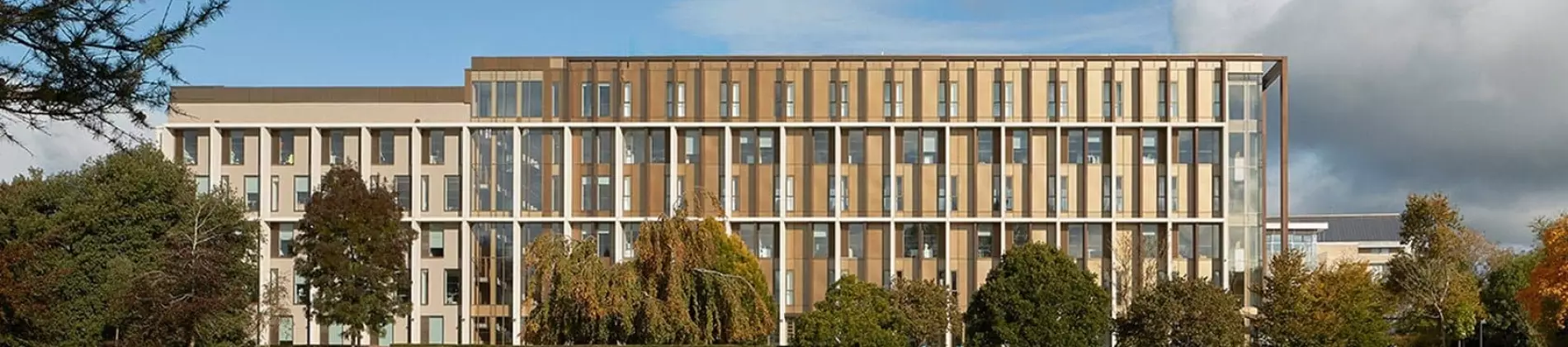

University of Bath in United Kingdom

Here is all you need to know as an international student!
University of Bath in United Kingdom Photos





About University of Bath in United Kingdom
The university has 21,452 students in the 2025/26 academic year, including 16,401 undergraduates and 5,051 postgraduates. Around 26% of students come from outside the UK, representing 152 nationalities. This makes Bath international enough for overseas students to find a diverse community while still retaining the atmosphere of a relatively compact campus university.
Bath is organised around the Faculty of Engineering & Design, Faculty of Humanities & Social Sciences, Faculty of Science, School of Management, and specialist departments such as Health and Psychology. Many undergraduate courses include an optional professional placement, study abroad period, or both. University figures show that 62% of students graduating from undergraduate courses in 2024/25 chose a placement year or study abroad option, which reflects how central professional experience is to Bath's educational model.
The university is also highly ranked. In the QS World University Rankings 2027, Bath is 125th globally. Times Higher Education places it in the 251–300 band in the World University Rankings 2026. In the UK, Bath is ranked 8th by both The Times and The Sunday Times Good University Guide 2027 and the Guardian University Guide 2027, and 9th in the Complete University Guide 2027. Rankings should not be the only reason to choose a university, but they confirm that Bath performs strongly across teaching, employability and overall student outcomes.
Where Is University of Bath Located?
The main campus is at Claverton Down, on a hillside above the city of Bath. The campus contains teaching buildings, laboratories, the library, student accommodation, sports facilities, food outlets and the Students' Union within a relatively concentrated area. This makes daily life convenient for first-year students living on campus because most essential university facilities can be reached on foot.
Bath city centre is about two miles from campus. Regular bus services connect the university with the city centre, railway station and residential areas. Bath Spa railway station provides direct services to Bristol, London Paddington and other major cities. Bristol is close enough for occasional travel, entertainment and airport access, while London is accessible by direct rail for internships, interviews or weekend visits.
The city itself is smaller than London, Birmingham or Manchester and has a distinctive historic character. Students who want a compact, visually attractive city may enjoy Bath, while those seeking very large-city nightlife or a huge metropolitan job market may prefer other locations. The main practical issue is cost: Bath is not one of the UK's cheapest student cities, especially for private accommodation.
Students from Saudi Arabia and the GCC should prepare for a cooler and wetter climate, shorter winter daylight hours and a more independent study culture. Bath is generally easy to navigate, but its hills can make walking more demanding than the map suggests, particularly between the city and Claverton Down campus.
Programs at University of Bath
Bath offers more than 190 undergraduate degree options across engineering, management, science, humanities, health and social science, as well as taught master's and doctoral study. The examples below are representative official programs rather than a complete list.
Faculty of Engineering and Design in University of Bath
The Faculty of Engineering & Design includes Architecture & Civil Engineering, Chemical Engineering, Electronic & Electrical Engineering and Mechanical Engineering. Most engineering subjects offer both bachelor's and integrated master's routes, and professional placement options are widely available.
- Aerospace Engineering BEng
- Aerospace Engineering MEng
- Architecture BSc
- Civil Engineering BEng
- Civil Engineering MEng
- Chemical Engineering BEng
- Chemical Engineering MEng
- Electrical and Electronic Engineering BEng
- Electrical and Electronic Engineering MEng
- Mechanical Engineering BEng
- Mechanical Engineering MEng
- Mechanical with Automotive Engineering MEng
Faculty of Science in University of Bath
The Faculty of Science covers Chemistry, Computer Science, Life Sciences, Mathematical Sciences, Natural Sciences and Physics. Many programs allow students to add a placement year or study abroad period.
- Biochemistry BSc
- Biology BSc
- Chemistry BSc
- Computer Science BSc
- Computer Science and Mathematics BSc
- Mathematics BSc
- Natural Sciences BSc
- Pharmacology BSc
- Pharmacy MPharm
- Physics BSc
Faculty of Humanities and Social Sciences in University of Bath
This faculty includes economics, politics, languages, psychology, sociology, education, criminology, social policy and international development. Several programs combine disciplines or include placement and study abroad options.
- Criminology BSc
- Economics BSc
- Economics and Mathematics BSc
- Economics with Politics BSc
- Education with Psychology BA
- International Development with Economics BSc
- International Politics and Modern Languages BA
- Modern Languages BA
- Politics and International Relations BSc
- Politics with Economics BSc
- Psychology BSc
Faculty of Business and Management in University of Bath
The School of Management offers accounting, finance, business and management degrees and is especially known for integrating work placements, employer engagement and professional development into the student experience.
- Accounting and Finance BSc
- Accounting and Management BSc
- Finance BSc
- Business BSc
- International Management BSc
- Management BSc
- Management with Marketing BSc
- International Management and Modern Languages BSc
Faculty of Health and Sport in University of Bath
Bath has a particularly visible profile in sport, exercise and health. The university combines academic study with major sports facilities and specialist research.
- Health and Exercise Science BSc
- Sport Management and Coaching BSc
- Sport and Exercise Science BSc
- Sport and Exercise Science MSci
- Sport (Sports Performance) FdSc
Top Programs at University of Bath
The university does not publish an official internal ranking that identifies one definitive list of its best programs. The following selection reflects Bath's subject reputation, professional orientation, student demand, employer relevance and strength in UK subject rankings.
- Management BSc
- Accounting and Finance BSc
- Computer Science BSc
- Mechanical Engineering MEng
- Aerospace Engineering MEng
- Architecture BSc
- Economics BSc
- Psychology BSc
- Sport and Exercise Science BSc
- Pharmacy MPharm
Bath is particularly strong for students who want a course with an applied or professional dimension. The School of Management works with hundreds of companies, engineering courses provide placement routes, and many science and social science programs can also be studied with professional placement or study abroad options.
The Real Cost of Studying at University of Bath
Tuition Fees for International Students
Bath publishes overseas undergraduate fees by subject band. For students starting in 2027/28, Band 1 courses, mainly Humanities and Social Sciences, cost £26,150 per year. Band 2 courses, covering Economics and School of Management programs, cost £29,500 per year. Band 3 courses, covering Science, Engineering, Health and Psychology, cost £32,950 per year.
| Subject area | 2027/28 overseas annual tuition | Examples |
|---|---|---|
| Band 1 | £26,150 | Many Humanities and Social Sciences courses |
| Band 2 | £29,500 | Economics and School of Management courses |
| Band 3 | £32,950 | Science, Engineering, Health and Psychology |
Placement years use reduced fee structures rather than the standard full-time tuition amount. For 2027/28, a typical thick-sandwich placement fee is £7,265 for Band 1, £8,195 for Economics courses and £9,155 for most Band 3 programs, while several School of Management courses use different placement rates. Students must check the exact placement structure for their chosen program.
International students should also budget for annual fee increases. Bath states that overseas students should allow for increases of up to 8% per year during the remainder of their course. This can have a meaningful impact on the total cost of a three-, four- or five-year degree.
Monthly Living Costs
Accommodation is the largest variable. Published university-managed accommodation prices for 2026/27 range from lower-cost shared rooms at about £3,724 for a 38-week contract to studios and longer contracts above £14,000. Many standard undergraduate options fall roughly between £5,500 and £11,000 for the academic contract, depending on room type, catering credit and location.
Private housing is also widely used, particularly after first year. University guidance indicates that shared private properties average around £650 per person per month before bills, although rent varies by neighbourhood and property quality. Students must then add electricity, gas, water, internet, food, transport, phone costs, study materials and personal spending.
For Student visa purposes, the current official maintenance requirement for study outside London is £1,171 per month for up to nine months. This is a visa minimum, not a promise that every student can live comfortably on that figure. A student choosing an en-suite room, frequent restaurant meals or regular travel should expect a higher real budget.
Is University of Bath Worth the Cost?
Bath can justify its cost most clearly for students who actively use the university's placement culture, careers support and employer connections. Its 2024/25 data show that 62% of undergraduate graduates chose a placement year or study abroad option. The university also reports strong graduate outcomes, with 87% of full-time UK-based graduates in high-skilled employment 15 months after leaving in the latest reported cohort.
The university's ranking profile is another strength: 125th globally in QS 2027, top ten in several major UK university guides for 2027, and triple Gold in the Teaching Excellence Framework 2023. These indicators do not guarantee individual success, but they support Bath's reputation for teaching, employability and student outcomes.
The main question is whether the student will make use of Bath's strengths. If you want a purely theoretical degree at the lowest possible cost, Bath may not provide the best value. If you want professional placements, employer interaction, a strong campus environment and respected programs in management, engineering, science, economics or sport, the higher cost may be easier to justify.
Scholarships at University of Bath
Bath offers university-administered scholarships for international students, but awards and deadlines change by entry year. The 2026/27 Bath International Excellence Scholarship was a major undergraduate award worth £8,000 per academic year for up to three years, giving a maximum tuition discount of £24,000. Up to 300 scholarships were available to new overseas-fee undergraduate students starting in September 2026. Applications for that cycle are now closed.
For taught master's applicants outside the School of Management, the Bath Global Excellence Scholarship for September 2026 offered up to 250 awards worth £10,000 as tuition-fee waivers for eligible international students in Engineering & Design, Humanities & Social Sciences and Science. That application cycle is also closed.
The School of Management administers its own master's scholarships. For 2026/27, university-published awards included the Master's Worldwide Scholarship worth £5,000, Scholarship for Academic Excellence worth £10,000 and Scholarship for Outstanding Individual worth £10,000. Availability differs between September and January entry points and is competitive.
| University-administered funding | Value | Level | Current position |
|---|---|---|---|
| Bath International Excellence Scholarship | £8,000 per year, up to £24,000 | Undergraduate | 2026/27 application cycle closed |
| Bath Global Excellence Scholarship | £10,000 tuition fee waiver | Taught master's | September 2026 cycle closed |
| School of Management Master's Worldwide Scholarship | £5,000 | School of Management master's | Availability depends on intake |
| School of Management Scholarship for Academic Excellence | £10,000 | School of Management master's | Availability depends on intake |
Students applying for 2027 entry should not assume that the 2026 awards will be repeated with the same values or rules. They should check the current entry-year funding information after receiving an offer.
Admission Requirements at University of Bath
Bath is selective, and requirements vary substantially by subject. For 2027 entry, Management BSc lists a typical A-level offer of AAA or A*AB and an International Baccalaureate typical profile of 36 points with 6, 6, 6 or 7, 6, 5 at Higher Level. Management also uses a high English-language requirement: IELTS 7.0 overall with no component below 6.5 when an accepted English qualification is required.
Computer Science is more selective. For 2027, the typical A-level offer is A*A*A including grade A in Mathematics. The university explicitly states that Computer Science is highly selective and that meeting the typical grades does not guarantee an offer. Mechanical Engineering MEng publishes A*A*A including A* in Mathematics and A in Physics, with an IB typical offer of 36 points and 7, 7, 6 at Higher Level.
Several science and engineering courses use English-language Category C, where IELTS 6.5 overall with at least 6.0 in each component is a common requirement. Management and some other subjects use higher categories. Students should therefore never assume that one IELTS score applies across the university.
International qualifications are assessed through country-specific guidance. Students whose school qualification is not accepted for direct entry may be able to use the International Foundation Year, depending on the target degree and progression requirements.
Undergraduate applications are made through UCAS. For many 2027 undergraduate courses, the equal-consideration application deadline is 13 January 2027. Postgraduate applications are generally made directly to Bath, and deadlines vary by course, capacity and applicant circumstances.
Cultural and Religious Life for Muslim Students in Bath
Bath is a predominantly non-Muslim British city, so Muslim students may need to plan prayer, food and Ramadan routines more consciously than at home in Saudi Arabia or the GCC. The university does, however, provide specific facilities and guidance.
Prayer and Mosques
There is a dedicated Muslim prayer room in Norwood House on campus, open 24 hours a day. The facility has separate entrances for brothers and sisters and hosts Friday prayer sessions. Students can also connect with the Bath University Islamic Society for current prayer times, events and community activities.
Outside the university, Bath has a local Muslim community and mosque facilities. Travel time will depend on accommodation, so students who want regular off-campus mosque attendance should consider location when choosing housing.
Halal Food
The university states that halal food and drink options are available across its campus food and drink outlets. Halal menu items are marked, and the university describes procedures for sourcing, storing and handling certified halal meat. Students who want more control over ingredients can choose self-catered accommodation and use supermarkets and shops in the city.
Where Do Students Usually Live in the United Kingdom?
Claverton Down campus accommodation is the easiest option for first-year students who want to live close to lectures, the library, sports facilities and campus services. It reduces commuting but may cost more than a shared private room, depending on room type.
Bath city centre is around two miles from campus and suits students who want shops, restaurants, railway access and a more urban daily routine. Regular buses connect the centre with campus. University data based on Studentpad listings indicate an average private rent of about £554 per person per month in the city centre, though actual rents vary.
Oldfield Park is one of Bath's best-known student areas. It is around three miles from campus and has shops, cafes and a local rail station. It has a stronger student-neighbourhood atmosphere than the city centre, but the morning bus commute can be busy.
Widcombe is around two miles from campus and about a 15-minute walk from the city centre. It can suit students who want a quieter neighbourhood while remaining close to Bath Spa railway station and city amenities.
Combe Down is another quieter option about two miles from campus. It has regular bus links and can offer slightly lower private rents than some central areas, although students should check the exact route and hill gradient before signing a tenancy.
Your First Month in Bath: What Should You Expect?
- Complete registration and attend departmental and international-student orientation.
- Learn the campus bus routes before your first 9am lectures.
- Register with local health services and understand how to access Student Support.
- Set up a UK bank account and mobile plan if needed.
- Confirm what is included in your accommodation contract, especially utilities and meal credit.
- Buy waterproof clothing and suitable shoes because Bath is hilly and rain is common.
- Understand how independent study, seminars, labs and group assignments are organised in your department.
- Visit Careers and your placement team early if your degree includes a professional placement.
- Join societies gradually rather than overloading your timetable during the first weeks.
Ramadan While Studying
The University of Bath publishes specific Ramadan guidance for students. It recognises that fasting may affect study, coursework preparation and revision and directs students toward Student Support, the Chaplaincy, the Islamic Society and academic staff when support is needed.
Ramadan may fall during teaching or assessment periods, and daylight hours in the UK vary by season. Students should plan sleep, hydration, study blocks and transport carefully. The Islamic Society can provide community connection, while the campus prayer room gives students a practical space for worship. Students should communicate early if health or other serious circumstances affect academic performance rather than assuming that deadlines will automatically change.
Working While Studying and After Graduation
Under current UK Student visa rules, international students on eligible full-time degree-level courses at a higher education provider with a track record of compliance can normally work up to 20 hours per week during term time and full-time during official vacations. The conditions on the student's own immigration permission always take priority, and restrictions apply to certain forms of work.
Bath's placement system is separate from ordinary part-time employment. Many degrees offer a professional placement as an integrated part of the course, and these placements can last several months or a full academic year. The university supports students through placement teams and careers services, but placements remain competitive and are not guaranteed.
After completing an eligible UK degree, the Graduate visa currently lasts two years for applications submitted on or before 31 December 2026 and 18 months for applications submitted on or after 1 January 2027. Doctoral graduates receive three years. The Graduate route gives time to work or look for work, but it is temporary and does not guarantee long-term sponsorship.
Three Weaknesses You Should Know
- Bath is expensive: tuition for international students can reach £32,950 per year for 2027/28 before accommodation and living expenses, and private housing in Bath is not cheap.
- Admission can be very competitive: courses such as Computer Science and Engineering publish high entry requirements, and Bath makes clear that meeting typical grades does not necessarily guarantee an offer.
- The city is compact rather than metropolitan: Bath offers a strong student environment and excellent access to Bristol and London, but students who want the scale, nightlife and employer density of a major city may find it limited.
Quick Comparison with Other Universities
| University | Location | Notable comparison point |
|---|---|---|
| University of Bath | Bath | Strong placements, management, engineering, sport and compact campus experience |
| University of Bristol | Bristol | Larger city and broader research-intensive university environment |
| University of Exeter | Exeter | Campus-focused experience in another smaller South West city |
| University of Warwick | Coventry | Strong business, economics and quantitative subject profile |
| Loughborough University | Loughborough | Strong engineering, sport and campus identity |
Considering Other Universities in Bath?
Bath Spa University is the main alternative within the city, but it has a different academic profile. Students comparing the two should focus on the exact subject, course structure, entry requirements, career outcomes and cost rather than assuming that universities in the same city offer similar experiences.
Who Is University of Bath For — and Who Is It Not For?
Bath is well suited to students who want strong academic standards combined with practical professional experience. It is especially attractive for applicants interested in management, engineering, computer science, economics, architecture, psychology, sport and selected sciences. Students who value a compact campus, placements, careers support and a smaller historic city may find the environment particularly suitable.
It may be less suitable for students seeking the lowest-cost UK option, a very large-city lifestyle or less competitive admission. It also requires independence: students must take responsibility for placement applications, budgeting, private housing after first year and long-term career planning.
Frequently Asked Questions
Is University of Bath highly ranked?
Yes. It is ranked 125th globally in QS 2027 and appears in the UK top ten in several major 2027 national university guides.
How much is tuition for international undergraduate students?
For 2027/28 entry, annual overseas tuition is £26,150 for Band 1, £29,500 for Band 2 and £32,950 for Band 3 courses.
Does Bath offer work placements?
Yes. Professional placements are a major feature of many Bath degrees, although students must compete for and secure an appropriate placement.
What IELTS score do I need?
It depends on the course. Some engineering and science programs use IELTS 6.5 overall with at least 6.0 in each component, while Management BSc requires IELTS 7.0 with at least 6.5 in each component when an English test is needed.
Is accommodation available?
The university provides both campus and city accommodation, subject to eligibility, application deadlines and availability. Private accommodation is also common.
Is there a Muslim prayer room?
Yes. The university has a dedicated Muslim prayer room in Norwood House, open 24 hours a day.
Is halal food available on campus?
Yes. The university publishes guidance confirming halal options across campus food outlets, with halal items clearly identified.
Can international students work during term time?
Eligible Student visa holders on full-time degree-level courses can normally work up to 20 hours per week during term time, subject to their visa conditions.
Does Bath offer scholarships for international students?
Yes. Bath has offered significant undergraduate and postgraduate awards, but scholarship values and deadlines vary by entry year and should be checked for the current cycle.
A Message for Parents
For parents, Bath offers a structured campus environment, strong academic standards, substantial careers support and a clear emphasis on practical experience. The city is manageable in size, and the university provides student support, accommodation services and faith facilities. The main concern is cost: tuition, housing and living expenses can be high, so families should build a realistic multi-year budget rather than focusing only on first-year tuition.
It is also important to understand that Bath expects students to be independent. The university supports placements, careers and wellbeing, but students still need to manage deadlines, applications, finances, housing and professional development themselves.
Need Help Applying to University of Bath?
YouApply can help students compare University of Bath programs, understand published admission requirements, review tuition and scholarship information and compare Bath with other universities before applying. Students should always use the conditions in their official university offer as the final reference for admission.
Apply Now! for University of Bath
1. Choose a course
Compare the curriculum, professional accreditation, placement structure, study-abroad opportunities and career direction of each course. Bath offers many similar subjects in different formats, so the exact route matters.
2. Check your eligibility
Review the academic and English requirements for your qualification system and entry year. Saudi and GCC applicants should use Bath's country-specific guidance because local school qualifications are not assessed in exactly the same way as A levels or the International Baccalaureate.
3. Gather your documents
- Passport details
- Academic transcripts and certificates
- English-language results where required
- UCAS application information for undergraduate study
- Personal statement or application responses where applicable
- CV, references or professional evidence for postgraduate programs where requested
- Portfolio for courses such as Architecture where required
4. Check your finances
Calculate tuition, accommodation, food, transport, visa costs, the immigration health surcharge, study materials and personal expenses. Include likely annual tuition increases and do not count a scholarship until it has been formally awarded.
5. Submit your application
Undergraduate applications are submitted through UCAS. Postgraduate applications are generally made directly to the University of Bath. After receiving an offer, check every academic, English-language and financial condition before accepting.

Need help applying to University of Bath in United Kingdom?
YouApply academic advisors help international students compare programs, understand admission requirements, prepare university applications, and plan student life in United Kingdom. Our academic consultation service is completely free for students.
University of Bath FAQs
University of Bath in United Kingdom Ranking

Best Global Universities Rankings -2025-2026 for University of Bath
University of Bath ranking is #403 globally in the Best Global Universities Rankings -2025-2026.

QS World University Rankings 2026 for University of Bath
University of Bath ranks #132 globally in the QS World University Rankings 2026.


Top Programs at University of Bath in United Kingdom
Explore undergraduate and postgraduate programs at University of Bath in United Kingdom.
- Robotics Engineering BEng (Hons)
- Natural Sciences BSc (Hons)
- Doctor of Clinical Psychology DClinPsy
- Chemical Engineering BEng (Hons)
- Biomedical Sciences BSc (Hons)
- Mechanical Engineering BEng (Hons)
- Civil Engineering BEng (Hons)
- Architecture BSc (Hons)
Scholarships at University of Bath in United Kingdom for International Students
Explore scholarships at University of Bath in United Kingdom including merit-based and need-based funding options.
- Gold Scholarship Programme at University of Bath in United Kingdom
- Global Leaders Scholarship at University of Bath in United Kingdom
- University of Bath's School of Management MSc Scholarships at University of Bath in United Kingdom
- MSc Anniversary Scholarships at University of Bath in United Kingdom
- Deans Award for Academic Excellence Scholarship at University of Bath in United Kingdom
- Dean's Scholarships for Ambition at University of Bath in United Kingdom
- AB InBev Scholarship at University of Bath in United Kingdom
- Winning Women in Technology: J.P. Morgan Scholarships at University of Bath in United Kingdom
- Euromasters Scholarship at University of Bath in United Kingdom
- Frank Wallace Scholarship at University of Bath in United Kingdom
Similar Universities to University of Bath in United Kingdom
Discover similar universities in the same country based on academic rankings and programs.